



What Is a Kitchen Lease Agreement?
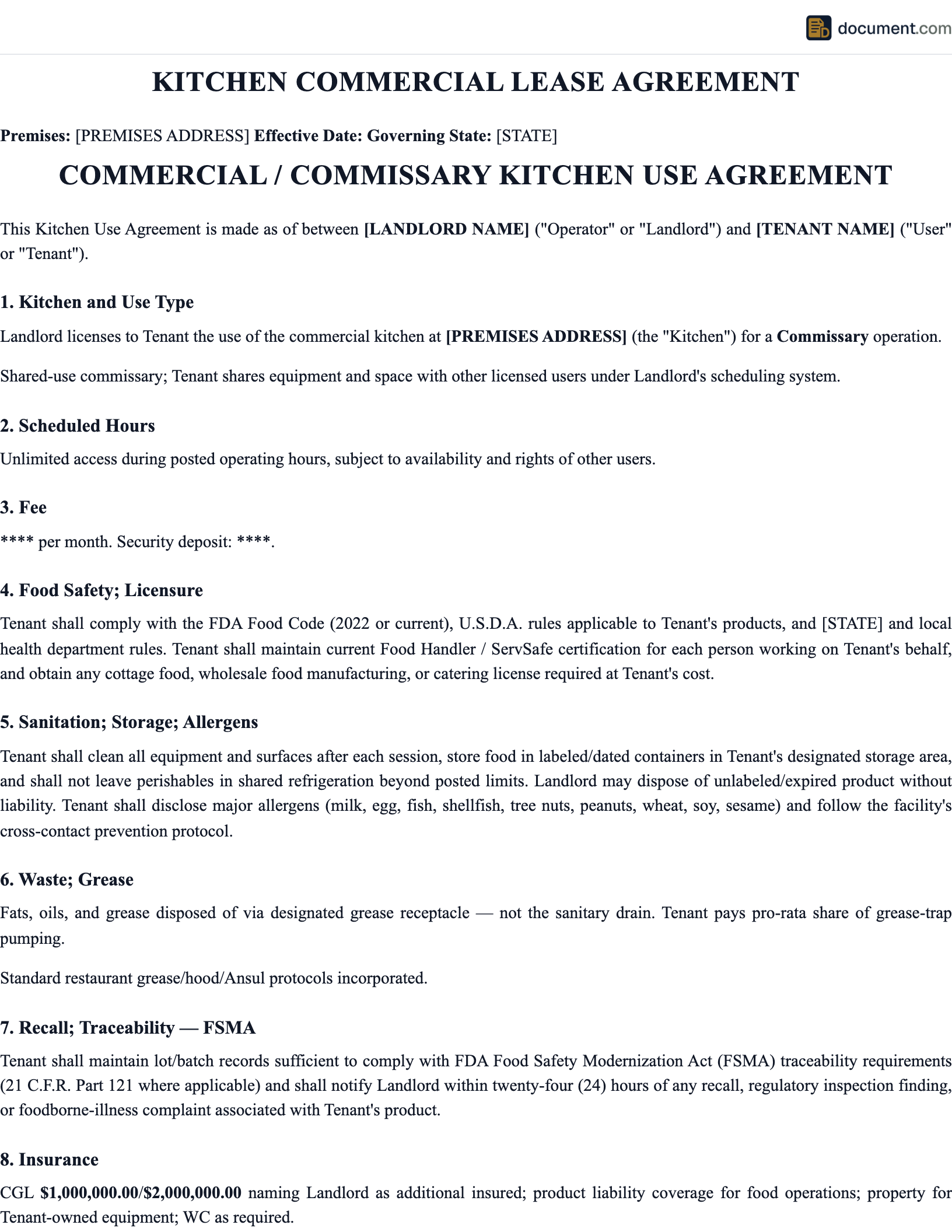
A kitchen lease agreement is a specialized commercial lease designed for renting commercial kitchen space, including ghost kitchens, shared commissary kitchens, food production facilities, and catering prep spaces. Unlike standard commercial leases, kitchen leases must address food safety regulations, health department compliance, equipment usage and maintenance, scheduling for shared spaces, and industry-specific insurance requirements.
The ghost kitchen and shared kitchen market has expanded rapidly, driven by the growth of food delivery services and the rising cost of opening traditional restaurant spaces. Commissary kitchens allow food entrepreneurs, caterers, food truck operators, and small-batch producers to access licensed commercial kitchen facilities without the capital investment of building their own. Kitchen leases govern these arrangements.
Critical elements of a kitchen lease include equipment inventory and condition documentation, scheduling and access arrangements for shared facilities, health department licensing and inspection responsibilities, sanitation and cleaning protocols, food storage allocations, grease trap and waste management, ventilation and fire suppression system usage, and liability for foodborne illness or contamination events.
Every state has its own food safety regulations and health department requirements for commercial kitchens. Some states require separate food handler permits, specific licensing for certain food products, or particular insurance coverage for food production operations. Your kitchen lease must comply with both state and local health codes.
Kitchen Lease Agreement Form Preview
Our kitchen lease agreement form includes all the fields required for a valid document. Below is a preview of the key sections. Your customized document will be tailored to your state's specific requirements.
KITCHEN LEASE AGREEMENT
Legal Document Template
FACILITY OWNER
Name: [Full Legal Name]
Facility: [Kitchen Name]
Address: [Facility Address]
KITCHEN TENANT
Name: [Full Legal Name / Business]
Business Type: [Restaurant/Catering/Production]
Health Permit #: [Number]
KITCHEN SPECIFICATIONS
Total SF: [Square Feet]
Schedule: [Days/Hours]
Equipment: [See Inventory Addendum]
Storage: [Allocated Space]
FINANCIAL TERMS
Monthly Rent: $[Amount]
Schedule Rate: $[Amount]/hour
Security Deposit: $[Amount]
Equipment Deposit: $[Amount]
Key Provisions
A kitchen lease agreement requires several important provisions to be legally effective and protect all parties involved. Review each provision carefully.
Equipment Usage
Create a detailed inventory of all kitchen equipment included in the lease, document condition at move-in, establish maintenance responsibilities, and specify liability for equipment damage or malfunction.
Health Department Compliance
Define which party maintains the health department license, how inspections are handled, responsibilities for correcting violations, and consequences of license suspension or revocation.
Scheduling and Access
For shared kitchens, establish scheduling systems, minimum and maximum hours, booking procedures, cancellation policies, and priority access arrangements.
Sanitation Standards
Set cleaning and sanitation requirements including end-of-shift cleanup procedures, deep cleaning schedules, pest control responsibilities, and food storage protocols.
Insurance Requirements
Specify required insurance including commercial general liability, product liability for food products, property insurance, and workers compensation, with the landlord named as additional insured.
Waste Management
Address grease trap maintenance, food waste disposal, recycling requirements, dumpster schedules, and compliance with local waste management ordinances.
When to Use A Kitchen Lease Agreement
Understanding when to use a kitchen lease agreement helps ensure you select the right document for your situation. Below are the most common use cases.
Ghost Kitchen Operations
Food delivery brands operating virtual restaurants without a physical dining room, needing licensed commercial kitchen space for food preparation and delivery fulfillment.
Catering Companies
Catering businesses that need commercial kitchen access for event prep without maintaining their own full-time facility, often on a part-time or seasonal basis.
Food Truck Operators
Mobile food vendors who need a licensed commissary kitchen for food prep, storage, and cleaning as required by most local health departments for food truck permitting.
Small Batch Producers
Artisan food producers, bakers, and specialty food makers who need commercial kitchen access to meet cottage food law limitations and retail distribution requirements.
How to Draft A Kitchen Lease Agreement
Drafting a kitchen lease agreement involves several steps to ensure the document is legally sound, complete, and enforceable in your state. Follow these steps for a thorough and professional document.
Gather Required Information
Collect all necessary details including party names, addresses, property or subject matter descriptions, financial terms, and any state-specific requirements for your jurisdiction.
Select Your State
Choose your state to ensure the document includes all required provisions, disclosures, and formatting requirements mandated by your jurisdiction's laws.
Complete All Sections
Fill in every section of the document carefully, including all parties, terms, conditions, and any special provisions relevant to your specific situation.
Review and Sign
Review the completed document for accuracy, have all parties sign, and arrange for notarization or witnesses if required by your state. Keep copies for all parties.
Distribute and Store
Provide signed copies to all parties involved. Store the original in a secure location and file any required copies with the appropriate government offices or recording agencies.
Legal Requirements
Legal requirements for a kitchen lease agreement vary by state. Each state has its own statutes governing this type of document, including specific provisions, disclosures, notice periods, and execution requirements. Selecting your state ensures your document meets all local requirements.
Important Legal Notice
This document template is provided for informational purposes and general guidance. While designed to comply with common legal requirements, laws vary by state and locality. For significant transactions or complex situations, consult with a licensed attorney in your jurisdiction to ensure full compliance with applicable laws.
- State Compliance: Each state has specific legal requirements that must be met for this document to be enforceable
- Proper Execution: The document must be properly signed by all parties, with notarization or witnesses as required by your state
- Required Disclosures: Many states mandate specific disclosures or addenda that must accompany this type of document
- Filing Requirements: Some states require filing or recording with government offices for the document to be fully effective
Kitchen Lease by State
Select your state for a kitchen lease agreement customized to your jurisdiction's specific legal requirements, disclosures, and formatting standards.
Sample Kitchen Lease Agreement
Below is a preview of our kitchen lease agreement template. Your customized document will include all fields and provisions required for your specific state and situation.
KITCHEN LEASE AGREEMENT
Template Preview
FACILITY OWNER
Name: [Full Legal Name]
Facility: [Kitchen Name]
Address: [Facility Address]
KITCHEN TENANT
Name: [Full Legal Name / Business]
Business Type: [Restaurant/Catering/Production]
Health Permit #: [Number]
KITCHEN SPECIFICATIONS
Total SF: [Square Feet]
Schedule: [Days/Hours]
Equipment: [See Inventory Addendum]
Storage: [Allocated Space]
FINANCIAL TERMS
Monthly Rent: $[Amount]
Schedule Rate: $[Amount]/hour
Security Deposit: $[Amount]
Equipment Deposit: $[Amount]
Frequently Asked Questions
Common questions about creating and using a kitchen lease agreement, including legal requirements, costs, and best practices.
Create your Commercial Kitchen Lease Agreement in under 10 minutes.
Answer a few questions and download a compliant, attorney-drafted document ready for your state.