



Florida Kitchen Lease Agreement Overview
Florida is one of the fastest-growing ghost kitchen and shared kitchen markets in the country, driven by high delivery app adoption in Miami, Tampa, and Orlando, a large tourist and seasonal population, and no state personal income tax. Florida DBPR's Division of Hotels and Restaurants licenses all food service operations in the state, including shared kitchen facilities and individual ghost kitchen operators using those facilities. Every operator must hold a valid DBPR food service license.
A Florida kitchen lease must address provisions unique to the state. Hurricane damage and power outage provisions affecting cold storage are essential in Florida's climate. DBPR licensing and compliance obligations run throughout the lease term, and both the facility and individual operators face inspection risk. Cold storage reliability in Florida's heat requires specific maintenance and emergency protocol provisions. Prep schedule allocation among operators in high-demand Miami and Orlando markets is a frequent source of dispute when not addressed in writing. The lease should also address what happens if DBPR suspends or revokes the facility's license.
$10
Filing fee
Required
Notarization
2
Witnesses required
County
Filing office
Florida Requirements
Florida kitchen leases must address DBPR licensing for both the facility and individual operators, hurricane and storm damage provisions, cold storage reliability in Florida's climate, operator scheduling among tenants, and insurance requirements. These are not optional additions; they reflect the real operating risks of running a shared kitchen in Florida.
Florida Specific Note
Florida DBPR conducts unannounced inspections of all licensed food service facilities, including shared kitchens and ghost kitchen operations. Both the facility operator and individual kitchen tenants can be cited in inspections. The lease must clearly define which party is responsible for correcting violations that arise from facility conditions versus individual operator practices, and on what timeline corrections must be made to avoid license jeopardy.
Document Requirements
- DBPR Commissary Licensing: Confirm the facility's DBPR license covers each operator's food categories and that DBPR approval is obtained before each new operator begins production
- Hurricane and Storm Provisions: Address wind and flood insurance on building and equipment, rent abatement after storm damage, cold storage emergency protocols, and landlord restoration obligations
- Cold Storage Allocation and Maintenance: Specify units allocated per operator, minimum temperatures, repair responsibility, and spoilage liability procedures for power outages
- DBPR Inspection Compliance: Allocate responsibility for correcting facility versus operator violations, with defined timelines to avoid DBPR enforcement action
- License Suspension Remedy: Include a rent abatement or termination right for tenants if the facility's DBPR license is suspended or revoked for an extended period
How to Execute a Florida Kitchen Lease
Florida kitchen leases require DBPR licensing verification before operations begin and hurricane season preparation built into the agreement from day one. Follow these steps to avoid regulatory and weather-related disruptions.
Confirm DBPR Facility License and Commissary Coverage
Request the facility's current DBPR food service license and confirm it covers shared kitchen or commissary operations for the food categories you intend to produce. Contact DBPR Division of Hotels and Restaurants to confirm that your planned operator status is permissible under the facility's license type.
Negotiate Florida-Specific Provisions
Address DBPR compliance and violation responsibility allocation, hurricane and storm damage provisions with cold storage emergency protocols, cold storage allocation and maintenance, prep schedule with conflict resolution, insurance requirements for each operator, and DBPR license suspension remedies.
Execute the Lease with Florida Formalities
Both parties sign with 2 witnesses and notarization as required in Florida. Attach the prep schedule, cold storage allocation, and insurance exhibits. Confirm that all operators' names and authorized food categories are accurately listed in the lease or an attached schedule.
Apply for Your DBPR Food Service License
Apply to DBPR Division of Hotels and Restaurants for your individual food service license listing the shared kitchen as your licensed location. Submit immediately after signing, as DBPR processing times vary and you cannot legally produce food for sale until the license is issued.
Prepare for Hurricane Season and Maintain Compliance
Confirm wind and flood insurance coverage is in place before hurricane season. Keep your signed lease, DBPR license, and commissary documentation at the facility at all times. Florida DBPR inspectors may request these documents during unannounced visits, and operators who cannot produce them face enforcement action.
Florida Fees & Costs
Below is a breakdown of the typical costs associated with filing this document in Florida. Actual fees may vary by county.
| Fee / Cost | Amount |
|---|---|
| Filing Fee | $10 first page |
| Notarization | $5 - $25 per signature |
| Certified Copy | $1 - $10 per page |
| Attorney Review (optional) | $150 - $500 |
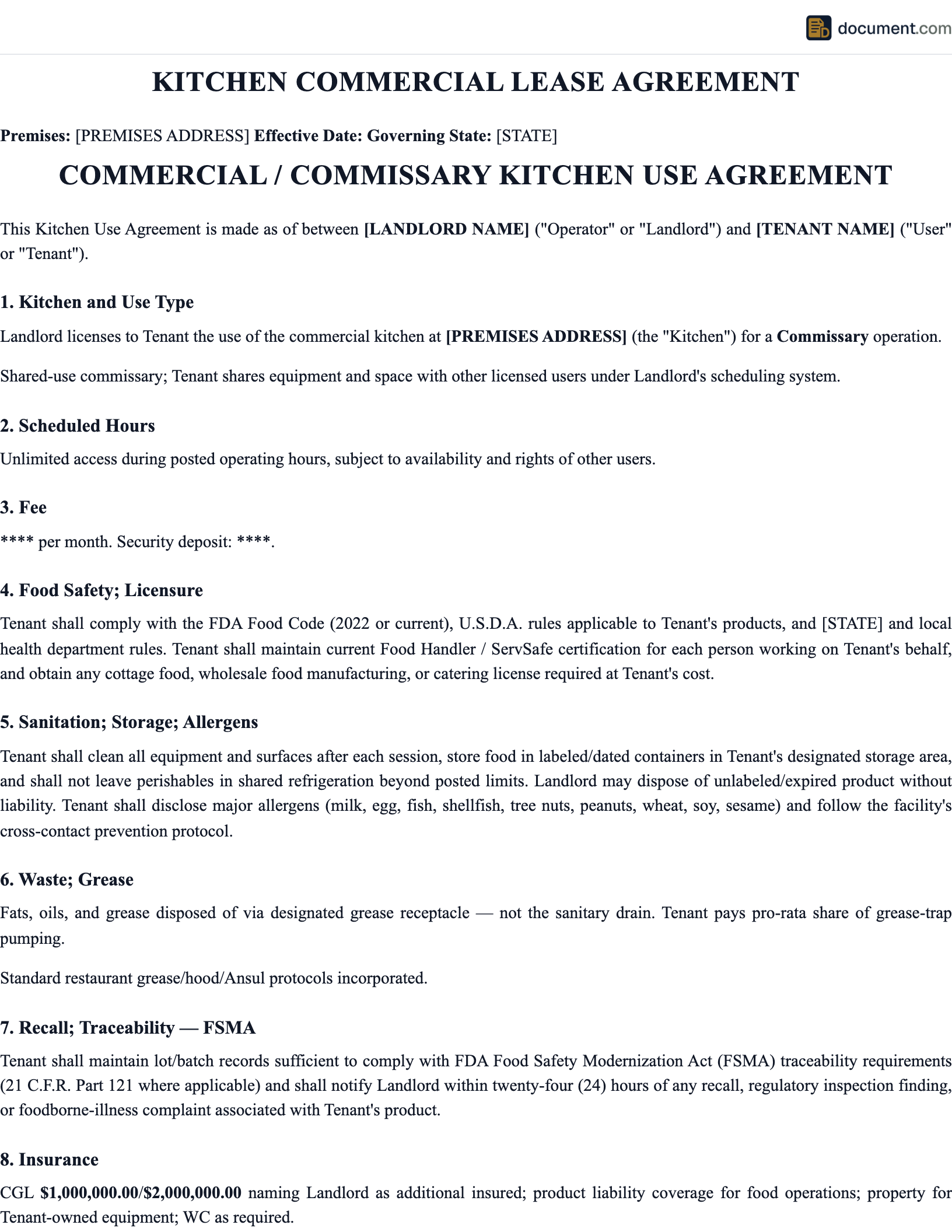
Sample Florida Kitchen Lease Agreement
Below is a preview of our Florida-specific template. Your customized document will include all fields and provisions required for filing in any Florida county.
KITCHEN LEASE AGREEMENT
STATE OF FLORIDA
Legal Document Template
FACILITY OWNER
Name: [Full Legal Name]
Facility: [Kitchen Name]
Address: [Facility Address]
KITCHEN TENANT
Name: [Full Legal Name / Business]
Business Type: [Restaurant/Catering/Production]
Health Permit #: [Number]
KITCHEN SPECIFICATIONS
Total SF: [Square Feet]
Schedule: [Days/Hours]
Equipment: [See Inventory Addendum]
Storage: [Allocated Space]
FINANCIAL TERMS
Monthly Rent: $[Amount]
Schedule Rate: $[Amount]/hour
Security Deposit: $[Amount]
Equipment Deposit: $[Amount]
Florida Kitchen Lease Agreement FAQ
Answers to common questions about filing a kitchen lease agreement in Florida, including requirements, fees, and procedures.
Official Florida Resources
Use these official state resources to verify requirements, find your local filing office, and access government forms for Florida.
Related Florida Documents
Depending on your situation, you may need additional documents alongside your Florida kitchen lease agreement.
Create your Florida Commercial Kitchen Lease Agreement in under 5 minutes.
Answer a few questions and download a Florida-compliant document, ready for the state agency.