
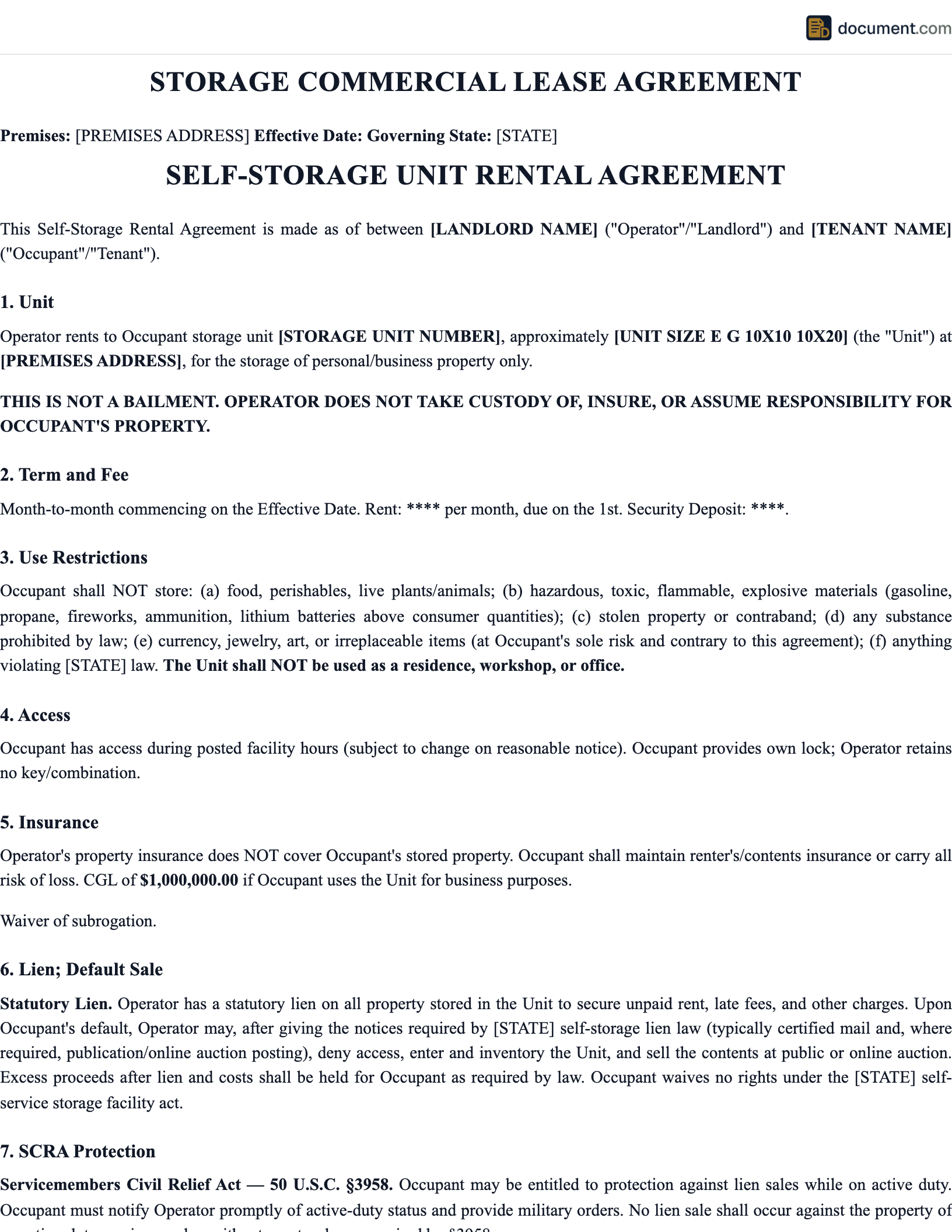



What Is a Storage Rental Agreement?
A storage rental agreement is a contract between a storage facility operator and a customer for the rental of a designated storage unit or space. This agreement governs the use of the storage unit, including access hours, payment terms, insurance requirements, the facility's lien rights on stored property, prohibited items, liability limitations, and the procedures for default and unit auction. Unlike traditional leases, storage agreements are typically month-to-month and governed by specific self-storage lien statutes in each state.
The self-storage industry has grown into a $40 billion market, with over 50,000 facilities across the United States. Storage agreements must comply with state-specific self-storage lien acts, which provide facility operators with the right to sell a tenant's stored property to recover unpaid rent. These lien statutes have specific notice requirements, waiting periods, and auction procedures that vary by state.
Key considerations in storage agreements include clearly defining the storage unit dimensions and location, establishing access hours and security protocols, requiring renter's insurance or offering tenant protection plans, listing prohibited items (hazardous materials, perishables, illegal goods), and explaining the default and lien enforcement process in compliance with state law.
Storage facility operators must balance customer service with asset protection. The agreement should be clear and understandable while also providing the legal protections needed to enforce payment obligations and maintain facility safety. State self-storage associations often provide model lease forms that comply with local requirements.
Storage Rental Agreement Form Preview
Our storage rental agreement form includes all the fields required for a valid document. Below is a preview of the key sections. Your customized document will be tailored to your state's specific requirements.
STORAGE RENTAL AGREEMENT
Legal Document Template
FACILITY OPERATOR
Company: [Storage Facility Name]
Address: [Facility Address]
Phone: [Contact Number]
License #: [Business License]
TENANT
Name: [Full Legal Name]
Address: [Mailing Address]
Phone: [Contact Number]
ID Type: [Driver's License/State ID]
UNIT DETAILS
Unit #: [Number]
Size: [Width x Depth]
Floor: [Ground/Upper]
Climate Controlled: [Yes/No]
Access Hours: [Hours]
FINANCIAL TERMS
Monthly Rent: $[Amount]
Payment Due: [Day of Month]
Late Fee: $[Amount] after [Grace Days]
Insurance: $[Amount]/month
Admin Fee: $[Amount]
Key Provisions
A storage rental agreement requires several important provisions to be legally effective and protect all parties involved. Review each provision carefully.
Unit Specifications
Describe the storage unit including unit number, dimensions, floor level, climate control status, electrical access, and any special features or restrictions specific to the unit.
Access and Security
Define access hours, gate code or key procedures, security camera coverage, facility rules for after-hours access, and restrictions on vehicle types or loading dock usage.
Insurance Requirements
Require the tenant to carry storage insurance or purchase the facility's tenant protection plan, specify minimum coverage amounts, and disclaim facility liability for stored property.
Lien Rights
Disclose the facility's lien rights under state self-storage act, including the process for enforcing liens, required notices, waiting periods, and auction procedures.
Prohibited Items
List items that cannot be stored including hazardous materials, flammable substances, perishable goods, live animals, illegal items, and anything that could damage other units or the facility.
Default and Late Fees
Establish the payment due date, grace period, late fee structure, overlocking procedures for delinquent accounts, and the timeline from default to lien enforcement.
When to Use A Storage Rental Agreement
Understanding when to use a storage rental agreement helps ensure you select the right document for your situation. Below are the most common use cases.
Personal Storage
Individuals storing household items during moves, renovations, or downsizing who need secure, accessible storage for furniture, boxes, and personal belongings.
Business Storage
Small businesses storing inventory, equipment, records, and seasonal merchandise in commercial storage units as a cost-effective alternative to warehouse space.
Vehicle Storage
Storage of cars, boats, RVs, motorcycles, and other vehicles in covered or uncovered storage spaces, often with specific requirements for insurance and registration.
Climate-Controlled Storage
Temperature and humidity-controlled units for sensitive items including documents, electronics, artwork, wine, pharmaceuticals, and musical instruments.
How to Draft A Storage Rental Agreement
Drafting a storage rental agreement involves several steps to ensure the document is legally sound, complete, and enforceable in your state. Follow these steps for a thorough and professional document.
Gather Required Information
Collect all necessary details including party names, addresses, property or subject matter descriptions, financial terms, and any state-specific requirements for your jurisdiction.
Select Your State
Choose your state to ensure the document includes all required provisions, disclosures, and formatting requirements mandated by your jurisdiction's laws.
Complete All Sections
Fill in every section of the document carefully, including all parties, terms, conditions, and any special provisions relevant to your specific situation.
Review and Sign
Review the completed document for accuracy, have all parties sign, and arrange for notarization or witnesses if required by your state. Keep copies for all parties.
Distribute and Store
Provide signed copies to all parties involved. Store the original in a secure location and file any required copies with the appropriate government offices or recording agencies.
Legal Requirements
Legal requirements for a storage rental agreement vary by state. Each state has its own statutes governing this type of document, including specific provisions, disclosures, notice periods, and execution requirements. Selecting your state ensures your document meets all local requirements.
Important Legal Notice
This document template is provided for informational purposes and general guidance. While designed to comply with common legal requirements, laws vary by state and locality. For significant transactions or complex situations, consult with a licensed attorney in your jurisdiction to ensure full compliance with applicable laws.
- State Compliance: Each state has specific legal requirements that must be met for this document to be enforceable
- Proper Execution: The document must be properly signed by all parties, with notarization or witnesses as required by your state
- Required Disclosures: Many states mandate specific disclosures or addenda that must accompany this type of document
- Filing Requirements: Some states require filing or recording with government offices for the document to be fully effective
Storage Rental by State
Select your state for a storage rental agreement customized to your jurisdiction's specific legal requirements, disclosures, and formatting standards.
Sample Storage Rental Agreement
Below is a preview of our storage rental agreement template. Your customized document will include all fields and provisions required for your specific state and situation.
STORAGE RENTAL AGREEMENT
Template Preview
FACILITY OPERATOR
Company: [Storage Facility Name]
Address: [Facility Address]
Phone: [Contact Number]
License #: [Business License]
TENANT
Name: [Full Legal Name]
Address: [Mailing Address]
Phone: [Contact Number]
ID Type: [Driver's License/State ID]
UNIT DETAILS
Unit #: [Number]
Size: [Width x Depth]
Floor: [Ground/Upper]
Climate Controlled: [Yes/No]
Access Hours: [Hours]
FINANCIAL TERMS
Monthly Rent: $[Amount]
Payment Due: [Day of Month]
Late Fee: $[Amount] after [Grace Days]
Insurance: $[Amount]/month
Admin Fee: $[Amount]
Frequently Asked Questions
Common questions about creating and using a storage rental agreement, including legal requirements, costs, and best practices.
Create your Commercial Storage Lease Agreement in under 10 minutes.
Answer a few questions and download a compliant, attorney-drafted document ready for your state.