



Alaska Kitchen Lease Agreement Overview
Operating a shared kitchen or ghost kitchen in Alaska comes with logistical challenges that do not exist in most other states. Equipment sourcing, refrigeration reliability during extreme cold, DEC permitting, and the realities of a seasonal business cycle all need to be addressed in a commercial kitchen lease. Alaska has no dedicated shared kitchen regulation separate from DEC food establishment requirements, so the lease carries the weight of defining every operational and liability term.
The shared kitchen market in Alaska is centered in Anchorage, where delivery demand supports ghost kitchen economics and commissary kitchens serve the city's catering and food production community. Outside Anchorage, shared kitchen access is limited, and operators in smaller communities may find themselves negotiating informal arrangements that still benefit from a written lease. Whether you are in Anchorage or a remote community, your kitchen lease should cover DEC permit status, equipment maintenance obligations, winterization responsibilities, cold storage allocation, and what happens during extended equipment outages.
$25
Filing fee
Required
Notarization
0
Witnesses required
District
Filing office
Alaska Kitchen Lease Requirements
A shared kitchen lease in Alaska needs to satisfy DEC compliance requirements and address the practical realities of operating a food production facility in a northern climate. The lease fills every gap that Alaska law does not cover.
Alaska Shared Kitchen Note
The Alaska DEC food establishment permit is required for any commercial kitchen open to multiple users. Verify the facility's current permit status and ask for the most recent inspection report before signing. The lease should also address how extended equipment outages and winter heating failures are handled, as these are real operational risks in Alaska.
Key Lease Provisions
- DEC Permit Confirmation: Confirm the facility holds an active Alaska DEC food establishment permit and specify who pays for permit renewals and compliance upgrades
- Equipment Maintenance and Downtime: Define the facility owner's obligation to maintain shared equipment and provide a rent credit or make-up scheduling for extended outages caused by equipment failure
- Winterization Obligations: Assign responsibility for maintaining adequate heating to prevent pipe freeze and kitchen equipment damage during Alaska's winter months
- Cold Storage Allocation: Define each tenant's refrigeration and freezer space by cubic feet or labeled zones, and address responsibility for temperature monitoring logs
- Inventory Loss Liability: Address who bears responsibility for tenant inventory losses caused by facility equipment failure, power outages, or winter building system failures
- Seasonal Rate Adjustment: For operations tied to Alaska's tourism cycle, consider a seasonal rate structure that reflects actual revenue periods
How to Execute an Alaska Kitchen Lease
Setting up a shared kitchen arrangement in Alaska involves confirming DEC compliance and addressing Alaska-specific operational risks before you begin using the space.
Verify DEC Permit and Inspection History
Ask for a copy of the facility's current Alaska DEC food establishment permit and the most recent inspection report. Any outstanding violations or compliance issues become your problem once you begin operating in the space.
Negotiate Storage, Schedule, and Equipment Terms
Agree in writing on your cold storage allocation, weekly time blocks, which equipment you can use during your sessions, how extended outages are handled, and what winterization and heating obligations apply to the facility owner.
Review and Sign the Lease
Both parties sign the kitchen lease. Ensure the lease covers inventory loss liability, insurance requirements, DEC permit obligations, cleaning standards, and termination rights for both parties including in the event of a health department closure.
Obtain Your Alaska Business License and Food Permits
Get your Alaska Business License from the Department of Commerce and confirm with Alaska DEC whether your specific operation type requires a separate food permit beyond the facility's existing permit.
Document Facility Condition and Begin Operations
Photograph shared equipment and storage areas before your first session and provide the facility owner a written record of any pre-existing damage. This protects you from liability for issues you did not cause.
Alaska Kitchen Lease Costs and Tax Considerations
Shared kitchen costs in Alaska are higher than Lower 48 averages because of freight, labor, and building operation costs. Budget accordingly and factor tax implications into your pricing.
| Cost Item | Typical Range |
|---|---|
| Shared Kitchen Hourly Rate (Anchorage) | $20 - $45/hour depending on equipment and facility |
| Monthly Block Rate | $500 - $1,200/month for reserved blocks |
| Alaska DEC Food Establishment Permit (facility) | $250 - $600/year |
| Alaska Business License | $50/year (biennial renewal) |
| Alaska Sales Tax on Food Sales | No state sales tax; local rates vary by municipality |
Alaska has no state sales tax, which benefits ghost kitchen operators selling prepared food. Local municipal sales taxes vary, with Anchorage currently having no local sales tax but many other Alaska communities imposing rates of 3% to 7% on food and beverage sales. Kitchen rental costs are generally deductible as a business expense. Keep clear records separating kitchen rental payments from food costs and equipment depreciation.
Sample Alaska Kitchen Lease Agreement
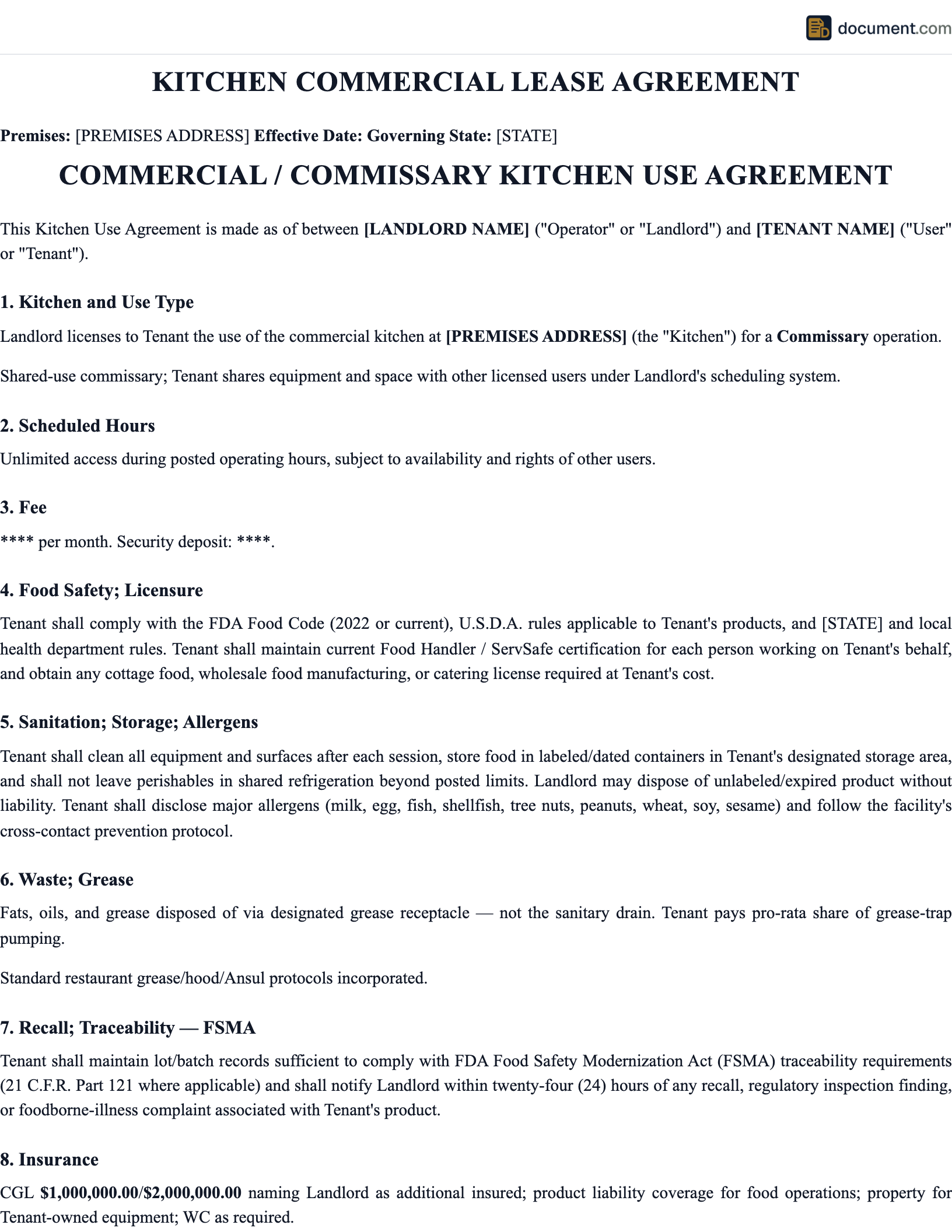
Below is a preview of our Alaska-specific template. Your customized document will include all fields and provisions required for filing in any Alaska county.
KITCHEN LEASE AGREEMENT
STATE OF ALASKA
Legal Document Template
FACILITY OWNER
Name: [Full Legal Name]
Facility: [Kitchen Name]
Address: [Facility Address]
KITCHEN TENANT
Name: [Full Legal Name / Business]
Business Type: [Restaurant/Catering/Production]
Health Permit #: [Number]
KITCHEN SPECIFICATIONS
Total SF: [Square Feet]
Schedule: [Days/Hours]
Equipment: [See Inventory Addendum]
Storage: [Allocated Space]
FINANCIAL TERMS
Monthly Rent: $[Amount]
Schedule Rate: $[Amount]/hour
Security Deposit: $[Amount]
Equipment Deposit: $[Amount]
Alaska Kitchen Lease Agreement FAQ
Answers to common questions about filing an kitchen lease agreement in Alaska, including requirements, fees, and procedures.
Official Alaska Resources
Use these official state resources to verify requirements, find your local filing office, and access government forms for Alaska.
Related Alaska Documents
Depending on your situation, you may need additional documents alongside your Alaska kitchen lease agreement.
Create your Alaska Commercial Kitchen Lease Agreement in under 5 minutes.
Answer a few questions and download a Alaska-compliant document, ready for the state agency.