



Wisconsin Kitchen Lease Agreement Overview
Wisconsin's shared kitchen market is anchored by Milwaukee and Madison, two genuinely distinct food cultures that drive different types of production demand. Milwaukee has the larger market, shaped by major event venues, Summerfest, a strong catering sector, and a growing food truck community that uses shared kitchens as their production base. The city's industrial heritage has left a stock of affordable commercial kitchen space that tends to keep rates accessible compared to coastal markets. Madison's market is tied to the University of Wisconsin, the Capitol district's professional workforce, and one of the most active farmers market ecosystems in the Midwest at the Dane County Farmers Market. The Wisconsin Department of Agriculture, Trade and Consumer Protection (WDATCP) licenses food establishments under ATCP 75, and facilities serving both retail and wholesale distribution channels sometimes need to navigate both WDATCP retail and food processing plant requirements.
Wisconsin's food identity is built around dairy production, craft brewing, and a supper club tradition that creates demand for specific specialty food categories that shared kitchen operators need to plan around. Artisan cheese production, sausage making, and fermented dairy products all have specific WDATCP processing requirements beyond standard commercial kitchen operations, and not every shared kitchen is equipped or licensed to support those categories. Wisconsin exempts most grocery food from the 5% state sales tax, which helps specialty food producers competing in retail channels, but prepared food is taxable at the full rate. Winter cold creates scheduling and cold storage challenges that need to be addressed in lease terms rather than handled informally.
$30
Filing fee
Required
Notarization
0
Witnesses required
Register
Filing office
Wisconsin Requirements
Wisconsin shared kitchen leases need to address WDATCP licensing, Summerfest and major Milwaukee event scheduling provisions, Wisconsin winter cold storage challenges, and the state's distinctive dairy and artisan food production requirements.
Wisconsin Summerfest and Dairy Production Note
Milwaukee shared kitchens face intense scheduling demand in the three to four weeks surrounding Summerfest in late June and early July. Operators who depend on expanded kitchen access during this window should secure priority scheduling provisions in writing before signing. Separately, operators producing cheese, cultured dairy products, or sausage may need a WDATCP food processing plant license in addition to a standard food establishment license, since Wisconsin dairy and meat regulations apply specific requirements beyond the standard shared kitchen framework.
Document Requirements
- WDATCP License Verification: Confirm the facility holds a current WDATCP food establishment license and that your production type is covered, including commissary approval for mobile food unit operations
- Summerfest and Event Scheduling: Define reserved hours and address how scheduling conflicts are resolved during Summerfest and major Milwaukee venue event weekends
- Cold Storage Allocation and Winter Operations: Assign specific refrigerator and freezer capacity, set temperature standards, and address loading dock and building envelope challenges during Wisconsin's severe winter months
- Insurance Requirements: Carry general liability of at least $1 million per occurrence naming the facility as additional insured, plus product liability for packaged food products
- Permitted Use and Dairy/Meat Processing: Review the permitted use clause to confirm it covers your product categories; confirm whether dairy, sausage, or fermented product production requires a separate WDATCP food processing plant license
How to File in Wisconsin
Executing a shared kitchen lease in Wisconsin involves confirming WDATCP licensing, inspecting the facility, and negotiating terms that address Summerfest scheduling demands, winter operations, and Wisconsin's distinctive artisan food production requirements. Follow these steps.
Verify WDATCP License Status and Commissary Coverage
Request a copy of the facility's current WDATCP food establishment license and confirm it covers your production type. If you produce dairy products, sausage, or other specialty items that require a food processing plant license, confirm whether the facility's license covers those categories. Verify commissary approval for food truck operations before signing.
Inspect Equipment and Cold Storage Systems
Walk through all equipment you will use, test cold storage temperatures, and check the facility's building envelope for cold storage units near exterior walls that may be affected by Wisconsin's severe winters. Document any maintenance issues and confirm the facility has protocols for loading dock operations during winter weather.
Negotiate Summerfest and Seasonal Scheduling Provisions
Finalize your reserved hours and confirm in writing how the facility handles scheduling during the Summerfest window in late June and early July. For Madison operators, address the Dane County Farmers Market summer season. Consider whether a reduced monthly rate during Wisconsin's slower winter catering months makes sense as part of a longer-term lease structure.
Execute the Lease and Obtain Insurance
Sign the agreement and deliver a certificate of insurance naming the facility as additional insured. Register for a Wisconsin seller's permit through the Department of Revenue if you will be selling taxable prepared food or catering, and confirm the tax treatment of your specific products before pricing your inventory.
Complete WDATCP Compliance and Begin Production
Obtain your individual WDATCP food establishment license or food processing plant license as required for your production category. Submit commissary documentation for mobile unit operations, complete your facility orientation, confirm cold storage assignments, and coordinate your first scheduled production run with the facility manager.
Wisconsin Fees & Costs
Wisconsin shared kitchen costs are moderate, with Milwaukee carrying higher rates than Madison and smaller markets. Here is a breakdown of typical costs for kitchen operators in Wisconsin.
| Fee / Cost | Amount |
|---|---|
| WDATCP Food Establishment License | $110 - $600 depending on license category and production volume |
| Operator Liability Insurance | $400 - $1,800 annually depending on coverage limits and product type |
| Kitchen Rental Rate (Milwaukee) | $15 - $30 per hour or $380 - $1,200 monthly block |
| Kitchen Rental Rate (Madison) | $14 - $26 per hour or $320 - $1,000 monthly block |
| Wisconsin Sales Tax on Prepared Food | 5% state rate plus 0.5% Milwaukee County; grocery food generally exempt |
| Attorney Review (optional) | $300 - $700 for lease review and licensing guidance |
Sample Wisconsin Kitchen Lease Agreement
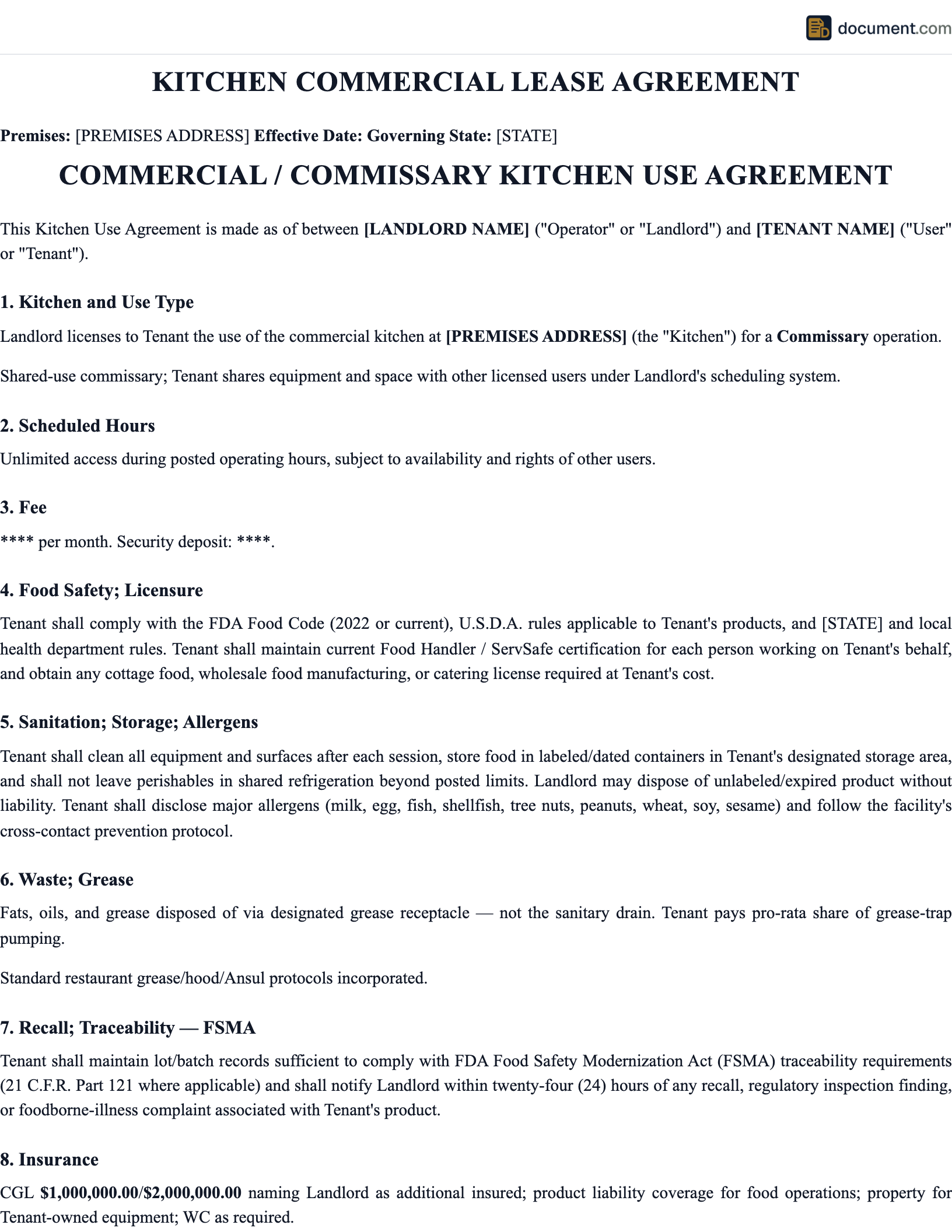
Below is a preview of our Wisconsin-specific template. Your customized document will include all fields and provisions required for filing in any Wisconsin county.
KITCHEN LEASE AGREEMENT
STATE OF WISCONSIN
Legal Document Template
FACILITY OWNER
Name: [Full Legal Name]
Facility: [Kitchen Name]
Address: [Facility Address]
KITCHEN TENANT
Name: [Full Legal Name / Business]
Business Type: [Restaurant/Catering/Production]
Health Permit #: [Number]
KITCHEN SPECIFICATIONS
Total SF: [Square Feet]
Schedule: [Days/Hours]
Equipment: [See Inventory Addendum]
Storage: [Allocated Space]
FINANCIAL TERMS
Monthly Rent: $[Amount]
Schedule Rate: $[Amount]/hour
Security Deposit: $[Amount]
Equipment Deposit: $[Amount]
Wisconsin Kitchen Lease Agreement FAQ
Answers to common questions about filing a kitchen lease agreement in Wisconsin, including requirements, fees, and procedures.
Official Wisconsin Resources
Use these official state resources to verify requirements, find your local filing office, and access government forms for Wisconsin.
Related Wisconsin Documents
Depending on your situation, you may need additional documents alongside your Wisconsin kitchen lease agreement.
Create your Wisconsin Commercial Kitchen Lease Agreement in under 5 minutes.
Answer a few questions and download a Wisconsin-compliant document, ready for the state agency.