



California Kitchen Lease Agreement Overview
Shared kitchen facilities in California operate under county environmental health department permits and are central to the state's large food truck, catering, and ghost kitchen economy. California's CDPH commissary requirements mean that mobile food facility operators and many catering businesses must use a licensed commissary as their base of operations, creating consistent demand for shared kitchen space. The facility must hold a county health permit, and individual users who operate food trucks or catering businesses typically need their commissary use documented as part of their own county permit.
The Los Angeles ghost kitchen market is one of the most developed in the country, with major operators offering shared production space across LA County. San Francisco and Oakland have smaller but active shared kitchen markets. In both regions, Cal/OSHA heat illness prevention requirements apply to employers using kitchen space with workers, and California's high minimum wages make per-production-hour labor costs among the highest in the United States. Shared kitchen leases need to address county health permit coverage, CDPH commissary documentation, refrigeration failure liability, scheduling, storage allocation, and equipment maintenance responsibility before signing.
$15
Filing fee
Required
Notarization
0
Witnesses required
County
Filing office
California Requirements
A California shared kitchen lease needs to confirm the facility's county environmental health permit, address CDPH commissary documentation for food truck and catering tenants, cover refrigeration failure liability, define storage allocation and scheduling, and address Cal/OSHA obligations for tenants with employees using the space.
California Shared Kitchen Note
The facility must hold a current county environmental health permit, and individual tenants using the space as a CDPH commissary for food trucks or catering operations typically need to document the commissary relationship as part of their own county permit. Confirm with your county environmental health department that the facility's permit covers your specific use category. Cal/OSHA heat illness prevention requirements apply to employers using kitchen space with employees during periods of elevated indoor temperatures.
Key Lease Provisions
- County Environmental Health Permit Coverage: The lease should state that the facility holds a current county permit and include a facility obligation to notify tenants of any permit change or suspension that would affect their ability to use the space as a licensed commissary
- CDPH Commissary Documentation: Specify that the facility will provide documentation letters for tenants who need commissary verification for their food truck, cottage food, or catering permits with their county environmental health department
- Refrigeration Failure Liability: Address whether the facility or tenant bears liability for inventory loss caused by equipment failures not due to tenant misuse, and define the facility's notification obligation when equipment is out of service before a scheduled block
- Scheduling and Equipment Access: Define prep block scheduling, advance booking requirements, and what equipment is available during each block to avoid conflicts among tenants
- Storage Allocation: Specify dedicated dry, refrigerated, and frozen storage in shelf or bin dimensions, with a dispute resolution process for storage conflicts
- Permitted Uses and Zoning: Confirm that the facility's use permit or conditional use permit from the local planning department covers the shared kitchen use, since some California cities require specific approval for commercial kitchens serving multiple users
How to Execute a California Shared Kitchen Lease
Signing a shared kitchen lease in California requires confirming the facility's permit coverage, verifying your own licensing needs with the county, and getting the operational terms in writing before your first prep session.
Verify the Facility's County Health Permit
Request a copy of the facility's current county environmental health permit before signing. Confirm with your county environmental health department that the facility's permit category covers your intended use, particularly if you need the space to qualify as a CDPH commissary for a food truck, catering operation, or cottage food business operating beyond direct-to-consumer limits.
Negotiate Storage, Scheduling, and Equipment Liability
Get your storage allocation in writing with specific dimensions for refrigerated, frozen, and dry storage. Confirm your scheduling blocks in the lease rather than in a separate policy that can change. Clarify whether the facility carries equipment breakdown insurance and who bears liability for inventory loss during equipment failures that were not caused by your misuse.
Review and Sign the Lease
Have a California attorney review the lease if your operation depends significantly on commissary documentation, involves significant product inventory, or includes employees subject to California's high minimum wage and Cal/OSHA standards. California commercial lease law is detailed and provides minimal implied protections for tenants.
Obtain Your California Business License and Food Permits
Register your business with the California Secretary of State if operating as an LLC or corporation, obtain your local city or county business license, and secure any county environmental health permit endorsements needed for your specific food production category. If you employ workers in the kitchen, register with the California Employment Development Department for payroll taxes and review your Cal/OSHA obligations.
Document the Facility Condition at Move-In
Photograph and document your dedicated storage area and any shared equipment you will use before your first session. Keep records of every county health inspection and commissary letter the facility provides. These documents are your evidence in any deposit dispute at lease end and your operational record for county compliance purposes.
California Shared Kitchen Costs
The figures below reflect typical costs for shared kitchen tenants in California. Rates vary between LA, the Bay Area, and smaller California markets.
| Fee / Cost | Typical Range |
|---|---|
| Hourly Kitchen Rate | $20 - $50/hour depending on market and facility quality |
| Monthly Membership | $400 - $1,200/month for block-hour packages in LA/Bay Area |
| County Environmental Health Permit (facility) | $500 - $1,500/year (facility operator bears this cost) |
| California Business License | $50 - $500/year depending on city and gross revenue |
| Cold Storage Allocation | $75 - $250/month for dedicated refrigerated or frozen space |
| Commercial General Liability Insurance | $600 - $2,000/year (most CA facilities require $1M per occurrence) |
California imposes sales tax on prepared food sold at retail. The statewide base rate is 7.25%, and local district taxes add on top of that in most California cities. Ghost kitchen and catering operations selling through delivery apps or at events should confirm with the California Department of Tax and Fee Administration which transactions are subject to sales tax in their specific business model and location.
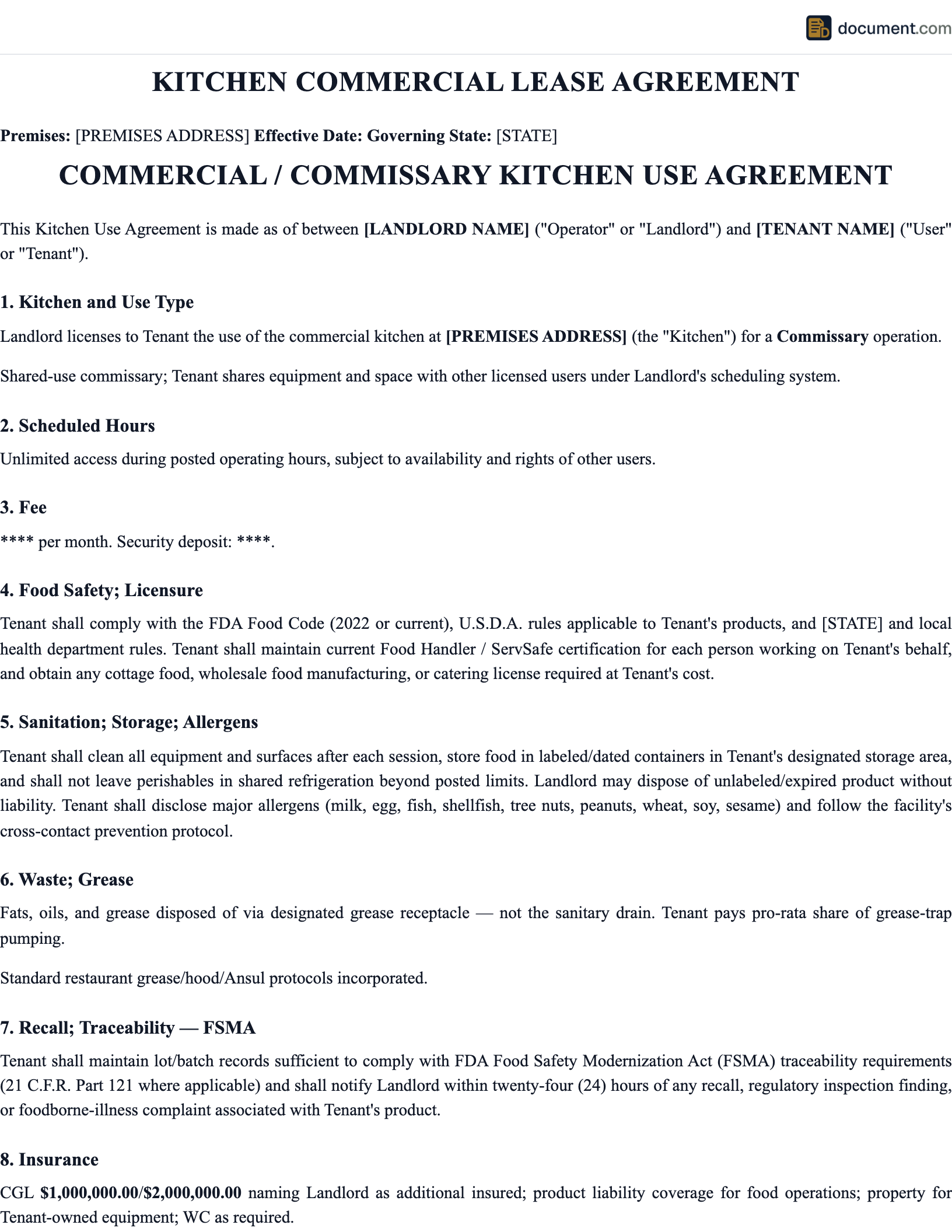
Sample California Kitchen Lease Agreement
Below is a preview of our California-specific template. Your customized document will include all fields and provisions required for filing in any California county.
KITCHEN LEASE AGREEMENT
STATE OF CALIFORNIA
Legal Document Template
FACILITY OWNER
Name: [Full Legal Name]
Facility: [Kitchen Name]
Address: [Facility Address]
KITCHEN TENANT
Name: [Full Legal Name / Business]
Business Type: [Restaurant/Catering/Production]
Health Permit #: [Number]
KITCHEN SPECIFICATIONS
Total SF: [Square Feet]
Schedule: [Days/Hours]
Equipment: [See Inventory Addendum]
Storage: [Allocated Space]
FINANCIAL TERMS
Monthly Rent: $[Amount]
Schedule Rate: $[Amount]/hour
Security Deposit: $[Amount]
Equipment Deposit: $[Amount]
California Kitchen Lease Agreement FAQ
Answers to common questions about filing a kitchen lease agreement in California, including requirements, fees, and procedures.
Official California Resources
Use these official state resources to verify requirements, find your local filing office, and access government forms for California.
Related California Documents
Depending on your situation, you may need additional documents alongside your California kitchen lease agreement.
Create your California Commercial Kitchen Lease Agreement in under 5 minutes.
Answer a few questions and download a California-compliant document, ready for the state agency.