



Connecticut Kitchen Lease Agreement Overview
Connecticut's shared kitchen and ghost kitchen market is shaped by the state's high cost of commercial real estate in the Stamford corridor and its active food entrepreneur communities in Hartford and New Haven. The state's reputation for strict health code enforcement means shared kitchen operators face detailed commissary certification requirements and frequent unannounced inspections. A kitchen lease that doesn't account for Connecticut DPH requirements and local health department enforcement patterns will leave operators exposed.
A Connecticut kitchen lease must address commissary certification status, individual operator permitting requirements, cold storage allocation and maintenance, prep schedule management among multiple tenants, health inspection access and violation remediation responsibility, insurance requirements for each operator, and what happens if the facility's health permit is suspended or revoked during the lease term. Connecticut local health departments each have slightly different processes for approving shared kitchen arrangements, so confirming requirements with the specific municipality is essential before executing.
$60
Filing fee
Required
Notarization
2
Witnesses required
Town
Filing office
Connecticut Requirements
Connecticut kitchen leases must address the state's strict DPH-administered health code, commissary certification requirements enforced at the local level, and multi-operator scheduling obligations. Connecticut's regulatory approach is more demanding than many neighboring states, and the lease must reflect that reality.
Connecticut Specific Note
Connecticut local health departments conduct detailed audits of shared kitchen commissary arrangements. The facility operator must maintain records of all authorized operators, their food categories, and their scheduled hours. An unauthorized operator found using the kitchen during an inspection can result in enforcement action against the facility's permit. The kitchen lease must identify all authorized operators and include a formal process for adding or removing operators that triggers a facility notification to the health department.
Document Requirements
- Commissary Certification: Confirm the facility's commissary certification covers each authorized operator's food categories; Connecticut DPH requires category-level approval at shared kitchens
- Operator Record-Keeping: Obligate each tenant to provide accurate scheduling and food category information for the facility's compliance records
- Cold Storage Allocation: Document refrigeration and freezer zones, minimum temperatures, repair responsibility, and spoilage liability
- Prep Schedule: Attach a written production schedule as a lease exhibit, with a defined process for conflicts and consequences for schedule overruns
- Permit Suspension Remedy: Include a tenant right to abate rent or terminate if the facility's health permit is suspended or revoked for more than a defined period
How to Execute a Connecticut Kitchen Lease
Connecticut kitchen leases require regulatory verification before signing and ongoing compliance management throughout the term. Work through these steps to protect your operations from the start.
Verify Commissary Certification and Facility Permit Status
Request a copy of the facility's current food service establishment permit and confirm its commissary certification covers your food categories. Contact the local health department to confirm the facility is in good standing and that your intended use will be approved under the existing permit.
Negotiate Connecticut-Specific Provisions
Address commissary certification obligations, operator record-keeping duties, cold storage allocation and maintenance, prep schedule with conflict resolution, health inspection access and violation responsibility, insurance requirements, and rent abatement or termination rights if the facility permit is suspended.
Execute the Lease with Required Formalities
Both parties sign with 2 witnesses and notarization as required in Connecticut. Attach the prep schedule, cold storage allocation plan, and any other exhibits as part of the executed agreement.
Apply for Your Individual Food Service Permit
Apply to your municipality's health department for your own food service permit listing the shared kitchen as your commissary. In Connecticut, permit processing can take several weeks, particularly in Hartford and New Haven. Submit your application promptly after signing.
Maintain Ongoing Compliance Records
Keep your signed lease, commissary agreement, and individual food service permit at the facility during all production sessions. Connecticut inspectors verify these documents during inspections. Notify the facility operator promptly of any changes to your food categories, operating hours, or employee status.
Connecticut Fees & Costs
Below is a breakdown of the typical costs associated with filing this document in Connecticut. Actual fees may vary by county.
| Fee / Cost | Amount |
|---|---|
| Filing Fee | $60 per document |
| Notarization | $5 - $25 per signature |
| Certified Copy | $1 - $10 per page |
| Attorney Review (optional) | $150 - $500 |
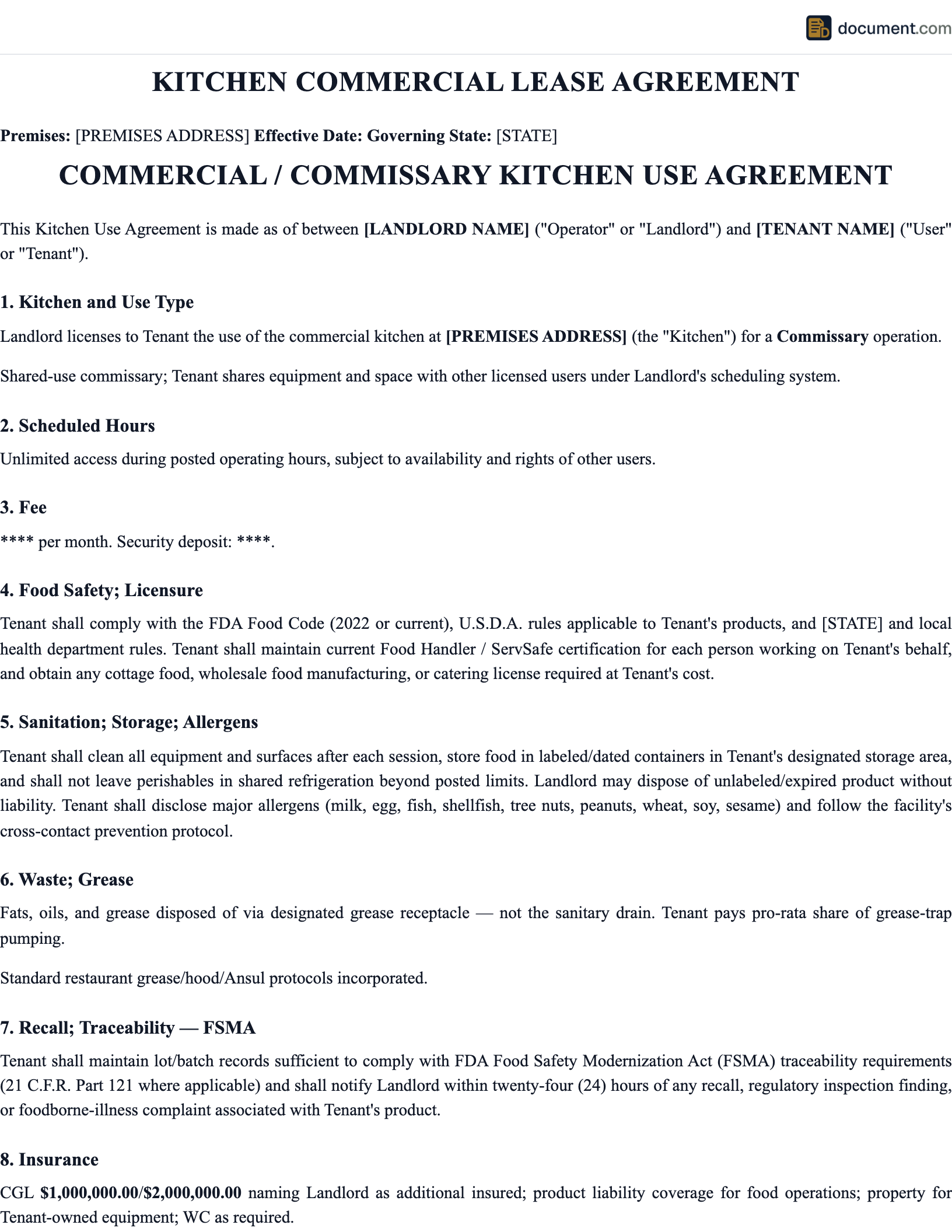
Sample Connecticut Kitchen Lease Agreement
Below is a preview of our Connecticut-specific template. Your customized document will include all fields and provisions required for filing in any Connecticut county.
KITCHEN LEASE AGREEMENT
STATE OF CONNECTICUT
Legal Document Template
FACILITY OWNER
Name: [Full Legal Name]
Facility: [Kitchen Name]
Address: [Facility Address]
KITCHEN TENANT
Name: [Full Legal Name / Business]
Business Type: [Restaurant/Catering/Production]
Health Permit #: [Number]
KITCHEN SPECIFICATIONS
Total SF: [Square Feet]
Schedule: [Days/Hours]
Equipment: [See Inventory Addendum]
Storage: [Allocated Space]
FINANCIAL TERMS
Monthly Rent: $[Amount]
Schedule Rate: $[Amount]/hour
Security Deposit: $[Amount]
Equipment Deposit: $[Amount]
Connecticut Kitchen Lease Agreement FAQ
Answers to common questions about filing a kitchen lease agreement in Connecticut, including requirements, fees, and procedures.
Official Connecticut Resources
Use these official state resources to verify requirements, find your local filing office, and access government forms for Connecticut.
Related Connecticut Documents
Depending on your situation, you may need additional documents alongside your Connecticut kitchen lease agreement.
Create your Connecticut Commercial Kitchen Lease Agreement in under 5 minutes.
Answer a few questions and download a Connecticut-compliant document, ready for the state agency.