



Rhode Island Kitchen Lease Agreement Overview
Rhode Island's commercial kitchen market is concentrated in Providence, where the culinary arts community around Johnson and Wales University and the state's active catering and event industry generate consistent demand for shared production space. The Rhode Island Department of Health licenses food establishments statewide, and the state's compact geography means a single Providence kitchen can serve operators across the entire state. Rhode Island's 8% meals tax applies to prepared food sold at retail or at events, and kitchen operators need to confirm their sales model's tax treatment before going to market.
Rhode Island's coastal economy drives a strong wedding and events catering market, creating seasonal peaks in kitchen demand during summer months that affect scheduling and cold storage availability at shared facilities. Operators planning catering-intensive summers should negotiate shift access and cold storage provisions that reflect that peak demand before signing. Rhode Island's small-state geography also makes non-compete provisions in kitchen leases commercially meaningful in a way they might not be in larger states, so lease language around exclusivity and competitive restrictions deserves careful review.
$40
Filing fee
Required
Notarization
0
Witnesses required
City
Filing office
Rhode Island Requirements
A Rhode Island commercial kitchen lease must address RIDOH facility licensing, operator-level compliance, seasonal scheduling for summer catering demand, cold storage allocation, and non-compete provisions that carry more weight in Rhode Island's small-state market than in larger states.
Rhode Island 8% Meals Tax on Prepared Food
Rhode Island imposes an 8% meals and beverage tax on prepared food sold for on-premise consumption and on food sold at catered events. Kitchen operators who sell directly to consumers or provide staffed catering services must collect and remit this tax. Confirm your sales model's tax treatment with the Rhode Island Division of Taxation before your first sale, as the 8% rate is among the higher prepared food taxes in New England.
Document Requirements
- RIDOH Facility License: Confirm the facility holds a current Rhode Island Department of Health food establishment license; identify who maintains facility-level compliance throughout the lease term
- Non-Compete Review: Review any exclusivity or non-compete provisions carefully; in Rhode Island's small-state market, restrictions on serving competing clients can be commercially significant statewide
- Summer Catering Season Access: Negotiate shift access and cold storage allocation provisions that reflect peak summer catering demand in Rhode Island's coastal wedding and events market
- Insurance Requirements: Specify minimum general liability and product liability coverage, require the facility owner as additional insured, and address liability allocation for food safety incidents among multiple operators
- Shellfish Handling Restrictions: Confirm whether the facility license covers shellfish handling and processing, which may require separate RIDOH certification under Rhode Island's shellfish regulations
How to File in Rhode Island
Executing a commercial kitchen lease in Rhode Island involves confirming RIDOH facility licensing, negotiating seasonal catering access provisions, and reviewing non-compete language before signing.
Confirm RIDOH Facility License and Commissary Coverage
Before signing, confirm the facility holds a current RIDOH food establishment license. If you are a food truck or catering vehicle operator, confirm the facility's license covers your vehicle and provides the documentation required for your RIDOH operating permit.
Inspect Equipment and Cold Storage Availability
Inspect equipment condition and available cold storage before signing. For summer catering operators, confirm that cold storage allocation during peak season is sufficient for your volume. Review the refrigeration maintenance responsibility provisions in the lease.
Negotiate Scheduling, Non-Compete, and Seasonal Access
Define shift windows and storage allocation. Review any non-compete or exclusivity provisions carefully given Rhode Island's small-state market. Negotiate summer catering season shift priority if your business is heavily seasonal.
Execute Lease and Obtain Insurance Coverage
Execute the lease and obtain required general liability and product liability insurance with the facility owner named as additional insured. Rhode Island requires workers' compensation for employees. Provide the certificate of insurance before occupancy begins.
Register for Meals Tax and Begin Production
Register with the Rhode Island Division of Taxation for meals and beverage tax if your business model involves selling prepared food directly to consumers or providing staffed catering services. Confirm food handler certifications are current and begin production within your scheduled hours.
Rhode Island Fees & Costs
Rhode Island commercial kitchen costs include RIDOH facility licensing fees paid by the facility owner, operator insurance requirements, and kitchen rental rates that reflect the Providence market's competitive urban pricing.
| Fee / Cost | Amount |
|---|---|
| RIDOH Food Establishment License (Facility Level) | $100 - $500 annually depending on establishment class; paid by facility owner |
| Operator Insurance (General and Product Liability) | $500 - $2,000 annually depending on production type and revenue volume |
| Kitchen Rental Rate (Providence) | $18 - $32 per hour for hourly access; $400 - $1,400 monthly for dedicated shift agreements |
| Attorney Review | $300 - $650 for kitchen lease review with RIDOH compliance, non-compete analysis, and seasonal access provisions |
Sample Rhode Island Kitchen Lease Agreement
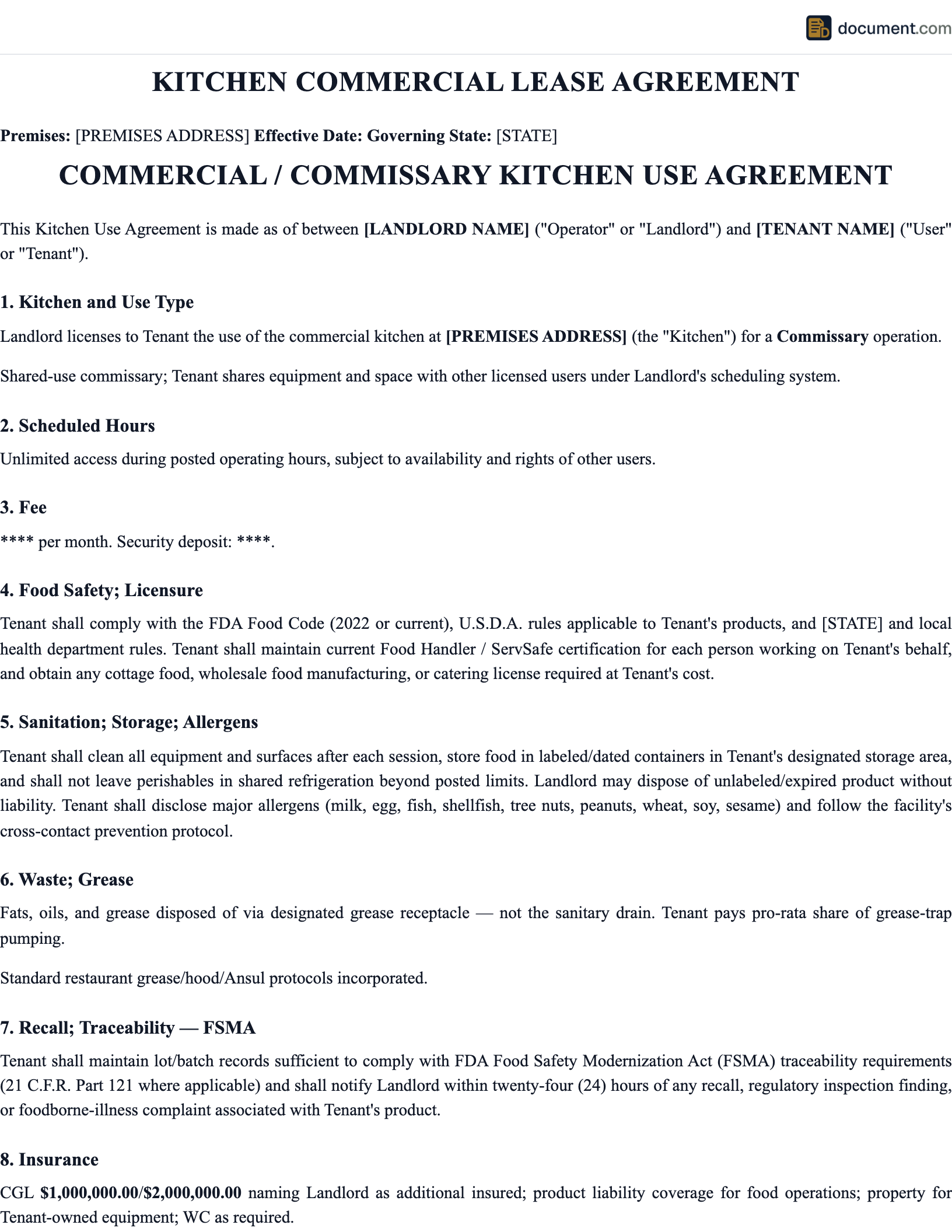
Below is a preview of our Rhode Island-specific template. Your customized document will include all fields and provisions required for filing in any Rhode Island county.
KITCHEN LEASE AGREEMENT
STATE OF RHODE ISLAND
Legal Document Template
FACILITY OWNER
Name: [Full Legal Name]
Facility: [Kitchen Name]
Address: [Facility Address]
KITCHEN TENANT
Name: [Full Legal Name / Business]
Business Type: [Restaurant/Catering/Production]
Health Permit #: [Number]
KITCHEN SPECIFICATIONS
Total SF: [Square Feet]
Schedule: [Days/Hours]
Equipment: [See Inventory Addendum]
Storage: [Allocated Space]
FINANCIAL TERMS
Monthly Rent: $[Amount]
Schedule Rate: $[Amount]/hour
Security Deposit: $[Amount]
Equipment Deposit: $[Amount]
Rhode Island Kitchen Lease Agreement FAQ
Answers to common questions about filing a kitchen lease agreement in Rhode Island, including requirements, fees, and procedures.
Official Rhode Island Resources
Use these official state resources to verify requirements, find your local filing office, and access government forms for Rhode Island.
Related Rhode Island Documents
Depending on your situation, you may need additional documents alongside your Rhode Island kitchen lease agreement.
Create your Rhode Island Commercial Kitchen Lease Agreement in under 5 minutes.
Answer a few questions and download a Rhode Island-compliant document, ready for the state agency.