



North Dakota Kitchen Lease Agreement Overview
North Dakota's shared kitchen market is smaller and less developed than those in major metropolitan states, but serves real and growing demand from caterers, food truck operators, oil patch catering operations, and small food producers. Fargo is the state's most developed shared kitchen market, with a handful of purpose-built facilities serving multiple tenant operators. Bismarck has a more limited but active market driven by the state government workforce and a growing local food economy. In western North Dakota, catering commissary demand from the Bakken oil field creates a distinctive market need that differs substantially from urban ghost kitchen operations.
North Dakota food establishment licensing is administered at the state level by the NDDOH, which provides regulatory consistency across counties. Tenants who use a shared kitchen as their base of operations must obtain individual food establishment licenses tied to the specific facility. The state's extreme climate creates unique lease considerations: refrigeration equipment, HVAC systems, and heating obligations require specific attention in a state where temperatures regularly reach well below zero and where equipment failures during winter months create immediate operational and food safety crises.
NDDOH
Food licensing
State
Permitting level
Bakken
Catering demand
Winter
HVAC provisions key
North Dakota Kitchen Lease Requirements
A North Dakota kitchen lease must address food safety permitting, climate-specific infrastructure obligations, and operational logistics for a shared facility. Standard commercial lease forms do not capture these needs.
Bakken Region Lease Caution
Kitchen leases serving Bakken oil patch catering operations carry significant revenue volatility risk. If a catering contract with an oil field client terminates due to a production downturn, the caterer's lease obligations continue unless the lease specifically addresses early termination rights. Negotiate for early termination provisions tied to revenue thresholds or catering contract loss rather than assuming market conditions will remain stable throughout the lease term.
Key Lease Requirements
- NDDOH Permit Status: Confirm the facility holds a current NDDOH food establishment license and that it covers the tenant's intended production type before signing
- Commissary Authorization: For caterers using the kitchen as their permitted base of operations, the lease should explicitly authorize this use and require the landlord to cooperate with NDDOH inspections tied to the caterer's license
- Cold Storage Allocation: Define each tenant's refrigerator and freezer allocation by labeled zone or cubic footage, with temperature monitoring responsibilities assigned to a specific party
- HVAC and Heating Obligations: Establish minimum temperature standards the landlord must maintain in the facility, emergency repair timelines, and tenant remedies for HVAC failures during winter months
- Permit Suspension Remedies: Include specific tenant remedies if the facility's NDDOH permit is suspended, revoked, or subject to a corrective action that limits tenant operations
- Bakken Contract Termination: For oil patch catering tenants, include an early termination right triggered by loss of the primary catering contract that supports the tenancy
How to Execute a North Dakota Kitchen Lease
Executing a North Dakota kitchen lease requires regulatory and infrastructure due diligence that is specific to the state's shared kitchen environment.
Verify the Facility's NDDOH License Status
Contact the NDDOH to confirm the facility holds a current food establishment license and that the license covers your intended production type. Ask about any recent inspection history, outstanding correction orders, or complaints. A facility with an active corrective action can affect your own ability to obtain a license tied to the premises.
Tour the Facility and Assess Climate-Readiness
Walk through the kitchen during an active operating period. Verify cold storage temperatures, hood ventilation function, HVAC capacity, and the condition of all shared equipment. In North Dakota, pay particular attention to the heating system capacity and the condition of door seals on walk-in coolers and freezers, which take more wear in cold climates. Photograph all pre-existing equipment conditions before signing.
Negotiate Operational and Climate Provisions
Push for explicit language addressing your prep schedule, cold and dry storage allocation, commissary authorization if you are a caterer, permit suspension remedies, and winter heating obligations. Bakken catering operators should negotiate early termination provisions tied to catering contract loss. Ghost kitchen operators should address delivery platform pickup logistics and whether competing concepts will be permitted in the same facility.
Execute the Lease
Both parties should sign a written agreement covering all operational and regulatory provisions. North Dakota law requires leases for more than one year to be in writing to be enforceable. Retain fully executed copies. Have an attorney review the agreement before signing, particularly if you are a Bakken-region caterer or an operator with significant equipment investment planned.
Apply for Your NDDOH License and Begin Operations
After executing the lease, apply to the NDDOH for your individual food establishment license. Bring your signed lease as documentation of your right to operate at the facility. NDDOH will conduct a pre-opening inspection before issuing the license, so allow time for this process in your planning. Maintain session logs, cleaning records, and equipment inspection records throughout the lease term.
Tax Implications for North Dakota Kitchen Tenants
North Dakota kitchen tenants face state and federal tax considerations that vary by production type and business structure.
| Tax Issue | North Dakota Treatment |
|---|---|
| ND Sales Tax on Food Sales | North Dakota imposes a 5% state sales tax on prepared food sold for immediate consumption. Sales of grocery-type food items may be exempt or taxed at a lower rate. Ghost kitchen operators selling through delivery platforms need to understand how their sales are classified under ND tax law and whether the platform handles tax collection. |
| Lease Rent Deductibility | Kitchen rent paid by a business entity is deductible as an ordinary business expense for federal and ND state income tax purposes. Oil patch catering operators whose revenue swings may result in losses in some years should work with a tax advisor familiar with ND law on how to handle lease costs during low-revenue periods. |
| Security Deposit Treatment | Security deposits are not income to the landlord until applied, and are not a deductible expense for the tenant until forfeited or applied. Ensure the lease addresses the conditions under which deposits can be retained and whether deposits earn interest during the tenancy. |
| Equipment Depreciation | Equipment installed by the tenant that remains removable at lease end is generally treated as personal property, which may qualify for Section 179 expensing or bonus depreciation under federal tax law. Consult a tax advisor about how equipment installed in a shared North Dakota kitchen is classified for depreciation purposes. |
Sample North Dakota Kitchen Lease Agreement
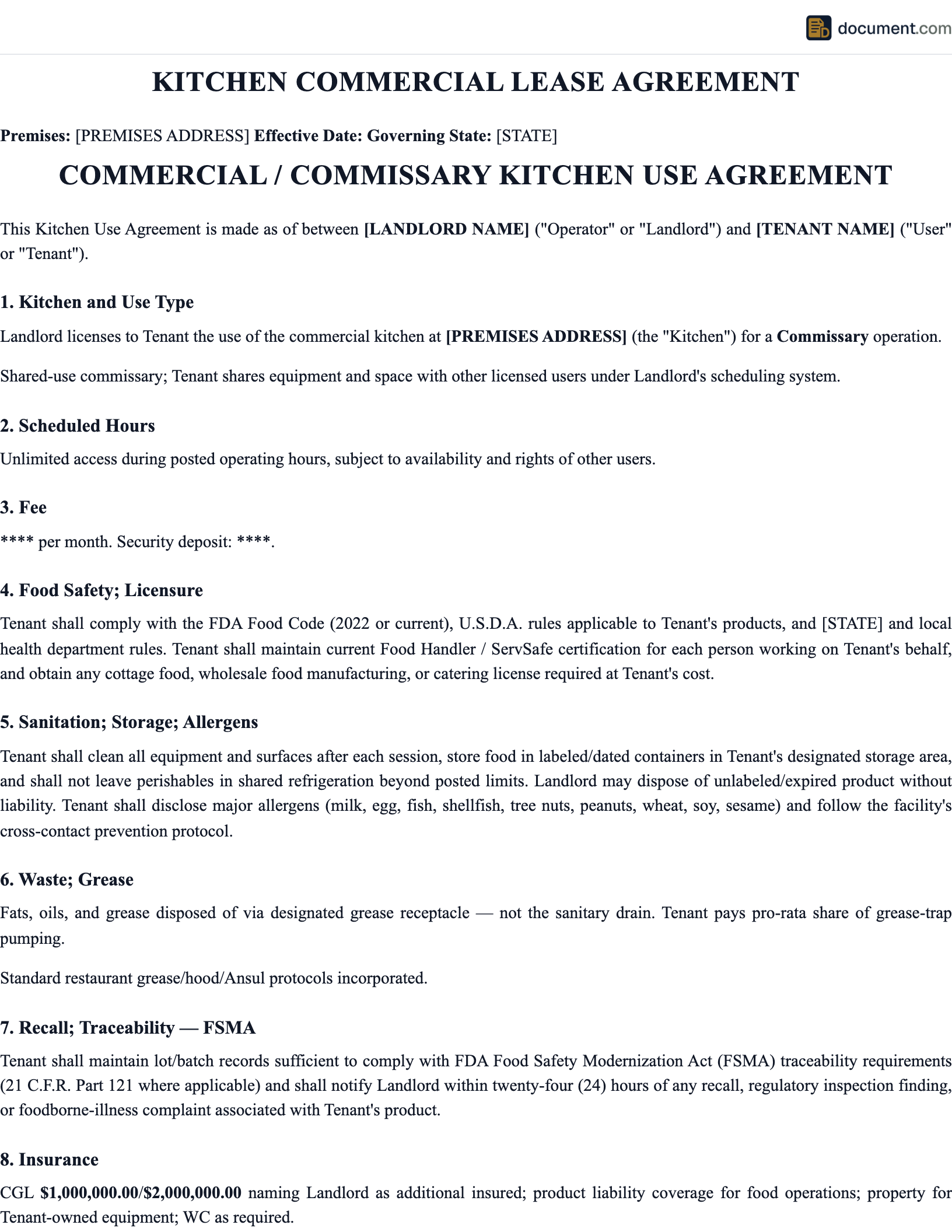
Below is a preview of our North Dakota-specific template. Your customized document will include all fields and provisions required for filing in any North Dakota county.
KITCHEN LEASE AGREEMENT
STATE OF NORTH DAKOTA
Legal Document Template
FACILITY OWNER
Name: [Full Legal Name]
Facility: [Kitchen Name]
Address: [Facility Address]
KITCHEN TENANT
Name: [Full Legal Name / Business]
Business Type: [Restaurant/Catering/Production]
Health Permit #: [Number]
KITCHEN SPECIFICATIONS
Total SF: [Square Feet]
Schedule: [Days/Hours]
Equipment: [See Inventory Addendum]
Storage: [Allocated Space]
FINANCIAL TERMS
Monthly Rent: $[Amount]
Schedule Rate: $[Amount]/hour
Security Deposit: $[Amount]
Equipment Deposit: $[Amount]
North Dakota Kitchen Lease Agreement FAQ
Answers to common questions about filing a kitchen lease agreement in North Dakota, including requirements, fees, and procedures.
Important Considerations for ND Kitchen Tenants
North Dakota's ghost kitchen and shared kitchen market is small enough that prospective tenants have limited facility options compared to larger states. In Fargo, there may be only a handful of licensed shared kitchen facilities available, meaning tenants have less negotiating leverage than they would in a Chicago or Seattle market. This makes it more important to do thorough due diligence on the facilities that are available before committing, since switching facilities mid-lease is difficult and leaving a lease early is costly.
Bakken region catering operators face a market reality that requires extreme caution in lease commitments. The cycles of oil production activity in western North Dakota have left many small business operators stranded in leases they signed during boom periods that became unaffordable during downturns. If the primary driver of your kitchen lease is oil patch catering revenue, the lease term should be as short as the market will allow, and any longer commitment should include meaningful exit provisions tied to client contract loss or revenue performance.
Written Lease and Legal Review Recommended
Even shorter-term North Dakota kitchen lease arrangements should be fully documented in writing. The operational complexity of shared kitchen access, cold storage allocation, permit status, and climate-specific obligations cannot be adequately protected through verbal agreements. An attorney with commercial lease or food business experience can review your agreement, confirm the permit suspension remedies are enforceable, and identify any winter HVAC provisions that need strengthening before you sign.
Official North Dakota Resources
Use these official state resources to verify licensing requirements and regulatory guidance for North Dakota kitchen tenants.
NDDOH Food Safety Program
Food establishment licensing and inspection requirements
ND Office of State Tax Commissioner
Sales tax rates on food sales and applicable exemptions
ND Attorney General - Landlord/Tenant
Commercial lease rights and remedies guidance
ND Department of Commerce
Business licensing and food industry resources
Related North Dakota Documents
Depending on your situation, you may need additional documents alongside your North Dakota kitchen lease agreement.
Create your North Dakota Commercial Kitchen Lease Agreement in under 5 minutes.
Answer a few questions and download a North Dakota-compliant document, ready for the state agency.