



What Is a Horse / Livestock Bill of Sale?
A horse or livestock bill of sale is a legal document that records the sale and transfer of ownership of horses, cattle, and other livestock from one party to another. It serves as proof of purchase and documents critical information about the animal including breed, registration, health status, and identifying markings.
Unlike a general bill of sale, a livestock bill of sale includes specific animal identification fields such as breed registration numbers, Coggins test results, health certificate information, brand descriptions, and physical markings. Many states require health documentation and brand inspections before livestock can be legally sold or transported.
Whether you're buying a quarter horse, selling cattle at a private sale, or transferring ownership of breeding stock, a properly completed livestock bill of sale protects both parties and ensures compliance with your state's livestock transfer laws, health regulations, and brand inspection requirements.
Health Documentation
Coggins test, health certificates, and vaccination records
Brand Inspection
Required in western states for ownership verification
Breed Registration
Transfer of registration papers and pedigree records
Horse / Livestock Bill of Sale by State
Each state has different requirements for livestock bills of sale, including brand inspections, health certificates, Coggins testing, and veterinary documentation. Select your state below for a template that meets your state's specific livestock transfer requirements.
How to Write a Horse / Livestock Bill of Sale
A livestock bill of sale must contain specific information about the animal, its health, and ownership documentation. Follow these steps to ensure your document is complete and legally sound.
Record Buyer and Seller Information
Include the full legal names, current mailing addresses, and phone numbers of both the buyer and seller. For ranch or farm transactions, include the farm or ranch name. If the seller is a licensed dealer or breeder, include their license or business registration number.
Identify the Animal
Provide a detailed description including species, breed, registered name (if applicable), registration number, sex, age or date of birth, color, and height or weight. For horses, record height in hands. Document all markings (stars, blazes, socks), brands (location and description), tattoos, lip tattoos, and microchip numbers.
Document Health Status
Include the date and result of the most recent Coggins test (for equines), the health certificate or Certificate of Veterinary Inspection (CVI) number, vaccination history, deworming schedule, and any known health conditions. Attach copies of the Coggins test certificate and CVI to the bill of sale.
Record Sale Price and Payment Terms
State the agreed purchase price in both numerals and written form. Note the payment method (cash, check, wire transfer, or installment plan). If using a payment plan, specify the down payment, installment schedule, and what happens if the buyer defaults. For breeding stock, note any live foal guarantees or breeding rights included.
State Warranties and Condition
Specify whether the animal is sold as-is or with warranties. Common warranties include: sound for riding, free of stable vices, in foal, or suitable for a specific purpose. Disclose any known health issues, lameness, vices (cribbing, weaving, wind sucking), or behavioral problems. Sellers who fail to disclose known defects may face fraud claims.
Sign, Date, and Complete Inspections
Both buyer and seller must sign and date the bill of sale. Print two copies for each party. Complete any required brand inspections before transport. Transfer breed registration papers by signing the transfer section on the certificate. Ensure Coggins and health certificates are current and attached. Some states require notarization.
Key Components of a Livestock Bill of Sale
A horse or livestock bill of sale must include specific information about the animal, health records, and ownership transfer. Missing key elements could lead to disputes or regulatory issues.
| Component | Description |
|---|---|
| Buyer & Seller Names | Full legal names, addresses, and farm/ranch names |
| Animal Description | Species, breed, sex, age, color, height/weight |
| Registration Info | Breed registry, registration number, registered name |
| Markings & Brands | Identifying marks, brands, tattoos, microchip numbers |
| Coggins Test | Date, result, accession number (equines) |
| Health Certificate | CVI number, issuing veterinarian, date of exam |
| Sale Price | Amount in numbers and words, payment terms |
| Warranties / As-Is | Soundness guarantees, breeding warranties, or as-is terms |
| Signatures | Dated signatures of buyer and seller (notary if required) |
Livestock Types Covered
Our livestock bill of sale templates work for all common types of horses and livestock:
Horses
Thoroughbreds, quarter horses, Arabians, draft horses, ponies, and all equine breeds
Cattle
Beef cattle, dairy cows, bulls, steers, heifers, and calves
Goats
Dairy goats, meat goats, Boer, Nigerian Dwarf, and breeding stock
Sheep
Ewes, rams, lambs, wool breeds, and hair sheep
Pigs / Swine
Breeding hogs, feeder pigs, pot-bellied pigs, and show pigs
Llamas & Alpacas
Guard llamas, fiber alpacas, breeding stock, and companions
Poultry
Chickens, turkeys, ducks, geese, and other domestic fowl
Donkeys & Mules
Standard and miniature donkeys, working mules, and guard animals
Health & Inspection Requirements
Livestock sales involve health and inspection requirements that vary by state, species, and whether the animal is being transported across state lines. Here are the key requirements to be aware of:
Important: Interstate Transport
Transporting livestock across state lines almost always requires a Certificate of Veterinary Inspection (health certificate) and, for horses, a current negative Coggins test. Many states also require entry permits. Check both the origin and destination state requirements before transport.
- Coggins Test (EIA): Required in most states for horses, donkeys, and mules — typically valid 12 months
- Health Certificate (CVI): Required for interstate transport and many intrastate sales — valid 14-30 days
- Brand Inspection: Required in western states (MT, WY, CO, ID, NV, OR, WA, SD, ND, NE) before sale or transport
- Brucellosis Test: Required for cattle in many states, especially breeding animals
- Tuberculosis Test: Required for cattle in some states and for interstate movement
- Entry Permits: Some states require advance permits before livestock can enter — check destination state rules
Sample Horse / Livestock Bill of Sale
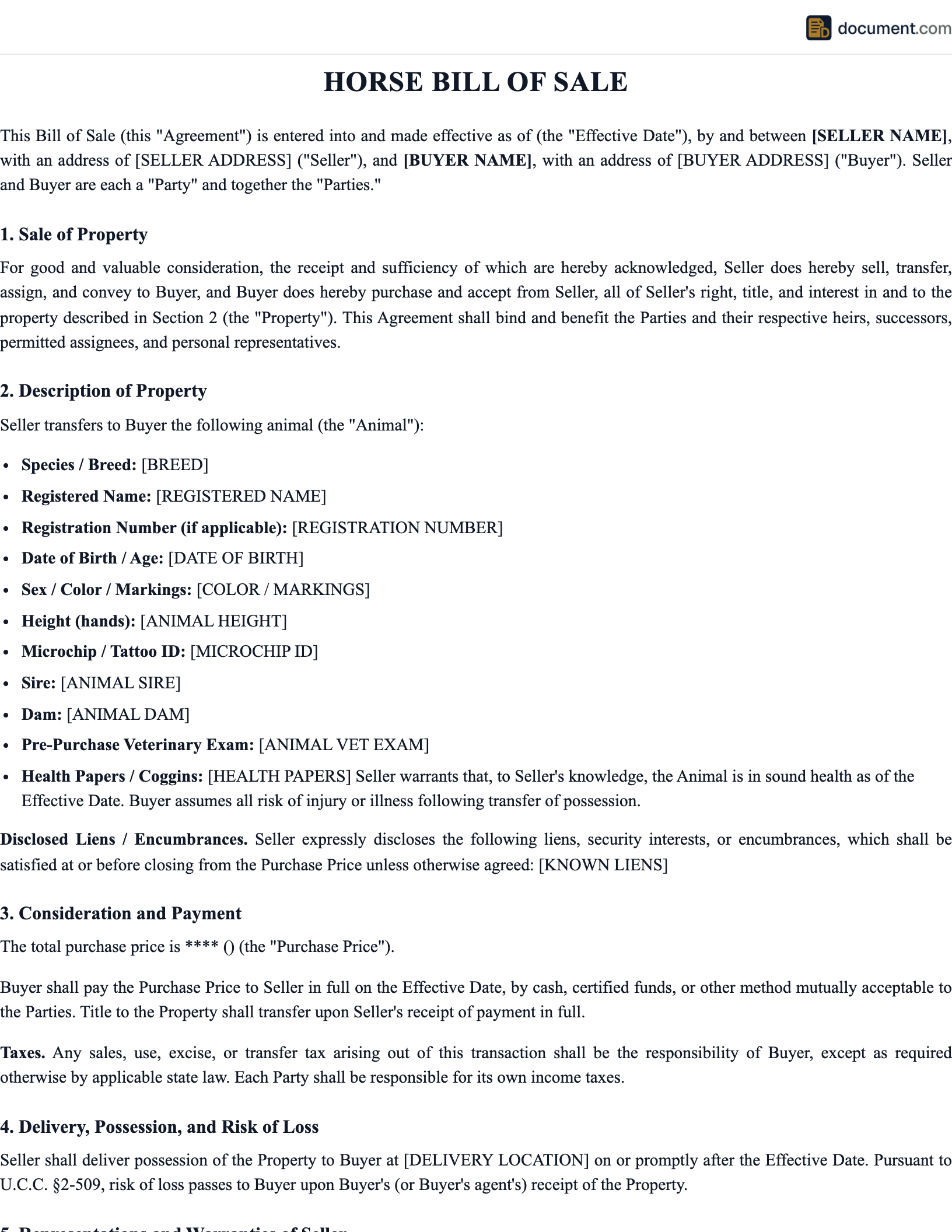
Below is a preview of our horse bill of sale template. Your customized document will include all fields required by your state's livestock transfer regulations.
HORSE / LIVESTOCK BILL OF SALE
Equine & Livestock Transfer Document
This Livestock Bill of Sale is entered into on[Date]between:
SELLER:
Name: [Seller Name]
Farm/Ranch: [Farm Name]
Address: [Address]
BUYER:
Name: [Buyer Name]
Farm/Ranch: [Farm Name]
Address: [Address]
1. ANIMAL DESCRIPTION
Species: [Horse/Cattle/etc.] Breed: [Breed]
Registered Name: [Name]
Reg. Number: [Number]
Sex: [M/F/Gelding] Age/DOB: [Age] Color: [Color]
2. HEALTH DOCUMENTATION
Coggins Test Date: [Date] Result: [Neg.]
Health Certificate #: [CVI Number]
3. SALE PRICE
$[Amount]([Amount in Words] Dollars)
Frequently Asked Questions
Find answers to common questions about horse and livestock bills of sale, health requirements, brand inspections, and registration transfers.
Create your Horse Bill of Sale in under 10 minutes.
Answer a few questions and download a compliant, attorney-drafted document ready for your state.