



What Is a Purchase Agreement Amendment?
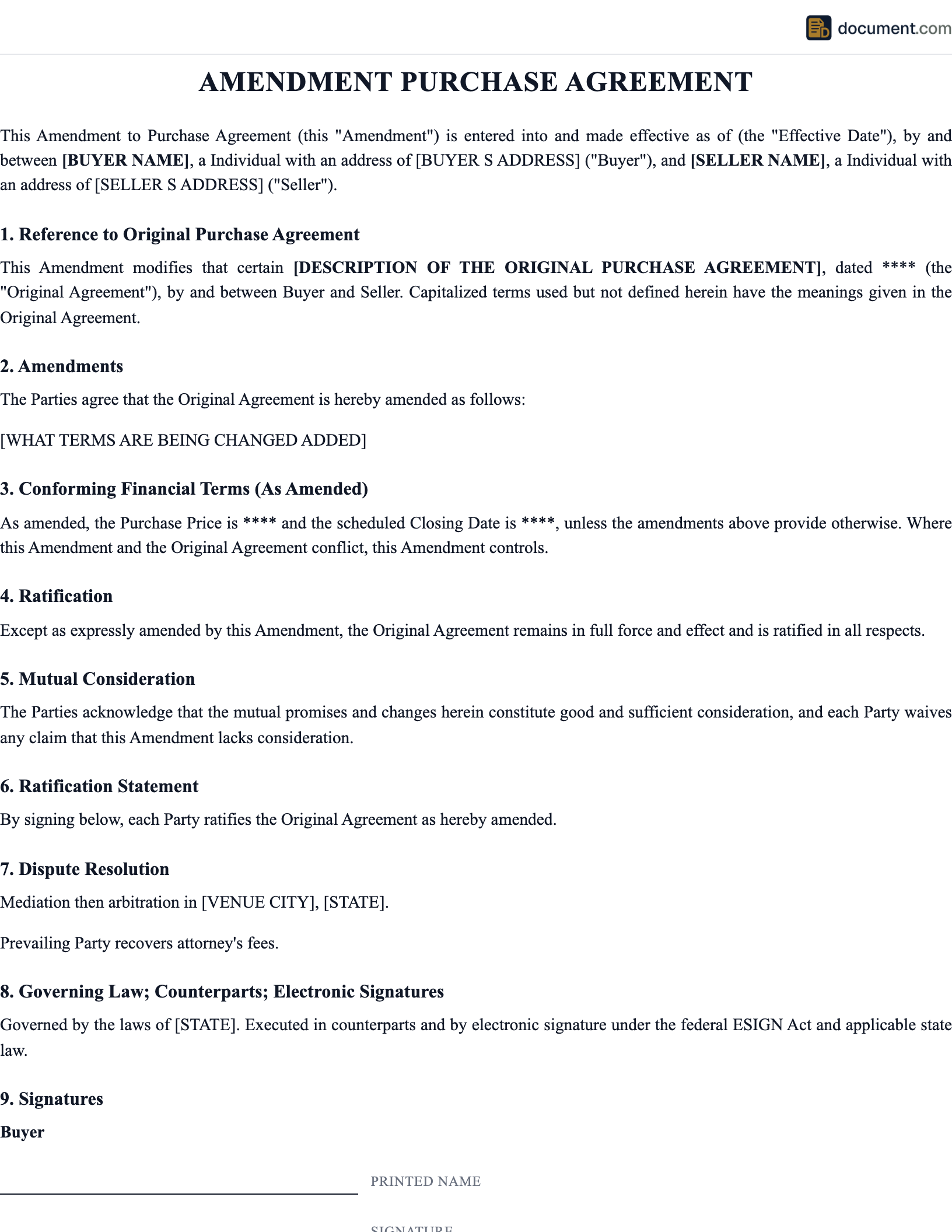
A purchase agreement amendment is a formal document that modifies one or more terms of an existing, executed real estate purchase agreement. Unlike an addendum (which adds new provisions), an amendment changes terms that were already agreed upon — such as the purchase price, closing date, financing terms, or contingency deadlines. The amendment supersedes the specific provisions it modifies while leaving the rest of the original agreement intact.
Amendments are an essential tool in real estate transactions because circumstances frequently change between contract execution and closing. Appraisals may come in lower than expected, inspection findings may require price renegotiation, loan processing may take longer than anticipated, or either party may need additional time for legitimate reasons. Rather than terminating the deal and starting over, an amendment allows the parties to adjust specific terms while preserving the overall transaction.
For an amendment to be enforceable, it must be in writing (under the Statute of Frauds, which requires real estate contracts to be written), signed by all parties to the original agreement, clearly identify the original agreement being amended, specify exactly which terms are being changed and what the new terms are, and include language confirming that all other provisions remain unchanged.
Modifies Existing Terms
Changes specific provisions while preserving the rest of the contract
Mutual Consent Required
All parties to the original agreement must sign the amendment
Supersedes Original
Modified terms in the amendment control over the original agreement
Common Purchase Agreement Modifications
Most purchase agreement amendments fall into a handful of common categories. Understanding these typical modifications helps you anticipate what may need to change during your transaction.
Purchase Price Adjustment
The most common amendment. Triggered by appraisal results (lender requires price reduction), inspection findings (buyer negotiates repair credit), or market changes during extended escrow periods. The amendment should state the new price and updated allocation of costs.
Closing Date Extension
The second most common amendment. Often needed due to loan processing delays, title issues that require resolution, short sale or probate court approval timelines, or delays in obtaining required inspections or certifications.
Contingency Waiver or Extension
A buyer may waive the financing, inspection, or appraisal contingency to strengthen their position, or request an extension if more time is needed to satisfy a contingency condition. Each waiver should be documented explicitly in writing.
Repair Credit or Seller Concessions
After inspection, the parties may agree to a repair credit (reducing the purchase price) or seller concessions (seller pays a portion of the buyer's closing costs) rather than requiring the seller to make physical repairs before closing.
Financing Terms Change
Changes to the loan type (conventional to FHA), down payment amount, or interest rate lock terms. Lender changes during the transaction may also require an amendment to the financing contingency provisions.
Amendment vs. Addendum: When to Use Each
Understanding the distinction between amendments and addenda helps ensure you use the correct document type and include appropriate legal language.
| Factor | Amendment | Addendum |
|---|---|---|
| Primary purpose | Changes existing terms | Adds new terms |
| Typical timing | After execution, during escrow | Often at or before execution |
| Effect on original | Supersedes modified provisions | Supplements without replacing |
| Example: price change | Amendment (modifying existing term) | Not appropriate |
| Example: escrow holdback | Not appropriate | Addendum (adding new provision) |
Legal Requirements for a Valid Amendment
For a purchase agreement amendment to be legally enforceable, it must satisfy several requirements rooted in contract law and the Statute of Frauds.
Important: Oral Amendments Are Not Enforceable
Under the Statute of Frauds, all contracts for the sale of real property must be in writing. This extends to modifications. A verbal agreement to change the price, closing date, or any other material term of a real estate purchase agreement is not enforceable in any U.S. state. Always document amendments in writing with all parties' signatures.
Written Form
The amendment must be in writing. Email confirmations, text messages, or verbal agreements are insufficient for real estate contract modifications.
Identification of Original Agreement
The amendment must reference the original purchase agreement by date, parties, and property address so there is no ambiguity about which contract is being modified.
Specific Changes Identified
Each modified term should state both the original provision and the replacement provision so the change is unambiguous and traceable.
All Parties' Signatures
Every party to the original agreement must sign the amendment. If a party has an authorized agent or power of attorney, proper authorization documentation should be attached.
Ratification Language
The amendment should confirm that all other terms of the original agreement not expressly modified remain in full force and effect.
Key Components of a Purchase Agreement Amendment
A well-drafted amendment follows a structured format that ensures clarity and enforceability.
| Component | Description |
|---|---|
| Heading & Amendment Number | Clearly identified as an amendment with sequential numbering |
| Recitals | References original agreement date, parties, and property; states the intent to amend |
| Modified Provisions | States original language being changed and the replacement language |
| Ratification Clause | Confirms all unmodified terms remain in full force and effect |
| Conflict Resolution | States the amendment controls if there is inconsistency with the original |
| Execution Block | Dated signatures of all parties with printed names |
Handling Multiple Amendments
Complex transactions may require multiple amendments. Proper management prevents confusion and ensures all modifications are properly documented and enforceable.
Sequential Numbering
Number each amendment sequentially (Amendment #1, #2, #3) and reference all prior amendments in each subsequent one. This creates a clear chain of modifications.
Cross-Reference Check
Before drafting a new amendment, review all prior amendments to ensure the new modification does not conflict with previously amended terms.
Consolidation Option
If amendments become numerous (3+), consider an amended and restated agreement that consolidates all changes into a single clean document.
Title Company Communication
Ensure the title company and lender receive copies of every amendment. Missing amendments at closing can cause significant delays and disputes.
Frequently Asked Questions
Find answers to common questions about purchase agreement amendments, their legal requirements, and when to use them.
Create your Amendment Purchase Agreement in under 10 minutes.
Answer a few questions and download a compliant, attorney-drafted document ready for your state.