
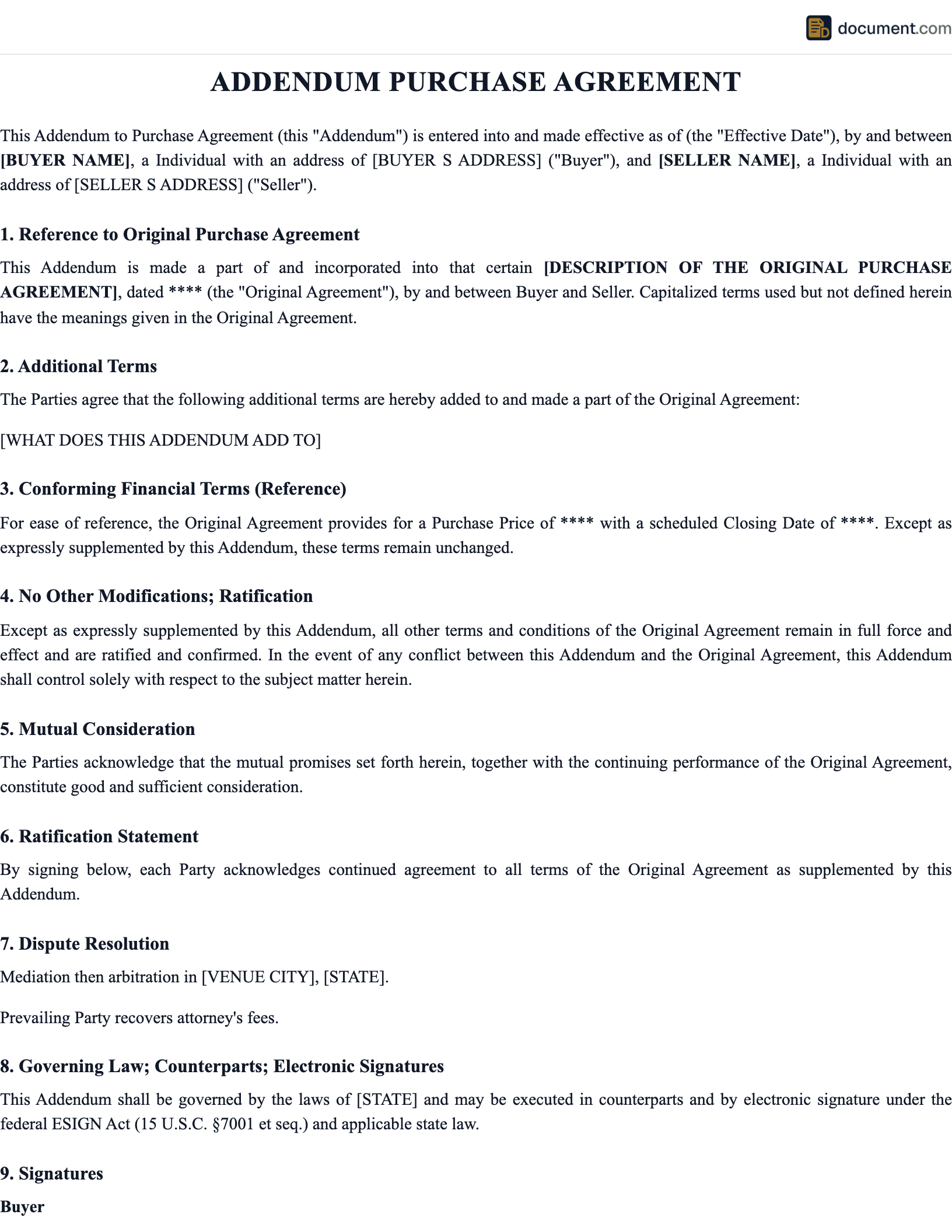



What Is an Escrow Holdback Addendum?
An escrow holdback addendum is a supplemental agreement to a real estate purchase contract that requires a specified amount of the seller's proceeds to be deposited into an escrow account at closing rather than disbursed directly to the seller. The held funds serve as a guarantee that the seller will complete agreed-upon obligations after the closing date — most commonly property repairs, permit compliance, or seasonal improvements.
Escrow holdbacks solve a fundamental timing problem in real estate transactions. Buyers want assurance that promised repairs will actually be completed, while sellers want to close on schedule without being forced to delay for non-critical work. By placing funds in escrow, both parties can proceed to closing with the confidence that financial incentives remain aligned for post-closing performance.
The holdback addendum must clearly define the amount being held, the specific work or conditions that must be satisfied for release, the deadline for completion, the identity of the escrow holder, and the consequences if the seller fails to perform. Vague or incomplete holdback provisions are among the most common sources of post-closing disputes in residential real estate.
Funds Held in Escrow
Seller's proceeds held by neutral third party until work is verified
Buyer Protection
Guarantees financial recourse if seller fails to complete repairs
Closes on Schedule
Allows transaction to close without waiting for repairs to finish
When to Use an Escrow Holdback
Escrow holdbacks are appropriate whenever a post-closing obligation needs financial enforcement. The most common scenarios include:
Unfinished Repairs from Inspection
The most common use case. When an inspection reveals needed repairs but the seller cannot complete them before the closing date, the holdback ensures the work gets done post-closing.
Seasonal or Weather-Dependent Work
Exterior painting, roof work, landscaping, and other weather-sensitive projects that cannot be completed during winter months or inclement weather periods.
Open Permits or Code Violations
When the property has open building permits or code violations that cannot be resolved before closing, a holdback provides assurance that the seller will obtain final inspections and close out permits.
Lien or Title Clearance Issues
When a lien payoff or title defect resolution is pending at closing, the holdback reserves funds to ensure the issue is resolved and clear title is delivered to the buyer.
How Escrow Holdbacks Work
The escrow holdback process follows a predictable sequence from negotiation through fund release. Understanding each step helps both parties protect their interests.
Negotiate Holdback Terms
The buyer and seller agree on the holdback amount (typically 1.5x to 2x the estimated repair cost), the specific work to be completed, the deadline for completion, and the escrow agent who will hold the funds. These terms are documented in the escrow holdback addendum.
Funds Deposited at Closing
At closing, the agreed holdback amount is deducted from the seller's proceeds and deposited into the escrow account. The seller receives the balance of their proceeds. The closing statement (HUD-1 or ALTA) reflects the holdback as a line item.
Work Completed & Verified
The seller completes the agreed work within the specified timeframe. Upon completion, an inspection or verification is performed — either by the buyer, a licensed inspector, or a mutually agreed professional. The verification confirms the work meets the addendum's standards.
Funds Released
Once the work is verified as complete, both parties authorize the escrow agent to release the holdback funds to the seller. If the seller failed to complete the work, the funds (or a portion) may be released to the buyer per the default provisions in the addendum.
Determining the Holdback Amount
Setting the right holdback amount is critical. Too little leaves the buyer exposed if costs exceed estimates; too much ties up the seller's funds unnecessarily and may derail the deal.
Important: Get Multiple Estimates
Base the holdback amount on at least two independent contractor estimates. Using only one estimate creates risk if that contractor is unavailable or their quote is inaccurate. The holdback multiplier (1.5x-2x) should account for the uncertainty inherent in repair cost estimates.
| Repair Estimate | 1.5x Holdback | 2x Holdback |
|---|---|---|
| $5,000 | $7,500 | $10,000 |
| $10,000 | $15,000 | $20,000 |
| $25,000 | $37,500 | $50,000 |
| $50,000 | $75,000 | $100,000 |
Release Conditions & Disbursement
The release conditions are the most important provisions in an escrow holdback addendum. They define exactly what must happen for the escrow agent to release the funds back to the seller.
Full Release to Seller
- All specified work completed satisfactorily
- Buyer or inspector verifies completion
- Completed within agreed timeframe
- Both parties sign release authorization
Release to Buyer (Default)
- Seller fails to complete work by deadline
- Work does not meet agreed standards
- Seller abandons or refuses to perform
- Buyer authorized to hire own contractors
Lender Requirements for Escrow Holdbacks
If the buyer is financing the purchase, the lender may have specific requirements or restrictions regarding escrow holdbacks. Understanding these requirements early prevents last-minute complications.
| Loan Type | Holdback Allowed | Key Requirements |
|---|---|---|
| Conventional | Generally yes | Varies by lender; typically requires 1.5x holdback |
| FHA | Yes, with conditions | 1.5x holdback; 90-day completion; re-inspection required |
| VA | Yes, with conditions | Must meet minimum property requirements; lender approval |
| USDA | Limited | Allowed for weather-related delays only; strict timelines |
| Cash Purchase | Yes, flexible | No lender restrictions; parties negotiate freely |
Frequently Asked Questions
Find answers to common questions about escrow holdback addenda, holdback amounts, and fund release procedures.
Create your Addendum Escrow Holdback Purchase Agreement in under 10 minutes.
Answer a few questions and download a compliant, attorney-drafted document ready for your state.