



What Is an Addendum to a Purchase Agreement?
An addendum to a purchase agreement is a supplemental document that adds new terms, conditions, or provisions to an existing purchase and sale contract. Unlike an amendment (which modifies existing terms), an addendum introduces provisions that were not part of the original agreement. Once signed by all parties, the addendum becomes a legally binding extension of the original contract.
Addenda are extremely common in real estate transactions because the period between signing a purchase agreement and closing is filled with due diligence, inspections, appraisals, and financing contingencies that frequently reveal issues requiring additional contractual provisions. Rather than renegotiating the entire purchase agreement, the parties use addenda to address specific items while leaving the rest of the original contract intact.
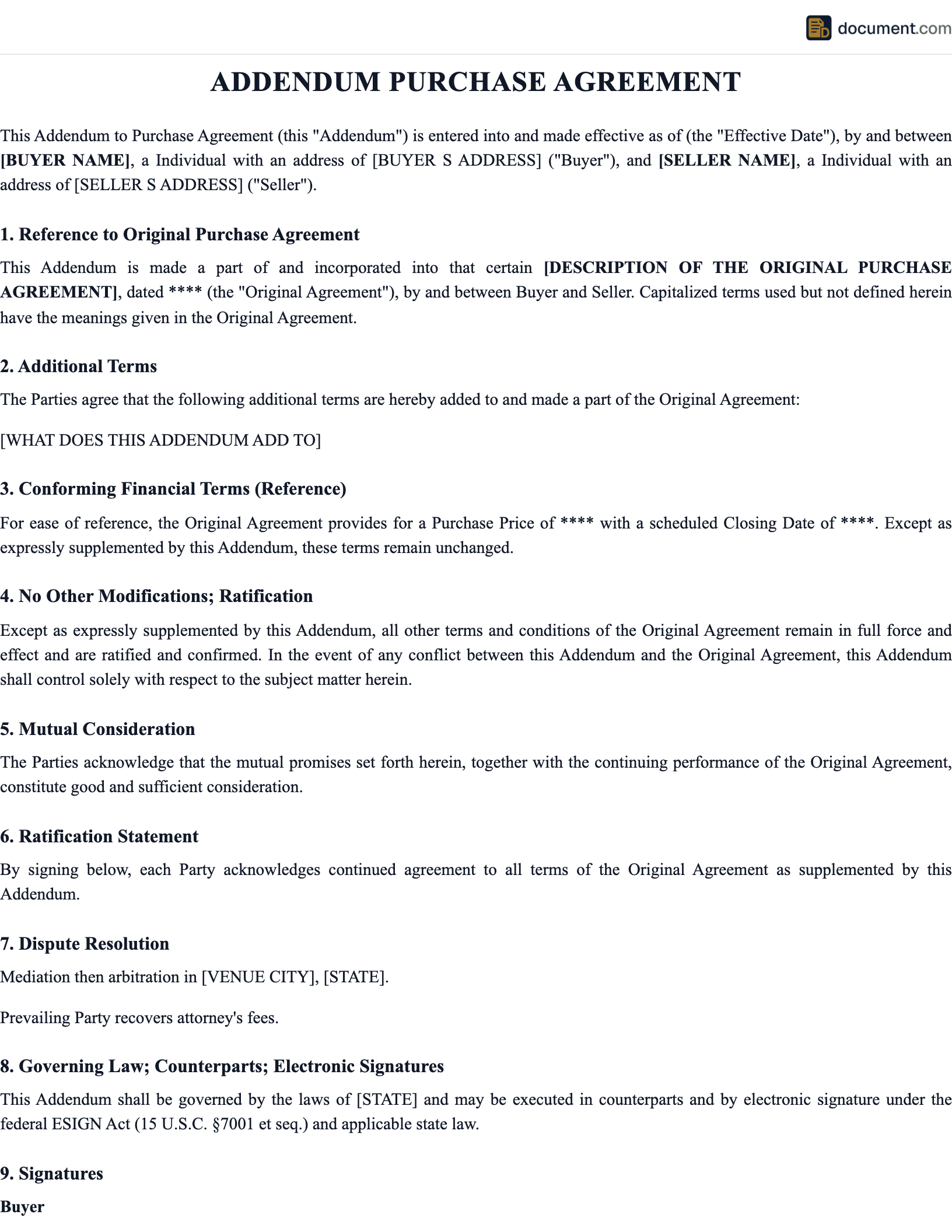
A properly drafted addendum must reference the original purchase agreement by date and party names, clearly state the new or supplemental terms, include a conflict resolution clause explaining which document controls if there is any inconsistency, and be signed by all parties to the original agreement. Missing any of these elements can create enforceability problems or disputes at closing.
Supplements Original
Adds new terms without replacing the entire purchase agreement
Legally Binding
Enforceable as part of the contract once signed by all parties
Conflict Resolution
Specifies which document controls if terms conflict
When to Use a Purchase Agreement Addendum
Addenda serve as the primary mechanism for addressing issues that arise between contract execution and closing. Here are the most common situations that call for an addendum to a purchase agreement:
Post-Inspection Repairs or Credits
After a home inspection reveals defects, an addendum formalizes the seller's obligation to make repairs or provide a credit at closing. This is the single most common reason for a purchase agreement addendum.
Escrow Holdback Provisions
When repairs cannot be completed before closing, an escrow holdback addendum sets aside funds to ensure the work gets done post-closing. This protects both the buyer and lender.
Closing Date Extension
Delays in financing, title clearance, or required repairs frequently necessitate extending the originally agreed closing date. An addendum documents the new date and any conditions.
Contingency Additions
Adding contingencies for events not covered in the original agreement — such as a home sale contingency, septic inspection, or radon testing requirement.
Personal Property Inclusions
Specifying that certain items (appliances, window treatments, furniture, outdoor equipment) are included in the sale, along with their condition at closing.
Addendum vs. Amendment: Key Differences
While the terms are often used interchangeably in casual conversation, addenda and amendments serve distinct legal purposes. Understanding the difference is essential for properly documenting changes to your purchase agreement.
| Factor | Addendum | Amendment |
|---|---|---|
| Purpose | Adds new terms or provisions | Changes existing terms |
| Timing | Often at or before execution | After contract is executed |
| Effect on original | Supplements without replacing | Modifies or replaces specific terms |
| Scope | Introduces entirely new provisions | Alters previously agreed provisions |
| Common examples | Inspection addendum, escrow holdback | Price change, closing date change |
Key Components of a Purchase Agreement Addendum
Every addendum to a purchase agreement should contain specific elements to ensure it is enforceable and integrated properly with the original contract.
| Component | Description |
|---|---|
| Reference to Original Agreement | Date, parties, and property address from the original purchase agreement |
| Addendum Number | Sequential numbering (e.g., Addendum #1) for tracking multiple addenda |
| New Terms & Provisions | Clear, specific language describing the additional terms being added |
| Conflict Resolution Clause | Statement that the addendum controls in the event of any inconsistency |
| Integration Language | Confirmation that the addendum is incorporated into and made part of the agreement |
| Signatures & Dates | All parties to the original agreement must sign and date the addendum |
Common Purchase Agreement Addenda
Real estate transactions regularly involve one or more specialized addenda. Each addresses a specific aspect of the transaction that requires additional contractual provisions beyond the base purchase agreement.
Inspection Addendum
Documents repair requests, seller concessions, or credit amounts based on inspection findings. Specifies deadlines for completion and verification.
Financing Addendum
Addresses loan commitment requirements, interest rate locks, and appraisal contingencies. Protects the buyer if financing falls through.
Sets aside a portion of proceeds in escrow to cover unfinished repairs, permit compliance, or other post-closing obligations.
Lead-Based Paint Addendum
Required by federal law for homes built before 1978. Discloses known lead hazards and gives the buyer an inspection period.
Home Sale Contingency Addendum
Makes the purchase contingent on the buyer selling their current home by a specified date. Includes kick-out clause provisions.
Seller Concession Addendum
Documents the seller's agreement to contribute toward buyer's closing costs, subject to lender limitations on seller-paid costs.
Frequently Asked Questions
Find answers to common questions about purchase agreement addenda, their legal effect, and when to use them.
Create your Addendum Purchase Agreement in under 10 minutes.
Answer a few questions and download a compliant, attorney-drafted document ready for your state.