
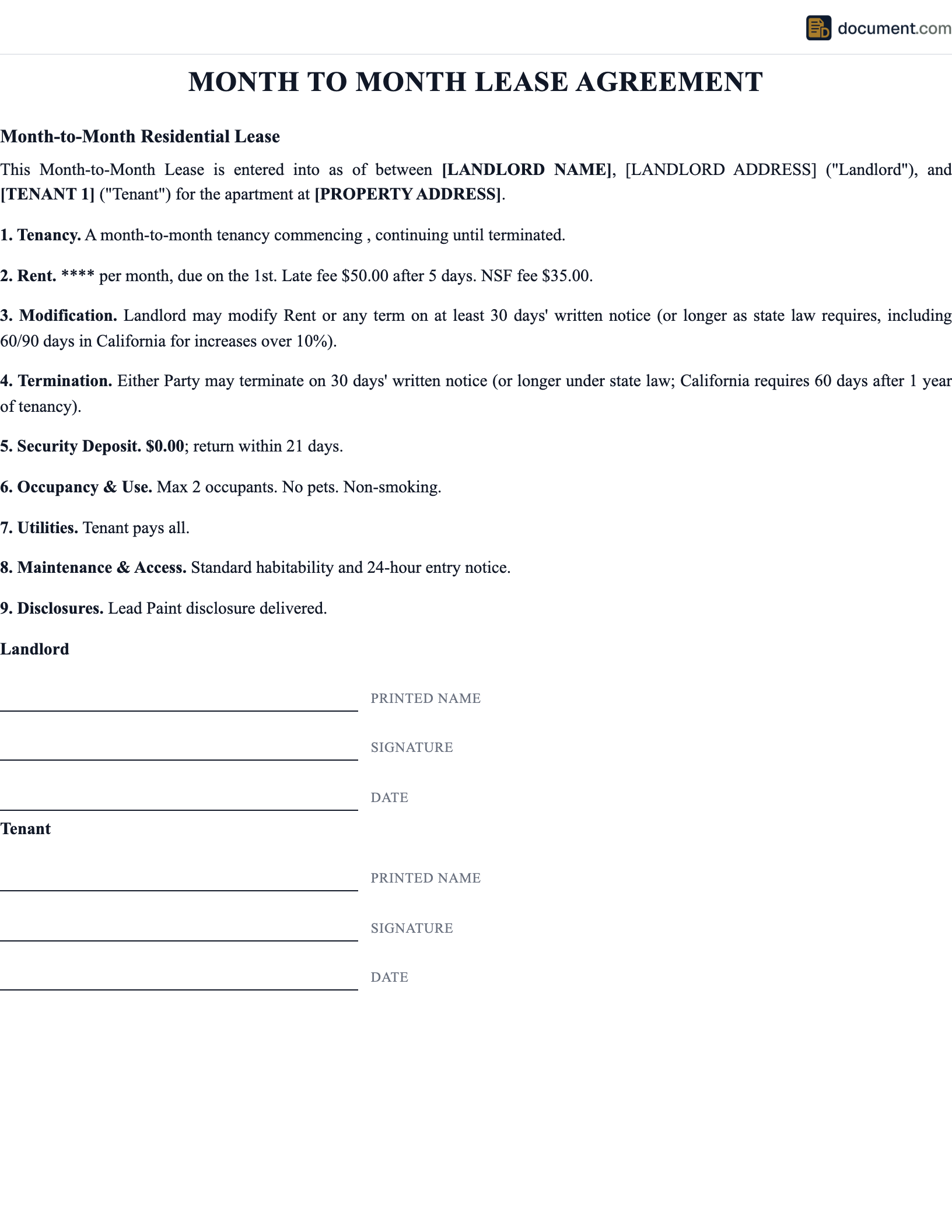



Hawaii Month-to-Month Lease Overview
Hawaii month-to-month lease agreements are governed by the Hawaii Residential Landlord-Tenant Code (HRS Chapter 521). Hawaii provides strong tenant protections, including asymmetric notice periods that favor tenants.
Hawaii's unique housing market, driven by limited land, tourism, and military presence, makes month-to-month leases common. The state caps security deposits at one month's rent and limits late fees to 8% of monthly rent.
28/45 days
Notice to terminate
45 days
Rent increase notice
1 month
Security deposit limit
8% of monthly rent
Late fee rules
Hawaii Month-to-Month Termination Notice Requirements
Hawaii has asymmetric notice requirements: tenants must give 28 days notice while landlords must give 45 days notice to terminate a month-to-month tenancy under HRS Chapter 521. This provides extra protection for tenants.
Important: Written Notice Required
Hawaii requires that termination notice be in writing. Verbal notice is generally not sufficient and may not be enforceable in court. Keep a copy of any notice you send or receive, and consider using certified mail or hand-delivery with a witness to prove delivery.
Hawaii Rent Increase Notice Periods
Hawaii landlords must provide at least 45 days notice before raising rent on a month-to-month tenancy, matching the landlord termination notice period.
How to Create a Hawaii Month-to-Month Lease
Follow these steps to create a legally compliant month-to-month lease agreement for Hawaii.
Identify the Parties and Property
Include the full legal names of the landlord and all tenants, the complete rental property address (including unit number), and the date the lease begins. Specify that this is a month-to-month tenancy that automatically renews.
Set the Rent and Payment Terms
State the monthly rent amount, the due date, acceptable payment methods, any grace period, and late fee terms. Under Hawaii law, be sure to comply with any state requirements for grace periods and late fee limits.
Document the Security Deposit
Record the security deposit amount, how it will be held, conditions for deductions, and the return timeline. Hawaii limits security deposits to 1 month and has specific requirements for how and when the deposit must be returned.
Include Notice Requirements
Clearly state the required notice period for termination (28/45 days in Hawaii) and rent increases (45 days). Include how notice must be delivered (certified mail, hand delivery, etc.) and when the notice period begins.
Add House Rules and Sign
Include provisions for pets, guests, noise, parking, maintenance responsibilities, and any other rules. Both landlord and tenant should sign and date the agreement. Provide copies to all parties.
Official Hawaii Resources
Use these official resources to verify Hawaii landlord-tenant requirements and access state government information.
Other Hawaii Lease Agreement Types
Need a different type of lease agreement for Hawaii? We offer state-specific templates for every type of rental arrangement.
Hawaii Residential Lease
Standard fixed-term residential lease agreements
Hawaii Room Rental Agreement
Rent a room within a shared house or apartment
Hawaii Vacation Rental Agreement
Short-term vacation and holiday rental agreements
Hawaii Commercial Lease
Office, retail, and commercial space leases
Hawaii Sublease Agreement
Sublease your rental unit to another tenant
Hawaii Roommate Agreement
Shared living arrangements and expense splitting
Hawaii Rent-to-Own Agreement
Lease with option to purchase the property
Hawaii Equipment Lease
Business and personal equipment rental agreements
Hawaii Land Lease
Agricultural, recreational, and development land leases
Hawaii Month-to-Month Lease FAQ
Answers to common questions about Hawaii month-to-month lease agreements, notice requirements, and tenant rights.
Create your Hawaii Month To Month Lease Agreement in under 5 minutes.
Answer a few questions and download a Hawaii-compliant document, ready for the state agency.