
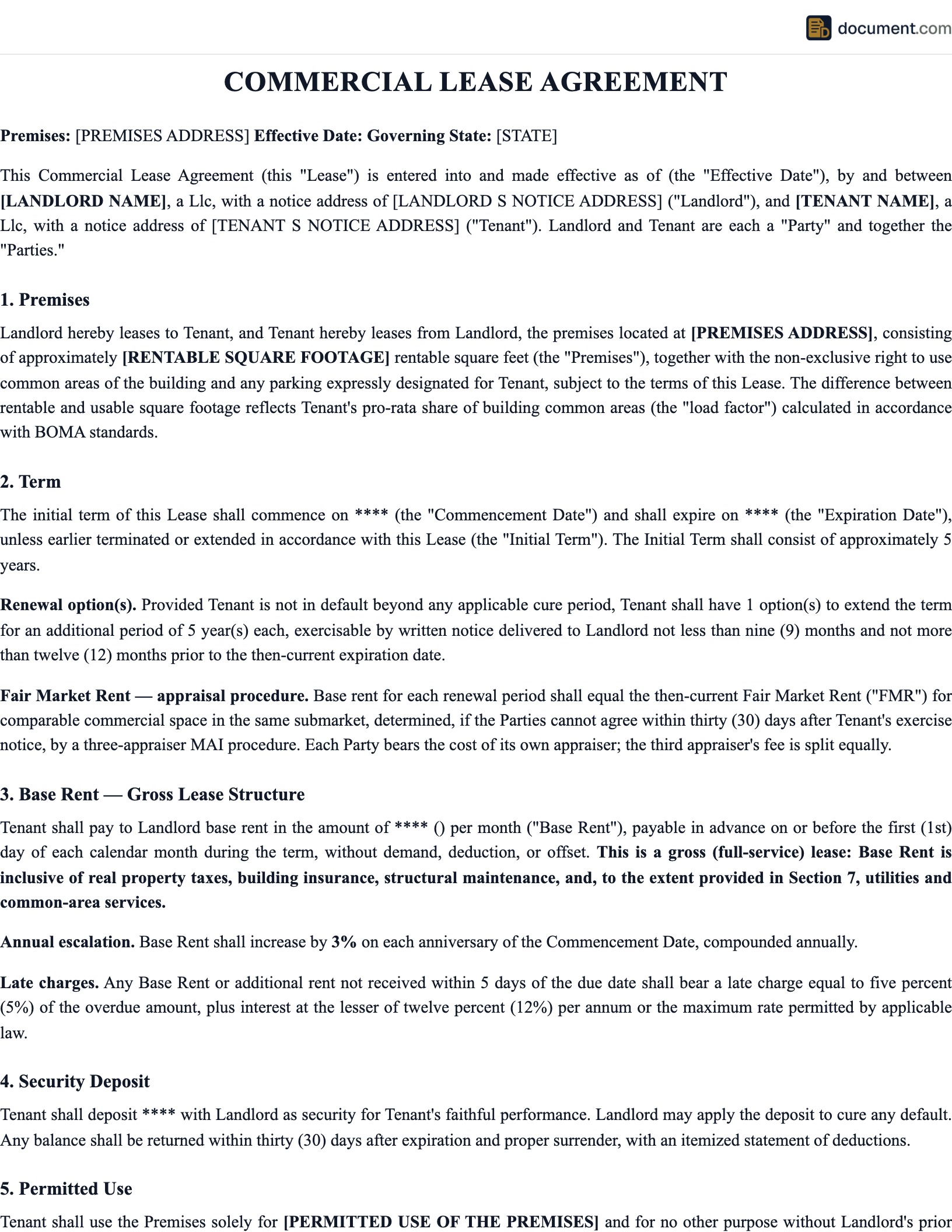



West Virginia Commercial Lease Overview
In West Virginia, commercial lease agreements are primarily governed by contract law, giving landlords and tenants broad freedom to negotiate terms. Unlike residential leases, West Virginia commercial tenants have fewer statutory protections, making the written lease terms critical. West Virginia's commercial real estate market includes office, retail, industrial, warehouse, restaurant, and medical properties, each with its own typical lease structures and market conventions.
West Virginia commercial property is subject to local zoning regulations administered at the municipality level. Before signing a commercial lease in West Virginia, tenants should verify that the property is properly zoned for their intended business use and that all necessary permits and licenses can be obtained. West Virginia's ADA compliance requirements follow federal standards standards.
Commercial lease registration in West Virginia is not required. Property taxes on commercial real estate in West Virginia average approximately 0.58% of assessed value, though rates vary significantly by location. Understanding these costs is essential for accurately budgeting your total occupancy expense under a NNN or modified gross lease structure.
0.58%
Avg. property tax rate
Not required
Lease registration
Municipality
Zoning authority
Federal standards
ADA compliance
West Virginia Commercial Leasing Requirements
While West Virginia gives commercial parties significant contractual freedom, there are important legal requirements and best practices to follow when entering a commercial lease:
Important: Review Before Signing
West Virginia commercial leases are binding contracts with limited statutory protections for tenants. Unlike residential leases, there are few "cooling off" periods or mandatory disclosures. Have an attorney review your lease before signing, especially regarding personal guaranty provisions, default remedies, and early termination penalties.
Key West Virginia Commercial Lease Provisions
- Premises Description: Exact address, suite/unit number, rentable vs. usable square footage, and common areas included
- Rent Structure: Base rent, NNN/gross/modified gross designation, escalation schedule, and payment terms
- CAM & Operating Expenses: Detailed list of pass-through expenses, calculation method, caps, and audit rights
- Tenant Improvements: TI allowance amount, construction standards, approval process, and ownership of improvements
- Permitted Use: Specific business activities allowed, exclusive use rights, and prohibited uses
- Insurance & Indemnification: Required coverage types and limits, additional insured requirements, and mutual indemnification
How to Complete a West Virginia Commercial Lease
Follow these steps to properly complete your West Virginia commercial lease agreement. Our template guides you through each section with WV-specific provisions and industry-standard terms.
Identify the Parties and Premises
Enter the legal names of the landlord (or property management company) and tenant (business entity). Include the full property address, suite or unit number, and the exact square footage being leased. Specify whether measurements are based on rentable or usable square footage per BOMA standards.
Define the Lease Term and Rent
Specify the commencement date, expiration date, and any free rent or abatement periods. Set the base rent amount, payment schedule, and annual escalation (typically 2-4% annually or tied to CPI). Choose the lease structure: NNN, gross, modified gross, or percentage lease.
Outline Operating Expenses and CAM
Detail which operating expenses are included in rent and which are passed through to the tenant. For NNN leases, specify the tenant's proportionate share and how it's calculated. Include CAM caps, exclusions for capital expenditures, and the tenant's right to audit the landlord's expense reconciliation.
Address Tenant Improvements
Document any TI allowance the landlord is providing, construction timelines, approval requirements, and whether improvements become the landlord's property at lease end. Address restoration obligations — whether the tenant must return the space to its original condition upon vacating.
Set Insurance and Default Terms
Specify required insurance types and minimum coverage amounts. Define events of default, notice requirements, cure periods, and remedies (including late fees, interest, and the landlord's right to re-enter). Address the personal guaranty terms and security deposit provisions under West Virginia law.
Execute the Agreement
Both parties sign and date the lease. If a party is a business entity, ensure the signer has authority to bind the entity. Attach all exhibits (floor plan, rules and regulations, TI work letter, personal guaranty). Each party retains an original executed copy.
Commercial Lease Types in West Virginia
The West Virginia commercial real estate market uses several lease structures. The right choice depends on your property type, business needs, and negotiating position.
| Lease Type | Common Use | Tenant Pays |
|---|---|---|
| Triple Net (NNN) | Retail, industrial | Rent + taxes + insurance + CAM |
| Gross (Full Service) | Office buildings | Single rent amount (all-inclusive) |
| Modified Gross | Small office, retail | Rent + some expenses |
| Percentage | Retail, malls | Rent + % of gross sales |
West Virginia Commercial Eviction Process
Commercial eviction in West Virginia is governed primarily by the lease terms rather than statutory protections. West Virginia courts generally enforce commercial leases as written, making the default and remedies provisions in your lease critically important.
Notice of Default
Landlord serves written notice specifying the default and cure period (typically 10-30 days per lease terms)
Cure Period Expires
If tenant fails to cure within the specified period, landlord may proceed with termination
File Eviction Lawsuit
Landlord files an unlawful detainer or ejectment action in West Virginia court
Court Judgment & Execution
If the court rules for the landlord, a writ of possession is issued and the sheriff executes the eviction
Sample West Virginia Commercial Lease
Below is a preview of our West Virginia-specific commercial lease agreement. Your customized document will include all provisions required for West Virginia commercial properties.
STATE OF WEST VIRGINIA
COMMERCIAL LEASE AGREEMENT
NNN / Gross / Modified Gross
LANDLORD:
Name: [Landlord Name]
Address: [West Virginia Address]
TENANT:
Business: [Business Name]
Address: [West Virginia Address]
PREMISES
Address: [Property Address]
Suite: [#] SF: [Sq Ft]
Lease Type: ☐ NNN ☐ Gross ☐ Modified Gross
West Virginia Commercial Lease FAQ
Answers to common questions about West Virginia commercial lease agreements, NNN leases, and commercial property requirements.
Official West Virginia Resources
Use these official West Virginia resources to verify commercial property requirements, zoning regulations, and business registration information.
West Virginia Secretary of State
Business registration and entity filings
West Virginia Realtors Association
Commercial real estate resources and market data
SBA — Choosing a Business Location
Federal guidance on commercial space selection and leasing
ADA.gov — Commercial Property Compliance
ADA requirements for commercial buildings and tenant spaces
Other West Virginia Lease Agreement Templates
Need a different type of lease agreement for West Virginia? We offer state-specific templates for every type of rental arrangement.
West Virginia Residential Lease
Houses, apartments, and condos
West Virginia Month-to-Month Lease
Flexible rental agreements
West Virginia Room Rental Agreement
Individual room rentals
West Virginia Sublease Agreement
Subletting and assignment
West Virginia Equipment Lease
Business equipment rentals
West Virginia Land Lease
Ground leases and vacant land
Create your West Virginia Commercial Lease Agreement in under 5 minutes.
Answer a few questions and download a West Virginia-compliant document, ready for the state agency.