



What Is a Construction Contract?
A construction contract is a legally binding agreement that governs the relationship between a property owner (or developer) and a contractor who will perform construction work on the property. Unlike a simple service agreement for routine maintenance, a construction contract must address the unique complexities of building projects: detailed plans and specifications, material procurement and substitutions, progress payment schedules tied to completion milestones, change order procedures for scope modifications, subcontractor management, building permits and code compliance, inspection and acceptance processes, mechanic's lien rights and protections, insurance requirements, and warranty obligations.
Construction is one of the most heavily regulated industries in the United States. Every state requires contractors to hold a license (the specific requirements vary by state and trade), comply with building codes (most jurisdictions have adopted the International Building Code or a variant), obtain permits for regulated work, pass inspections at defined stages, and maintain specified insurance coverage. The construction contract must reference these regulatory requirements and assign responsibility for compliance between the owner and the contractor.
Construction projects also carry unique financial risks that the contract must allocate. Mechanic's lien laws — which exist in every state — give contractors, subcontractors, and material suppliers the right to place a lien on the property if they are not paid. This means a property owner can pay the general contractor in full and still face liens from unpaid subcontractors. The construction contract must include lien waiver requirements, subcontractor payment verification, and potentially payment bond requirements to protect the owner from this exposure.
Our attorney-reviewed construction contract templates are designed for the full spectrum of construction projects — from residential kitchen remodels and bathroom renovations to commercial tenant build-outs and new ground-up construction. Each template includes progress payment provisions, change order forms, lien waiver requirements, insurance specifications, warranty terms, and state-specific provisions for contractor licensing and lien law compliance.
Scope and Specs
Detailed project scope with plans, specifications, materials, and acceptance criteria
Payment Protection
Progress payments, retainage, lien waivers, and change order cost controls
Lien Protection
Mechanic's lien waiver requirements and subcontractor payment verification
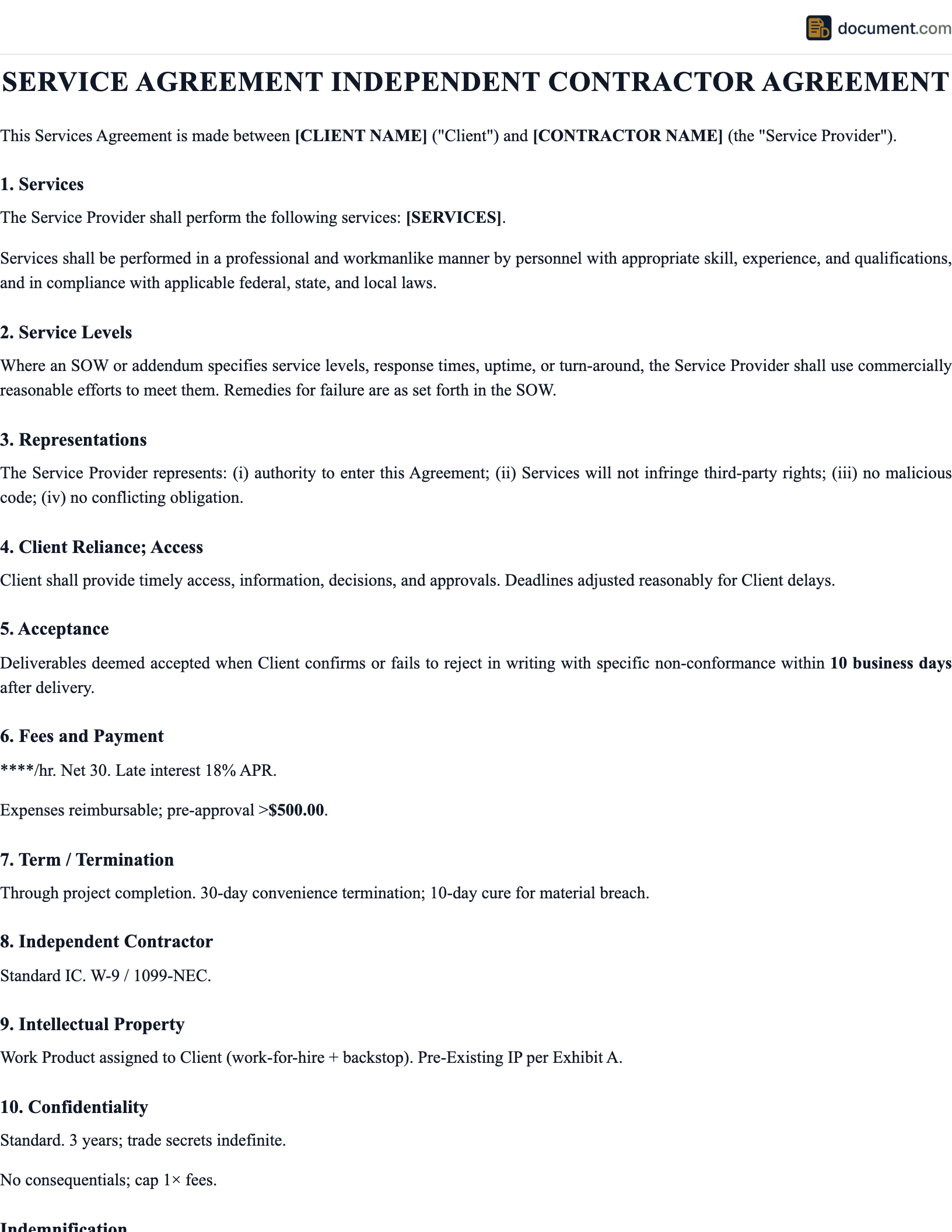
Construction Contract Form Preview
This visual preview illustrates the structure of our construction contract template. Your completed document will be customized for your project type, payment structure, and state-specific requirements.
Construction Contract
Residential / Commercial Construction Agreement
Section 1: Parties
Section 2: Project Scope
Section 3: Contract Price and Payment
Section 4: Signatures
Property Owner
Contractor
Related Construction Documents
Construction projects often require supplementary documents beyond the base contract. These forms support the change management and bidding processes that are integral to construction work.
Fixed-Price vs Cost-Plus vs Time-and-Materials
The pricing structure you choose fundamentally affects risk allocation, cost predictability, and scope flexibility. Each model is appropriate for different project types and certainty levels.
Fixed-Price (Lump Sum)
- - Single total price for all work
- - Contractor bears overrun risk
- - Maximum budget certainty for owner
- - Requires detailed, complete scope
- - Change orders for any scope changes
- - Best for: well-defined projects
Cost-Plus
- - Actual costs plus markup (10-20%)
- - Owner bears overrun risk
- - Full cost transparency
- - Flexible scope adjustments
- - Often includes a GMP cap
- - Best for: evolving or complex scopes
Time and Materials
- - Labor hours at agreed rates + materials
- - Owner bears overrun risk
- - Maximum scope flexibility
- - Least budget predictability
- - Often capped with a not-to-exceed
- - Best for: emergency or exploratory work
Key takeaway: Use fixed-price when the scope is completely defined and unlikely to change. Use cost-plus when the scope is complex or evolving but you want cost transparency. Use time-and-materials only for projects where the scope truly cannot be defined upfront or for small emergency repairs.
How to Draft a Construction Contract: A 7-Step Guide
A well-drafted construction contract is the single most important risk management tool for any building project. Follow these steps to create a contract that protects both the property owner and the contractor.
Define the Project Scope with Plans and Specifications
The scope of work is the contract's foundation. Reference detailed construction plans, architectural drawings, and written specifications by date and revision number. Describe the work in enough detail that both parties — and a judge, if necessary — can determine exactly what is included and what is not. Specify materials by brand, model, grade, and color where appropriate. Include a material substitution clause defining the process and approval requirements for replacing specified materials with alternatives. Define the project boundaries — what the contractor is responsible for and what the owner or other contractors will handle.
Structure the Payment Schedule
Align payments with work completion to protect both parties. A typical structure includes: an initial deposit (10-20% for mobilization and material procurement), progress payments at defined milestones (foundation, framing, rough-in, drywall, finishes), retainage (5-10% withheld from each payment and released upon final completion), and a final payment upon substantial completion, punch list completion, and receipt of all lien waivers. Never front-load payments — if the contractor has received 80% of the contract price when only 50% of the work is complete, the owner has little leverage if problems arise.
Warning:Many states cap the deposit amount a contractor can collect before starting work. California limits deposits to 10% of the contract price or $1,000, whichever is less, for home improvement contracts. Check your state's specific limits.
Establish a Change Order Process
Changes during construction are inevitable — homeowners change their minds about finishes, hidden conditions are discovered behind walls, material availability shifts. The contract must require all changes to be documented in written change orders signed by both parties before the changed work begins. Each change order should detail: the description of changed work, the cost impact (itemized labor and materials), the schedule impact, and any effect on existing warranties. Include a clause that no verbal change orders are valid — the most common construction dispute is "he told me to go ahead" without written documentation.
Include Mechanic's Lien Protections
Mechanic's lien exposure is the unique financial risk of construction contracts. Require the contractor to: provide a conditional lien waiver with each progress payment request (the waiver becomes unconditional upon payment); provide unconditional lien waivers from all subcontractors and material suppliers before the next progress payment is released; pay subcontractors within a defined period (typically 7-10 days of receiving payment from the owner); and provide a final unconditional lien waiver from all parties upon project completion and final payment. For larger projects, consider requiring a payment bond that guarantees payment to subcontractors.
Verify Insurance and Licensing
Before signing, verify the contractor's license with the state licensing board and obtain certificates of insurance showing current general liability, workers' compensation, and commercial auto coverage. The contract should specify minimum coverage amounts, require 30-day notice of any policy cancellation, and may require the owner to be named as an additional insured. For new construction and major remodels, require builder's risk insurance covering the structure under construction. Specify that the contractor is responsible for ensuring all subcontractors carry appropriate insurance and licensing.
Define the Timeline and Delay Provisions
Establish a realistic project timeline with start and completion dates, interim milestones, and provisions for delays. Distinguish between excusable delays (weather, force majeure, owner-caused delays, permitting) and inexcusable delays (contractor mismanagement). For inexcusable delays, consider liquidated damages — a pre-agreed amount per day of delay that compensates the owner without requiring proof of actual damages. The contractor should be required to notify the owner of anticipated delays within 3-5 business days with a description of the cause and expected duration.
Specify Warranty and Completion Procedures
Define the warranty period for workmanship (typically 1-2 years from substantial completion) and the process for warranty claims. Specify that manufacturer warranties on materials and equipment are assigned to the owner. Establish the substantial completion and punch list process: when the work is substantially complete, the owner and contractor walk through and create a punch list of remaining items. The contractor must complete punch list items within a defined period (typically 30 days). Upon completion of all punch list items, final inspection, and receipt of all lien waivers, the owner releases the retainage and makes final payment.
Key Components of a Construction Contract
Construction contracts are among the most detailed commercial agreements. The table below outlines the essential provisions that protect both parties and keep the project on track.
| Component | Description |
|---|---|
| Project Scope | Plans, specifications, materials, work description, exclusions, project boundaries |
| Contract Price | Total price, pricing model (fixed/cost-plus/T&M), allowances, unit prices |
| Payment Schedule | Deposit, progress payments, retainage, final payment, invoicing, lien waiver requirements |
| Timeline | Start date, milestones, completion date, excusable vs inexcusable delays, liquidated damages |
| Change Orders | Written change order process, cost and schedule impact, approval requirements, no verbal changes |
| Insurance | GL, workers' comp, auto, builder's risk, coverage minimums, additional insured requirements |
| Licensing | Contractor license verification, subcontractor licensing, permit responsibilities |
| Lien Waivers | Conditional/unconditional waivers, subcontractor payment verification, payment bonds |
| Warranty | Workmanship warranty period, manufacturer warranties, claim process, exclusions |
| Substantial Completion | Definition, determination process, punch list, retainage release, risk transfer |
| Safety and Compliance | OSHA compliance, building codes, inspections, hazard disclosure, clean-up obligations |
| Dispute Resolution | Mediation, arbitration, or litigation; governing law; venue; attorney fees |
Mechanic's Lien Protection
Mechanic's lien laws give unpaid contractors, subcontractors, and material suppliers the right to place a claim against the property. Understanding and protecting against this exposure is one of the most important aspects of any construction contract.
Conditional Lien Waivers
Submitted with each progress payment request. The waiver becomes effective only upon receipt of payment.
- - Protects contractor's lien rights until paid
- - Gives owner evidence of waiver upon payment
- - Required from contractor and all subcontractors
- - Covers work through the payment date
Unconditional Lien Waivers
Submitted after payment is received. Irrevocably waives lien rights for the covered period.
- - Waives lien rights regardless of future events
- - Required from all parties at project completion
- - Must be obtained before releasing retainage
- - Provides owner with clear title
Payment Bonds
Surety bond guaranteeing the contractor will pay subcontractors and suppliers — shifts lien risk to the surety.
- - Required for public projects (Miller Act)
- - Optional but recommended for large private projects
- - Cost typically 1-3% of contract value
- - Subcontractors claim against bond, not property
Retainage
Percentage withheld from each payment as security for completion and lien-free delivery.
- - Typically 5-10% of each progress payment
- - Released upon final completion and lien waiver
- - Some states cap retainage percentages
- - Incentivizes contractor to complete punch list
Frequently Asked Questions
Find answers to common questions about construction contracts, payment schedules, change orders, mechanic's liens, warranties, and contractor licensing.
Official Resources
For additional information on construction contracts, contractor licensing, mechanic's liens, and building code compliance, consult these official resources.
OSHA - Construction Safety
Federal workplace safety standards specific to the construction industry
ICC - International Building Code
Building codes adopted by most U.S. jurisdictions for construction compliance
SBA - Contractor Hiring Guide
Small Business Administration resources for hiring and managing contractors
EPA - Lead Paint RRP Rule
EPA lead paint regulations for renovation and construction in pre-1978 buildings
IRS - Contractor Classification
IRS guidance on classifying construction workers as employees or contractors
Nolo - Mechanic's Lien FAQ
Free legal information on mechanic's lien rights, filing, and enforcement by state
Ready to Create Your Construction Contract?
Define your project scope, choose your payment structure, and download your attorney-reviewed construction contract in minutes. Includes change order forms, lien waiver templates, and state-specific licensing compliance provisions.
Create DocumentNo account required. Free to create and preview.