
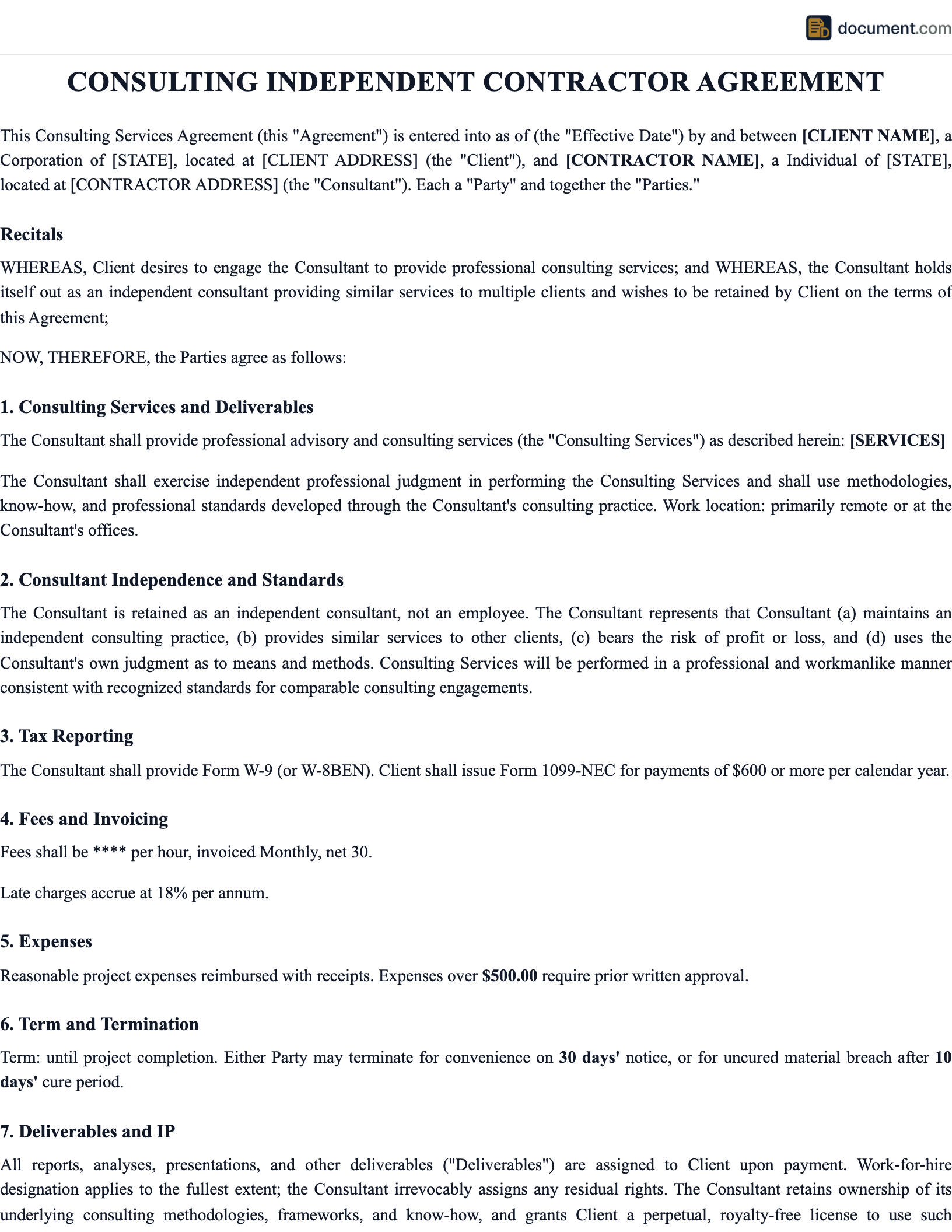



What Is an Interior Design Retainer Agreement?
An interior design retainer is a continuing services agreement under which a designer or firm reserves a defined hour bank per month for ongoing design and procurement work on the client's property. The instrument controls the scope of services, monthly fee and hour bank, procurement markup methodology, change-order procedure, design IP licensing under 17 U.S.C. § 102(a)(8) (architectural works) and § 102(a)(5) (pictorial works), insurance requirements, and termination economics including the treatment of non-cancellable vendor orders. The retainer fits clients with multi-phase renovations, seasonal home refreshes, hospitality groups managing recurring property design, developers with multi-unit roll-outs, and high-net-worth individuals with multiple residences requiring consistent aesthetic direction.
Twenty-eight states regulate the practice of interior design through title acts (which restrict use of titles like "Certified Interior Designer" or "Registered Interior Designer") or practice acts (which restrict the practice itself). Florida (Fla. Stat. § 481.219), Nevada (NRS 623), Louisiana (La. R.S. § 37:3171 et seq.), and the District of Columbia operate the strictest practice acts requiring licensure to stamp construction documents for commercial interior projects. The NCIDQ examination administered by the Council for Interior Design Qualification is the credentialing baseline; many state licensing boards condition licensure on NCIDQ passage. The contract should recite the designer's NCIDQ number and state license where applicable, and disclose the limits of the designer's authority to seal documents.
Procurement markups and trade-discount disclosure
Procurement is typically the largest line item in any residential interior design engagement and the most common source of fee disputes. The industry standard markup is 30 percent above trade cost (range 20 to 40 percent), but the methodology must be disclosed in writing. Three structures predominate. Cost-plus pricing discloses the trade cost and applies a percentage markup to the invoice; the client sees full cost transparency. Retail pricing bills at MSRP and the designer keeps the trade discount as compensation. Flat procurement fee charges a fixed dollar amount per order regardless of cost, suitable for clients who furnish high volumes of low-cost items. State UDAP statutes (Florida FDUTPA, Massachusetts Chapter 93A, California UCL Cal. Bus. & Prof. Code § 17200) and ASID's Code of Ethics require disclosure of any compensation the designer receives from vendors including referral fees, manufacturer rebates, and volume bonuses.
Design deposits and change orders
The design deposit (the upfront retainer fee) is typically structured as non-refundable to secure the designer's reserved capacity. State the non-refundable status expressly and tie the amount to a reasonable estimate of the designer's lost opportunity cost; courts will void deposits that operate as penalties (Cal. Civ. Code § 1671). Two revision rounds per design deliverable is standard; further revisions or any changes to designs already approved trigger a written change order signed by both parties, stating additional scope, hours, fee, and revised completion timeline. The contract should require client written approval before any procurement order over a defined threshold (commonly $500 to $1,000) and disclose representative vendor lead times (custom upholstery 12 to 16 weeks, case goods 8 to 14 weeks, lighting 6 to 12 weeks, hand-knotted rugs 8 to 20 weeks) so the client cannot later claim surprise.
Cohesive Vision
Consistent aesthetic direction across rooms, phases, and seasons.
Trade Pricing
Access to designer trade discounts on furniture, fabrics, and finishes.
Priority Access
Retainer clients receive first priority on the designer's schedule.
Interior Design Retainer Form Preview
Interior Design Retainer Agreement
Ongoing Residential / Commercial Design
Section 1: Parties
Section 2: Design Services
Section 3: Fees & Procurement
Key Components
Scope of Design Services
Concept development, space planning, material selection, procurement, site visits, and installation.
Monthly Hours & Fee
Retainer fee, included hours, and overage hourly rate for additional design time.
Procurement Markup
Percentage markup on trade purchases, methodology (cost-plus or retail), and transparency requirements.
Revision Rounds
Number of design revision rounds included and the process for change orders beyond the included scope.
Site Visits & Travel
Number of included site visits, travel time billing, and expense reimbursement for out-of-town projects.
Design IP & Licensing
Designer retains copyright in drawings and concepts; client receives a license for the specific project.
Vendor Coordination
Designer manages vendor relationships, deliveries, installations, and warranty claims on the client's behalf.
Budget Management
Designer provides procurement budgets, tracks spending against approved budgets, and obtains pre-approval for purchases.
Insurance Requirements
Professional liability, general liability, and workers' compensation coverage requirements.
Termination & Procurement Settlement
Notice period, treatment of in-progress orders, procurement settlement, and return of design materials.
How to Create an Interior Design Retainer
Identify the parties and project scope
Full legal names of client and designer, property address(es), and a description of the ongoing design needs.
Define included design services
List every service category: concept boards, space plans, elevations, material specs, procurement, site visits, and styling.
Set the retainer fee and procurement markup
Establish the monthly design fee, included hours, overage rate, and the procurement markup percentage with full transparency.
Specify revision and approval procedures
Define the number of revision rounds, the client approval process, and the fee for changes to previously approved designs.
Address site visits and travel
Number of monthly site visits, travel-time billing, and expense reimbursement categories and pre-approval requirements.
Include IP and portfolio-use terms
Clarify that the designer retains copyright, the client receives a project license, and the designer may publish the work.
Draft termination and procurement settlement
Specify the notice period, treatment of non-cancellable orders, procurement markup on items already placed, and design-file handoff.
Fee Models
| Model | Structure | Best For |
|---|---|---|
| Hourly Retainer | Monthly fee for a set number of design hours | Advisory, seasonal refreshes, phased projects |
| Flat Fee + Markup | Fixed design fee plus procurement markup on all purchases | Full-service residential design |
| Percentage of Budget | Design fee calculated as a percentage (15-25%) of total project budget | Large residential and commercial projects |
| Cost-Plus | All items billed at trade cost plus a transparent markup (20-35%) | Clients who want full cost transparency |
Procurement & Markup
Procurement typically accounts for 60 to 80 percent of total spend on a residential interior design engagement. The retainer must define how the designer purchases on the client's behalf, the markup applied to trade cost, and the allocation of risk for vendor delays, freight damage, and warranty claims. State UDAP laws and ASID Code of Ethics Section 5 require written disclosure of the markup methodology and any third-party compensation the designer receives in connection with the project.
Sales tax, freight, and white-glove delivery
Pass through freight, white-glove delivery, crating, and storage at cost on the next invoice. Sales tax is more complex: in states recognizing the resale exemption (most states), the designer purchases tax-exempt and collects sales tax from the client at the rate in effect at the delivery address. In states without a resale exemption for designers, the designer pays sales tax on the trade purchase and the markup applies to the post-tax cost. The contract should state which party is responsible for collecting and remitting sales tax, and require the designer to maintain a resale certificate where applicable. For interstate purchases, the Wayfair decision (South Dakota v. Wayfair, Inc., 138 S. Ct. 2080 (2018)) obligates many out-of-state vendors to collect sales tax on purchases shipping to the client's state.
Trade Account Purchasing
Designers purchase through their trade accounts at wholesale prices and pass items to the client at trade cost plus the agreed markup.
Client Pre-Approval
All purchases above a defined threshold (e.g., $500) should require written client approval before the designer places the order.
Warranties & Returns
The designer coordinates vendor warranties and returns but is not personally liable for manufacturer defects or shipping damage.
Frequently Asked Questions
Official Resources
ASID
American Society of Interior Designers. Practice standards and contract resources.
IIDA
International Interior Design Association. Professional resources and advocacy.
CIDQ
Council for Interior Design Qualification. NCIDQ certification and licensing info.
SBA
Small Business Administration resources for design professionals.
U.S. Copyright Office
Copyright protection for architectural and design works.
CPSC
Consumer Product Safety Commission. Furniture and fixture safety standards.
Ready to Create Your Design Retainer?
Define your design scope, procurement terms, and retainer fee in an attorney-reviewed agreement.
Create DocumentNo account required. Free to create and preview.