



What Is an Interior Design Contract?
An interior design contract is a legally binding agreement between a professional interior designer and a client that defines the scope, deliverables, compensation, and terms for a design project. Interior design engagements are creative, multi-phase projects that involve concept development, space planning, material and finish selection, furniture procurement, contractor coordination, and project management — often spanning months and involving tens of thousands of dollars in design fees and hundreds of thousands in furniture, fixtures, and construction costs. The contract transforms this complex creative process into a structured engagement with clear expectations, approval gates, and financial terms.
The interior design profession sits at the intersection of art, architecture, and commerce. Designers exercise creative judgment in translating a client's lifestyle preferences and functional needs into physical spaces, but they also manage budgets, coordinate trades, procure furnishings through trade accounts, and navigate building codes and accessibility requirements. This duality — creative service and business transaction — makes the design contract uniquely complex. The contract must protect the designer's creative work and intellectual property while giving the client confidence that the project will be completed on time, within budget, and to the quality level they expect.
Approximately 28 U.S. states regulate the interior design profession in some form — some require full licensure to practice, others protect the title "interior designer" without restricting practice, and others have no regulation at all. The National Council for Interior Design Qualification (NCIDQ) examination is the primary national credentialing standard. The contract should document the designer's credentials, address state-specific licensing requirements, and clarify the scope of services relative to what constitutes the practice of architecture (which requires a separate license in every state).
Our interior design contract templates serve residential designers, commercial design firms, hospitality design studios, and freelance designers. Each template addresses the specific financial, creative, and legal considerations of design engagements — from procurement markup and revision limits to intellectual property ownership and trade-account management.
Creative Protection
Intellectual property ownership, portfolio rights, and revision limits.
Fee Transparency
Design fees, procurement markup, and milestone payments defined.
Approval Gates
Written sign-offs at each phase prevent costly miscommunication.
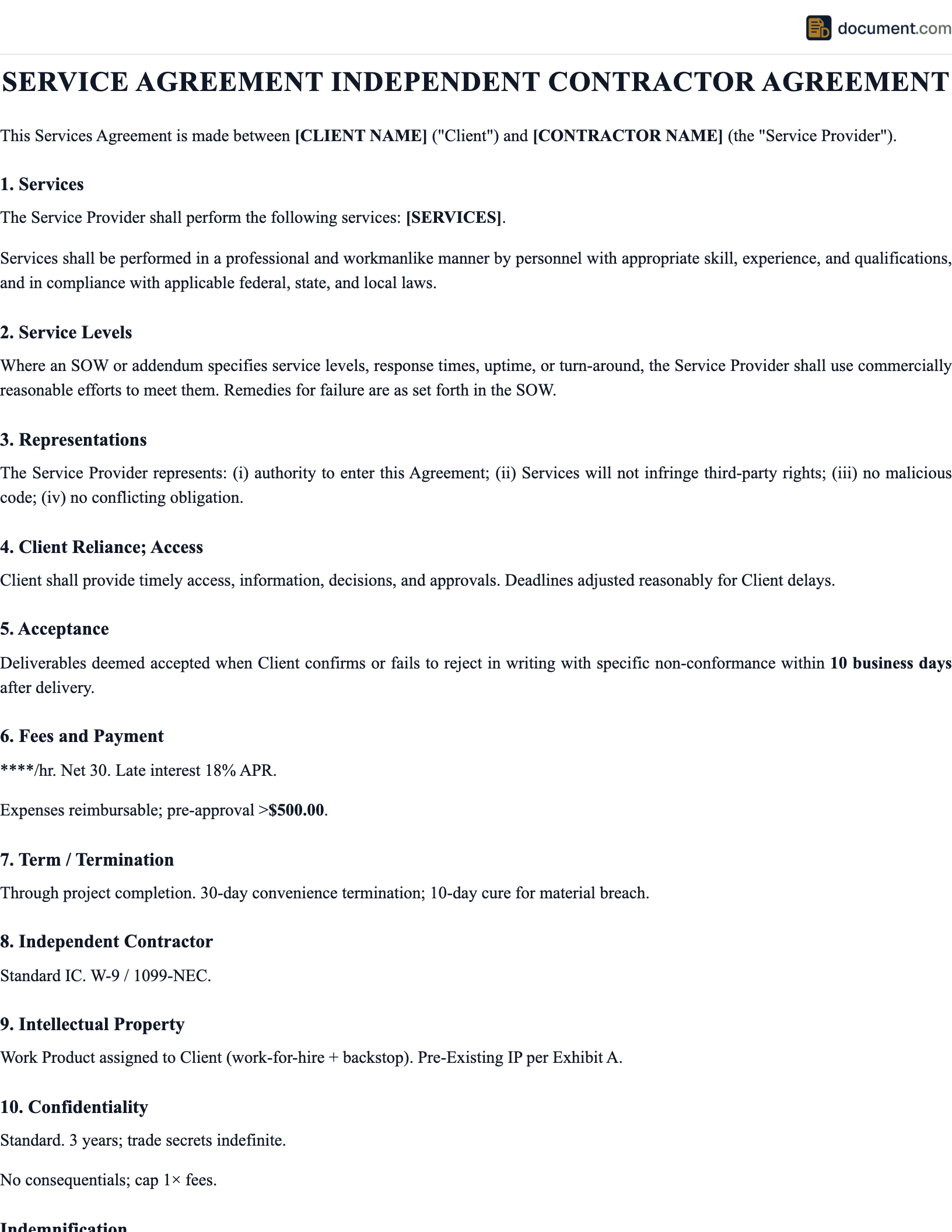
Interior Design Contract Form Preview
Interior Design Service Agreement
Professional Design Engagement Contract
1. SCOPE OF SERVICES
Designer shall provide the following services for the project at : concept development, space planning, material and finish selection, furniture specification, procurement management, and contractor coordination for rooms.
2. DESIGN FEES
Design fee: $ (flat fee / hourly at $/hr). Procurement markup: % above trade pricing. Included revisions: rounds per phase.
3. INTELLECTUAL PROPERTY
Designer retains ownership of all original designs, drawings, and specifications. Client receives a non-exclusive license to use the designs for the contracted project only. Designer retains the right to photograph and use the completed project in marketing materials.
4. CLIENT APPROVALS
Client shall provide written approval at each project phase before Designer proceeds to the next phase. Approval must be provided within business days of presentation.
Key Components of an Interior Design Contract
| Component | Purpose | Key Details |
|---|---|---|
| Scope of Services | Defines what the designer will deliver | Phases, rooms, deliverables, exclusions |
| Fee Structure | Sets compensation model | Flat, hourly, % of budget, procurement markup |
| Revisions | Limits scope of included changes | Rounds per phase, additional revision pricing |
| IP Ownership | Clarifies design ownership rights | Designer retention, client license, portfolio rights |
| Procurement | Governs furniture and material purchasing | Markup %, trade accounts, ordering, delivery, returns |
| Client Approvals | Creates sign-off gates between phases | Written approval, turnaround time, deemed approval |
| Payment Schedule | Ties payments to project milestones | Retainer, phase payments, final payment |
| Cancellation | Addresses early termination scenarios | Payment for completed work, non-cancellable orders |
How to Create an Interior Design Contract
Define the Project Scope and Phases
Identify the rooms and spaces to be designed, the level of service (full-service design vs. consultation only), and the project phases — concept, schematic design, design development, procurement, and installation oversight.
Set Fee Structure and Procurement Terms
Choose a pricing model (flat fee, hourly, percentage of budget, or combination) and set the procurement markup percentage. Define what is included in the base fee versus what triggers additional charges.
Establish Revision Limits and Approval Process
Specify the number of revision rounds included at each phase, the cost of additional revisions, the approval turnaround time, and the written sign-off procedure.
Address IP, Procurement, and Logistics
Define intellectual property ownership, portfolio usage rights, trade-account purchasing procedures, delivery coordination, and installation oversight responsibilities.
Structure Payment and Legal Terms
Tie payments to project milestones — retainer at signing, phase payments upon approval, and final payment at project completion. Add cancellation, liability, and governing-law provisions.
Frequently Asked Questions
Official Resources
ASID - American Society of Interior Designers
Professional standards, continuing education, and contract guidance.
IIDA - International Interior Design Association
Industry advocacy, certifications, and professional development.
NCIDQ - Interior Design Qualification
National credentialing examination for interior designers.
SBA - Business Licenses
Federal and state licensing guidance for design professionals.
IRS - Self-Employed Tax Center
Tax guidance for independent interior designers.
U.S. Copyright Office
Copyright registration and protection for design works.
Ready to Create Your Interior Design Contract?
Select your state, define your design project, and download a professional interior design contract in minutes.
Create DocumentNo account required. Free to create and preview.