



What Is a Plumbing Subcontractor Agreement?
A plumbing subcontractor agreement is a legally binding contract that governs the relationship between a general contractor or property owner and a licensed plumber engaged to perform plumbing work on a construction or renovation project. Unlike a simple service invoice for a repair call, this agreement establishes the full scope of a plumbing subcontract — from underground rough-in through final fixture trim-out — and addresses the regulatory, financial, and liability framework for the entire engagement. Plumbing is one of the most heavily regulated building trades because failures can contaminate potable water supplies, release sewer gases into occupied spaces, or cause catastrophic water damage to structures.
The agreement serves multiple critical functions beyond a basic work description. It documents the plumber's licensing and insurance credentials, which the GC needs for permit compliance and to satisfy their own insurance carrier requirements. It establishes who is responsible for pulling plumbing permits and scheduling inspections with the local authority having jurisdiction (AHJ). It defines material specifications — whether the project uses copper, PEX, CPVC, or a hybrid system for water distribution, and Schedule 40 PVC, ABS, or cast iron for drain/waste/vent piping. And it allocates the risk of hidden conditions, which are endemic in plumbing work: corroded galvanized pipes behind finished walls, deteriorating cast-iron stacks below grade, root-infiltrated sewer laterals, and asbestos pipe insulation that triggers abatement requirements.
From a legal perspective, plumbing subcontractor agreements carry unique weight because plumbing defects often manifest months or years after completion — a slow leak behind a wall that causes mold, a cross-connection that contaminates drinking water, or a gas line leak that creates an explosion hazard. The agreement's warranty provisions, completed operations insurance requirements, and indemnification clauses must account for this delayed-manifestation risk. State construction defect statutes (like California's SB 800 or Colorado's Construction Defect Action Reform Act) impose specific notice and repair procedures that the agreement should incorporate by reference.
Code Compliance
Ensures all work meets IPC/UPC standards and local plumbing code amendments.
License Verification
Documents active plumbing license and required trade certifications.
Change-Order Process
Defines procedures for handling hidden conditions and scope changes.
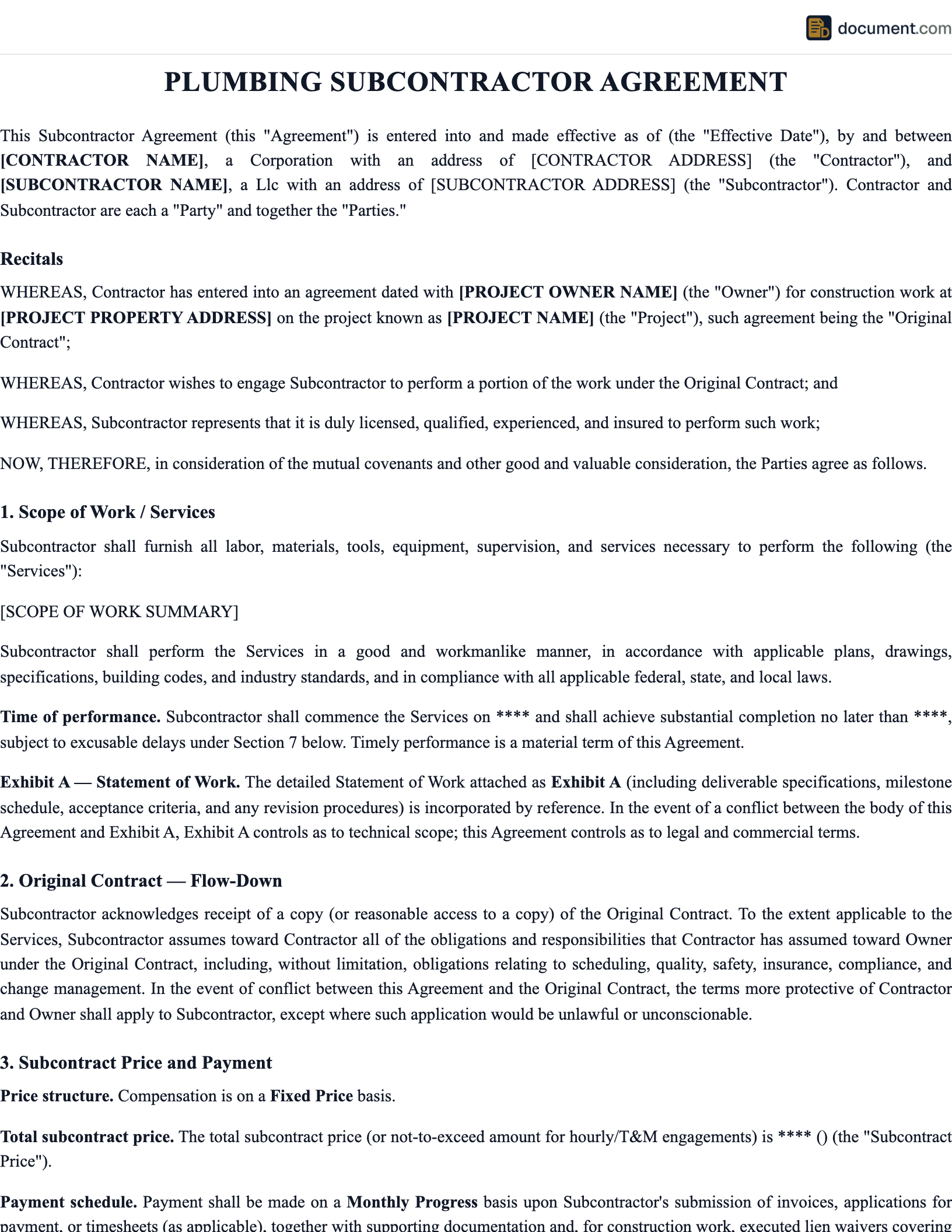
Plumbing Subcontractor Agreement Form Preview
Plumbing Subcontractor Agreement
Licensed Plumbing Services Contract
1. PARTIES
This Agreement is entered into between ("General Contractor") and ("Plumbing Subcontractor"), License No. , for plumbing services at ("Project Site").
2. SCOPE OF WORK
Subcontractor shall furnish all labor, materials, and equipment necessary to complete: in accordance with the project plans dated and all applicable plumbing codes.
3. COMPENSATION
Total contract price: $ , payable in progress payments upon completion of each phase as outlined in Schedule A.
GENERAL CONTRACTOR
PLUMBING SUBCONTRACTOR
Key Components
A comprehensive plumbing subcontractor agreement addresses the regulated nature of plumbing work, the risk of hidden conditions, and the multi-phase inspection process:
| Component | Purpose | Key Details |
|---|---|---|
| Licensing & Credentials | Verifies legal authority to perform work | License number, type, expiration, state plumbing board registration, backflow certifications |
| Scope of Work | Defines exactly what plumbing work is included | Supply piping, DWV systems, gas lines, fixtures, equipment connections, testing, inspections |
| Material Specifications | Ensures code-compliant materials | Pipe types (copper, PEX, PVC), fixture brands, approved substitution process |
| Payment Schedule | Ties compensation to project milestones | Underground rough-in, above-ground rough-in, trim-out, final inspection, retainage |
| Insurance Requirements | Allocates risk and protects all parties | GL minimums, completed operations, workers' comp, additional insured endorsements |
| Change-Order Process | Manages scope changes and hidden conditions | Written approval required, markup percentages, T&M rates, schedule impact documentation |
| Warranty Terms | Defines post-completion obligations | Workmanship warranty period, manufacturer pass-through, response times, exclusions |
How to Create a Plumbing Subcontractor Agreement
Verify Licensing and Insurance
Before drafting the agreement, confirm the plumber holds a valid license for the scope of work (journeyman, master, or contractor classification as required by your state), verify the license through the state plumbing board's online database, and request certificates of insurance showing current general liability, completed operations, workers' compensation, and commercial auto coverage with adequate limits.
Define the Scope and Specifications
Detail every plumbing system covered by the agreement: domestic water supply (hot and cold), drain/waste/vent (DWV), gas piping, fixture installation, water heater hookup, hose bibs, cleanouts, and any specialty systems (medical gas, fire sprinkler tie-ins, grease interceptors). Reference the project drawings by sheet number and specify the applicable plumbing code (IPC, UPC, or state-amended version).
Establish the Payment Schedule
Structure payments around inspection milestones: mobilization deposit, underground rough-in completion, above-ground rough-in passing inspection, trim-out and fixture installation, and final inspection approval. Specify retainage percentage (typically 5-10%), payment terms (net-15 or net-30), and the process for submitting payment applications with lien waivers.
Document Permit and Inspection Responsibilities
Assign who pulls the plumbing permit, who pays permit fees, who schedules inspections with the AHJ, who must be present during inspections, and who bears the cost of re-inspection if work fails. In most jurisdictions, the licensed plumber of record must pull the permit under their license.
Create a Change-Order Protocol
Establish the process for handling hidden conditions (corroded pipes, code violations in existing work, undiscovered obstructions) and owner-requested changes. Require written change-order requests with cost breakdowns (labor hours, material costs, markup), schedule impact assessment, and written approval before proceeding. Define T&M rates for emergency or small-scope changes.
Set Warranty and Callback Terms
Define the workmanship warranty period (1-2 years is standard), response time requirements for warranty callbacks (24-48 hours for leaks, immediate for emergencies), exclusions (owner misuse, freeze damage from failure to winterize, modifications by others), and how manufacturer material warranties pass through to the owner.
Include Dispute Resolution and Lien Provisions
Specify the dispute resolution process (mediation before arbitration or litigation), the governing state law, and mechanic's lien provisions including preliminary notice requirements, conditional and unconditional waiver procedures, and the plumber's agreement to release liens upon receipt of final payment. Reference any applicable state prompt-payment act requirements.
Frequently Asked Questions
Official Resources
Authoritative resources on plumbing codes, licensing, and construction subcontracting best practices.
IAPMO - Uniform Plumbing Code
International Association of Plumbing and Mechanical Officials — publisher of the UPC adopted by many western states.
ICC - International Plumbing Code
International Code Council's plumbing code adopted by the majority of U.S. jurisdictions.
OSHA - Trenching and Excavation Safety
Federal OSHA requirements for trench safety applicable to underground plumbing installations.
EPA - Drinking Water Standards
EPA standards governing safe drinking water that inform plumbing material and installation requirements.
PHCC - Plumbing-Heating-Cooling Contractors Association
National trade association providing contractor resources, model contracts, and continuing education.
SBA - Contractor vs Employee Classification
Small Business Administration guide to properly classifying workers as independent contractors.
Create Your Plumbing Subcontractor Agreement
Define scope, licensing, payment milestones, and warranty terms in a professional plumbing subcontract.
Create DocumentNo account required. Free to create and preview.