
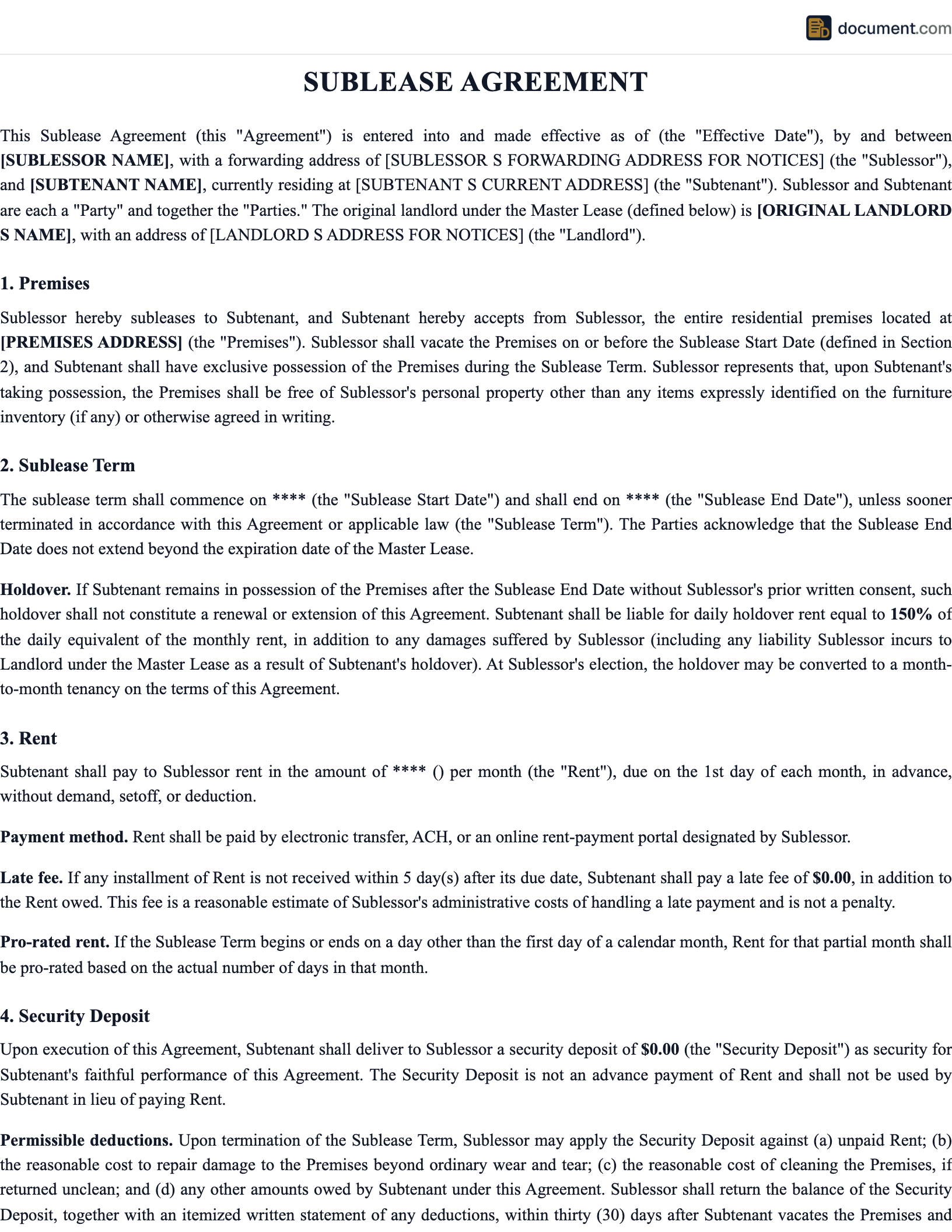



Vermont Sublease Agreement Overview
Vermont sublease law is governed primarily by contract, not statute. No Vermont law grants tenants an automatic right to sublet, and no statute requires commercial landlords to act reasonably when withholding sublease consent. Whether subleasing is permitted depends on the terms of the prime lease. Most Vermont commercial leases in Burlington, South Burlington, and the Chittenden County market require landlord consent, and many are silent on the reasonableness standard, leaving the landlord broad discretion.
A critical concept in Vermont sublease arrangements is the absence of privity between the sublessee and the landlord. The sublessee's obligations flow to the sublessor, not to the landlord. If the prime lease terminates because the sublessor defaults, the sublessee loses occupancy rights even if they are current on sublease rent. Vermont commercial sublessees in Burlington's downtown and Route 2 corridor markets should consider negotiating a non-disturbance agreement directly with the landlord to protect against this risk.
Vermont's sublease market reflects the state's small commercial base and its university communities. The University of Vermont in Burlington generates residential sublease demand, particularly in summer months when students sublet off-campus apartments. Stowe and other ski communities see seasonal sublease activity tied to the winter recreation season.
None
Statutory subletting right
Yes
Consent typically required
Yes
Original tenant remains liable
None
Privity with landlord
Vermont Subletting Laws
Vermont sublease law is contract-driven. The prime lease governs whether subleasing is permitted and what conditions apply. Vermont commercial landlords have broad discretion to consent or refuse, while residential tenants in Burlington and other Vermont cities operate under Title 9, Chapter 137, which does not create a standalone subletting right.
No Privity Between Sublessee and Landlord in Vermont
Vermont subleases do not create a direct contractual relationship between the sublessee and the landlord. If the sublessor defaults on the prime lease, the sublessee can lose occupancy even while current on sublease rent. Vermont commercial sublessees in Burlington, South Burlington, and Chittenden County office or retail spaces should negotiate a non-disturbance agreement with the landlord before executing the sublease.
Sublessor Obligations and Risks
- Obtain Written Landlord Consent: Confirm the prime lease allows subleasing and get the landlord's written approval before executing any sublease document
- Remain Fully Liable Under the Prime Lease: The sublessor cannot transfer liability to the sublessee; the landlord retains full recourse against the original tenant for rent and lease compliance throughout the sublease term
- Screen the Sublessee: Conduct credit and reference checks; the sublessor bears the financial risk if the sublessee defaults, making careful screening a direct financial protection
- Provide Prime Lease Copy: Give the sublessee a complete copy of the prime lease; the sublessee is bound by the prime lease terms to the extent incorporated into the sublease
Sublessee Risks in Vermont
- No Direct Lease Rights Against Landlord: The sublessee cannot enforce the prime lease provisions directly against the landlord; rights flow through the sublessor only
- Risk of Prime Lease Termination: If the sublessor stops paying rent to the landlord, Vermont courts can terminate the prime lease, ending the sublessee's right to occupy regardless of the sublease term
- Non-Disturbance Protection Not Automatic: Commercial sublessees in Burlington and South Burlington should request a non-disturbance and attornment agreement from the landlord, which provides protection if the prime lease terminates due to sublessor default
- Security Deposit Rights: Vermont residential tenants must receive their deposit back within 14 days of tenancy end; sublessees should confirm the same standard applies in their sublease agreement
How to Fill Out a Vermont Sublease Agreement
A Vermont sublease requires careful preparation because the sublessor retains liability under the prime lease throughout the sublease term. These steps address the specific issues Vermont sublessors and sublessees face.
Review the Prime Lease and Seek Consent
Read the prime lease subletting provision carefully. If the prime lease requires landlord consent, submit a written request with the proposed sublessee's financial information and intended use before executing any sublease document. Vermont commercial sublessees should simultaneously ask the landlord to execute a non-disturbance agreement protecting their occupancy if the sublessor defaults on the prime lease.
Screen the Sublessee and Conduct a Credit Check
Verify the sublessee's creditworthiness and rental history. Vermont law does not limit how the sublessor evaluates the sublessee's qualifications, but the screening must comply with Vermont fair housing laws, which prohibit discrimination based on protected characteristics. Burlington's tight rental market means qualified sublessees can usually be found, but thorough screening is essential since the sublessor remains liable to the landlord.
Draft the Sublease with Vermont-Compliant Default Provisions
Include the sublease start and end dates within the prime lease term, monthly rent and payment terms, security deposit amount and the 14-day return requirement consistent with Vermont residential practice, utility allocation, and an indemnification clause protecting the sublessor if the sublessee causes damage or lease violations. Incorporate the no-privity concept explicitly by stating that the sublessee has no direct lease relationship with the landlord.
Execute the Sublease and Distribute All Documents
Both the sublessor and sublessee must sign the sublease. Provide each party with a fully executed copy and attach the landlord's written consent and a copy of the prime lease. Complete a move-in condition checklist with photos to document the premises condition at sublease commencement. For commercial sublessees in Burlington, distribute copies to any lenders or guarantors who require notice of a sublease.
Landlord Consent for Subletting in Vermont
Vermont sublease consent requirements depend on the prime lease terms. These are the key rules Vermont sublessors and sublessees need to understand before proceeding.
| Topic | Vermont Rules |
|---|---|
| Statutory Subletting Right | None; subletting rights depend entirely on the prime lease terms |
| Landlord Consent Standard | No reasonableness mandate for commercial leases; landlord can withhold for any reason unless the lease expressly limits that right |
| Original Tenant Liability | Remains fully liable under the prime lease; subletting does not release the sublessor from rent or lease compliance obligations |
| Privity Between Sublessee and Landlord | None under a standard Vermont sublease; sublessee has no direct contractual rights against the landlord absent a separate non-disturbance agreement |
| Non-Disturbance Protection | Not automatic; must be separately negotiated with the landlord; important for Burlington and South Burlington commercial sublessees to protect against sublessor default |
| Security Deposit from Sublessee | No statutory cap on amount; residential sublessors should return deposits within 14 days of tenancy end consistent with Vermont Title 9 residential landlord-tenant practice |
Sample Vermont Sublease Agreement
Below is a preview of our Vermont-specific sublease agreement. Your customized document will include all provisions required under VT law.
STATE OF VERMONT
SUBLEASE AGREEMENT
Residential Subletting Contract
SUBLESSOR (Original Tenant):
Name: [Sublessor Name]
Address: [Vermont Address]
SUBLESSEE (New Occupant):
Name: [Sublessee Name]
Current Address: [Address]
SUBLEASE TERMS
Start Date: [Date]
End Date: [Date]
Monthly Rent: $[Amount]
Security Deposit: $[Amount]
Vermont Sublease Agreement FAQ
Answers to common questions about sublease agreements in Vermont.
Other Vermont Lease Agreement Templates
Need a different type of lease agreement for Vermont? We offer state-specific templates for every type of rental arrangement.
Vermont Residential Lease
Standard rental agreements
Vermont Month-to-Month Lease
Flexible short-term rentals
Vermont Vacation Rental
Short-term vacation properties
Vermont Commercial Lease
Business and retail spaces
Vermont Roommate Agreement
Shared living arrangements
Vermont Rent-to-Own
Lease with purchase option
Vermont Equipment Lease
Equipment rental agreements
Vermont Land Lease
Land rental agreements
Vermont Room Rental
Individual room rentals
Create your Vermont Sublease Lease Agreement in under 5 minutes.
Answer a few questions and download a Vermont-compliant document, ready for the state agency.