
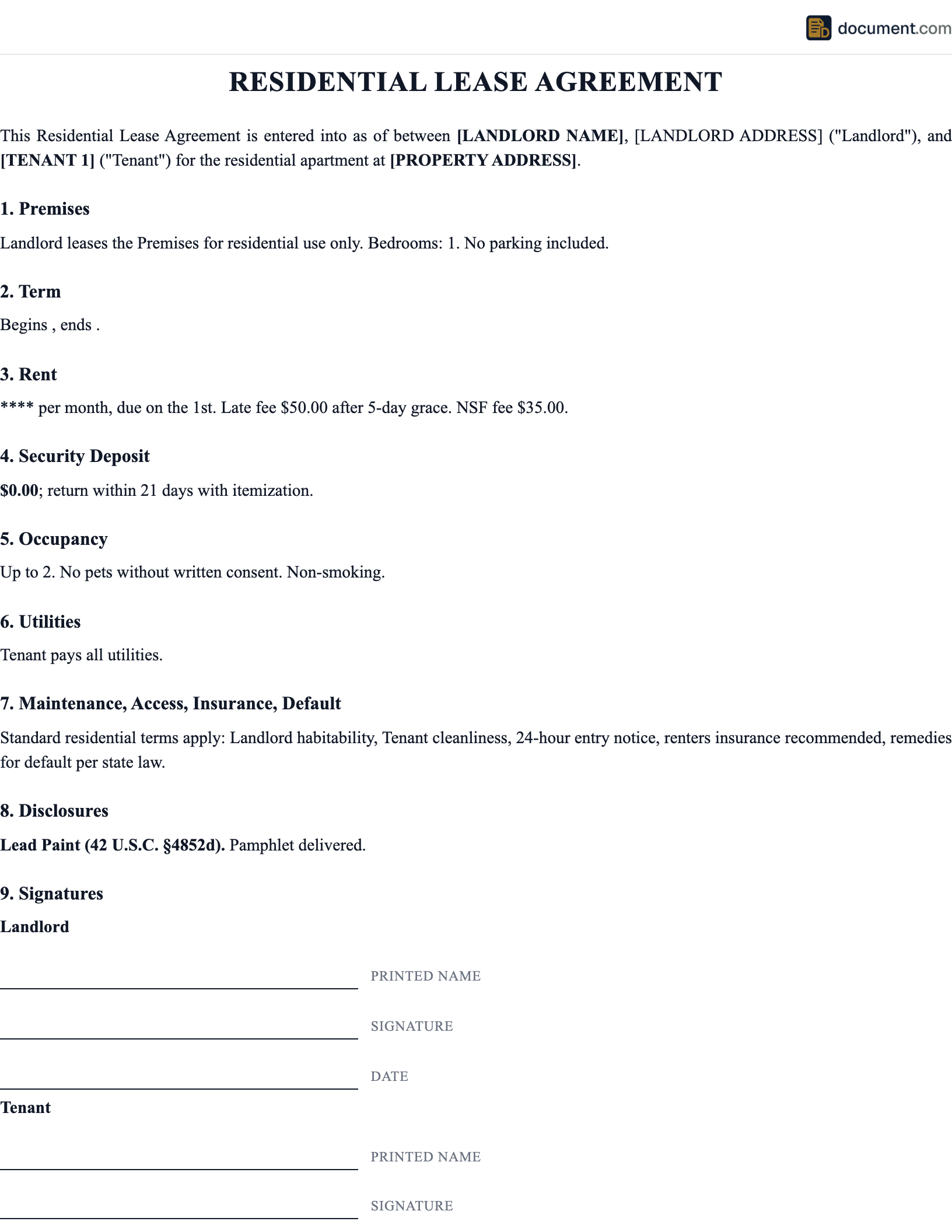



New Jersey Residential Lease Agreement Overview
New Jersey's landlord-tenant law is governed by New Jersey Anti-Eviction Act (N.J.S.A. 2A:18-61.1) & Security Deposit Act (N.J.S.A. 46:8-19). New Jersey is generally considered a tenant-friendly state with rent control provisions. Security deposits are limited to 1.5 months' rent. Landlords must return the deposit within 30 days after the tenant vacates.
New Jersey requires Reasonable notice (no specific statute) before a landlord enters a rental unit. The state provides a 5 days grace period before late fees can be assessed. New Jersey requires several important disclosures including Lead paint (pre-1978), Flood zone disclosure, Truth in Renting statement.
1.5 months' ren
Security Deposit Limit
30 days (mon
Notice to Vacate
5 days
Rent Grace Period
Reasonable n
Landlord Entry Notice
New Jersey Landlord-Tenant Law Requirements
Eviction Process
New Jersey requires landlords to provide written notice before filing for eviction. For nonpayment of rent, a notice to pay or vacate is required (typically 3-14 days depending on the situation). For lease violations, the landlord must provide notice and, in most cases, an opportunity to cure the violation. If the tenant fails to comply, the landlord may file an eviction action (unlawful detainer) in court. As a tenant-friendly state, New Jersey provides additional protections during the eviction process.
Habitability Standards
New Jersey recognizes the implied warranty of habitability, requiring landlords to maintain rental properties in a livable condition. Landlords must generally maintain structural integrity, provide working plumbing, electrical, and heating systems, ensure adequate weatherproofing, maintain common areas, comply with building and housing codes, and provide working smoke detectors. Tenants are responsible for keeping their unit clean, disposing of waste properly, and reporting needed repairs promptly.
Rent Control in New Jersey
New Jersey has rent control provisions that may limit how much landlords can increase rent for covered properties. Check local ordinances for additional rent stabilization rules that may apply in your area.
New Jersey Security Deposit Rules
New Jersey limits security deposits to 1.5 months' rent. The landlord must return the deposit within 30 days after the tenant vacates, along with an itemized statement of any deductions. New Jersey requires landlords to pay interest on security deposits held during the tenancy. Allowable deductions typically include unpaid rent, damages beyond normal wear and tear, and cleaning costs if specified in the lease.
Security Deposit Best Practices
Always conduct a move-in and move-out inspection with the tenant, document the property's condition with photos, keep the deposit separate from personal funds, and provide an itemized deduction list when returning the deposit. In New Jersey, failure to properly handle security deposits can result in penalties.
Required Disclosures in New Jersey
New Jersey landlords must provide certain disclosures to tenants before or at the start of the tenancy. Failure to provide required disclosures can result in penalties and may give tenants legal remedies.
- Lead paint (pre-1978)
- Flood zone disclosure
- Truth in Renting statement
- Window guard notice (if children under 10)
New Jersey Lease Fees & Limits
Key financial limits and fees that apply to residential leases in New Jersey:
| Item | New Jersey Rule |
|---|---|
| Security Deposit Limit | 1.5 months' rent |
| Deposit Return Deadline | 30 days |
| Late Fee Limit | No statutory limit (must be reasonable) |
| Rent Grace Period | 5 days |
| Notice to Vacate | 30 days (month-to-month; but just cause required for eviction) |
| Landlord Entry Notice | Reasonable notice (no specific statute) |
| Deposit Interest Required | Yes |
Official New Jersey Resources
Use these official resources to verify New Jersey landlord-tenant law requirements and find legal assistance.
Other New Jersey Lease Agreement Types
Need a different type of lease agreement for New Jersey? We offer state-specific templates for every type of rental and lease arrangement.
New Jersey Month-to-Month Lease
Flexible periodic tenancy with 30-day termination notice
New Jersey Room Rental Agreement
Single room rental with shared common areas
New Jersey Vacation Rental Agreement
Short-term rental for vacation and holiday stays
New Jersey Commercial Lease
Lease agreement for retail, office, or industrial space
New Jersey Sublease Agreement
Agreement to sublet all or part of a rental unit
New Jersey Roommate Agreement
Agreement between co-tenants sharing a rental unit
New Jersey Rent-to-Own Agreement
Lease-option with rent credits toward purchase
New Jersey Equipment Lease
Lease agreement for business or personal equipment
New Jersey Land Lease
Ground lease for land use without purchasing the property
New Jersey Residential Lease FAQ
Answers to common questions about New Jersey residential lease agreements and landlord-tenant law.
Create your New Jersey Residential Lease Agreement in under 5 minutes.
Answer a few questions and download a New Jersey-compliant document, ready for the state agency.