



Texas Equipment Lease Overview
In Texas, equipment leasing is governed by the Uniform Commercial Code (UCC) Article 2A, which Texas has adopted. This provides the legal framework for equipment lease formation, performance, warranties, and remedies. Texas businesses commonly lease construction equipment, medical devices, restaurant and kitchen equipment, IT infrastructure, agricultural machinery, and manufacturing tools.
Texas applies a state sales/use tax rate of 6.25% to equipment lease payments. The tax is typically applied to each periodic payment rather than the full equipment value upfront. Some equipment categories may qualify for Texas tax exemptions, particularly manufacturing equipment, agricultural machinery, and equipment used in qualifying industries. Personal property tax on leased equipment in Texas: Yes.
Whether you choose a capital lease (finance lease) or operating lease affects both your Texas tax obligations and financial reporting. Capital leases with $1 buyout options are treated similarly to purchases for tax purposes, while operating lease payments are generally fully deductible as business expenses in Texas.
6.25%
Sales/use tax rate
Adopted
UCC Article 2A
Yes
Personal property tax
Required — stricter standards
Insurance
Texas Equipment Leasing Requirements
When entering an equipment lease in Texas, both lessors and lessees should ensure the agreement addresses all critical provisions required under TX law and UCC Article 2A:
Important: UCC Filing Requirements
In Texas, lessors should consider filing a UCC-1 financing statement with the Texas Secretary of State to perfect their interest in leased equipment. While not always required for a "true lease," filing protects the lessor's interest if the lease is later recharacterized as a secured transaction or if the lessee files for bankruptcy.
Essential Texas Equipment Lease Provisions
- Equipment Description: Detailed description including make, model, serial number, year of manufacture, condition, and any accessories or attachments
- Lease Term & Payment: Duration, payment amount and frequency, security deposit, late fees, and any advance payments required
- Maintenance Obligations: Who is responsible for routine maintenance, repairs, and servicing per manufacturer specifications
- Insurance Requirements: Required — stricter standards — types of coverage, minimum limits, and named insured requirements
- End-of-Lease Options: Purchase at FMV or fixed price, return conditions, renewal terms, and upgrade provisions
- Default & Remedies: Events of default, cure periods, repossession rights, and damage calculations under Texas law
How to Complete a Texas Equipment Lease
Follow these steps to properly complete your Texas equipment lease agreement with all TX-specific provisions and industry-standard terms.
Identify the Parties
Enter the legal names and addresses of both the lessor (equipment owner) and lessee (equipment user). If either party is a business entity, include the entity type (LLC, Corp, etc.), state of formation, and the name and title of the authorized signer.
Describe the Equipment
Provide a detailed description of the equipment including the type, manufacturer, model number, serial number, year of manufacture, condition (new or used), and any included accessories, attachments, or software. The more specific the description, the better protected both parties are.
Set Lease Terms and Payment
Specify the lease commencement date, term length, payment amount, payment frequency (monthly, quarterly), and any security deposit or advance payments. Choose the lease type — capital lease with $1 buyout or operating lease with FMV purchase option. Factor in Texas's 6.25% sales/use tax on lease payments.
Address Maintenance and Insurance
Define maintenance responsibilities — who maintains the equipment, required service schedules, and authorized repair providers. Specify insurance requirements including coverage types, minimum amounts, and the lessor's status as loss payee and additional insured. Texas insurance requirement: required — stricter standards.
Define End-of-Lease Options
Specify what happens when the lease ends: purchase at fair market value, purchase at a fixed price, return the equipment, or renew the lease. Include return condition standards, the process for determining FMV, and notice requirements (typically 60-90 days before expiration).
Execute the Agreement
Both parties sign and date the lease. If a personal guaranty is required, the guarantor signs separately. Each party retains an original executed copy. Consider filing a UCC-1 financing statement with the Texas Secretary of State to protect the lessor's interest.
Texas Equipment Lease Tax Treatment
Understanding the tax implications of equipment leasing in Texas is essential for making the right financial decision between leasing and purchasing.
| Tax Type | Texas Treatment |
|---|---|
| Sales/Use Tax | 6.25% applied to each lease payment |
| Personal Property Tax | Yes — assessed annually on depreciated value |
| Operating Lease Deduction | Payments fully deductible as business expense |
| Capital Lease Treatment | Depreciation + interest deduction (Section 179 may apply) |
| Exemptions | Manufacturing, agricultural, and other qualifying equipment may be exempt |
Texas Equipment Leasing Regulations
Texas equipment leases are governed by UCC Article 2A (adopted) and general Texas contract law. Key regulatory considerations for equipment leasing in Texas include:
UCC Article 2A Compliance
Texas has adopted UCC Article 2A, which provides default rules for equipment lease formation, warranties, risk of loss, and remedies
True Lease vs. Secured Transaction
Texas courts analyze whether an equipment lease is a "true lease" or a disguised secured transaction, which affects UCC filing requirements and bankruptcy treatment
UCC-1 Filing
Lessors should file a UCC-1 financing statement with the Texas Secretary of State to protect their interest, especially for high-value equipment
Sales Tax Collection
Texas requires collection of 6.25% sales/use tax on equipment lease payments, with the lessor typically responsible for collection and remittance
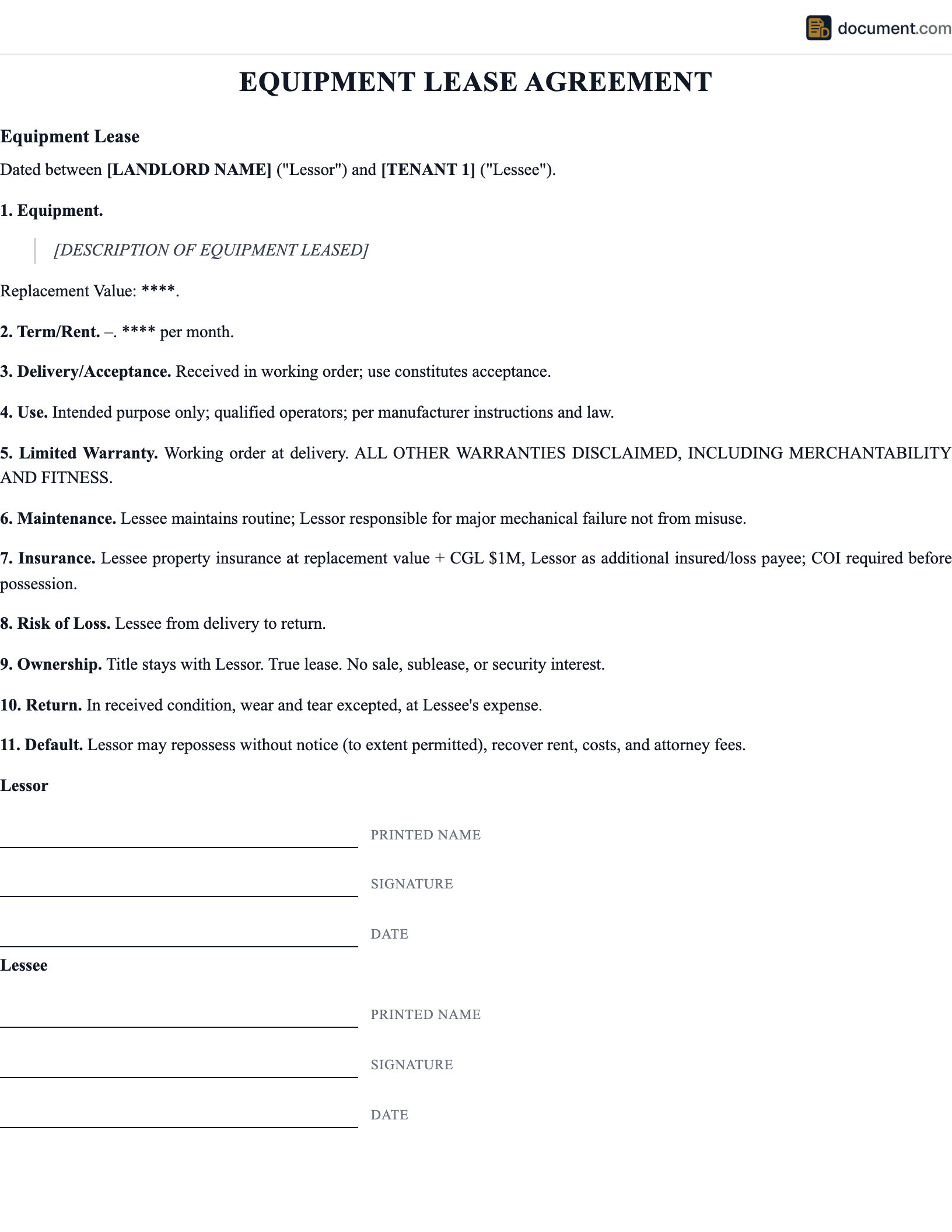
Sample Texas Equipment Lease
Below is a preview of our Texas-specific equipment lease agreement. Your customized document will include all provisions required under TX law and UCC Article 2A.
STATE OF TEXAS
EQUIPMENT LEASE AGREEMENT
Capital Lease / Operating Lease
LESSOR:
Name: [Lessor Name]
Address: [Texas Address]
LESSEE:
Business: [Business Name]
Address: [Texas Address]
EQUIPMENT
Type: [Type]
Make/Model: [Make/Model] Serial #: [Serial]
Condition: ☐ New ☐ Used
Lease Type: ☐ Capital ☐ Operating
Texas Equipment Lease FAQ
Answers to common questions about Texas equipment lease agreements, tax treatment, and UCC Article 2A compliance.
Official Texas Resources
Use these official Texas resources to verify equipment leasing regulations, tax requirements, and UCC filing procedures.
Texas Secretary of State
UCC filings and business entity registration
Texas Department of Revenue
Sales tax on equipment leases and exemptions
Equipment Leasing and Finance Association
Industry resources and equipment leasing best practices
SBA — Equipment Financing Resources
Federal small business equipment financing and leasing guidance
Other Texas Lease Agreement Templates
Need a different type of lease agreement for Texas? We offer state-specific templates for every type of rental arrangement.
Texas Residential Lease
Houses, apartments, and condos
Texas Month-to-Month Lease
Flexible rental agreements
Texas Room Rental Agreement
Individual room rentals
Texas Sublease Agreement
Subletting and assignment
Texas Commercial Lease
Office, retail, and industrial space
Texas Land Lease
Ground leases and vacant land
Create your Texas Equipment Lease Agreement in under 5 minutes.
Answer a few questions and download a Texas-compliant document, ready for the state agency.