
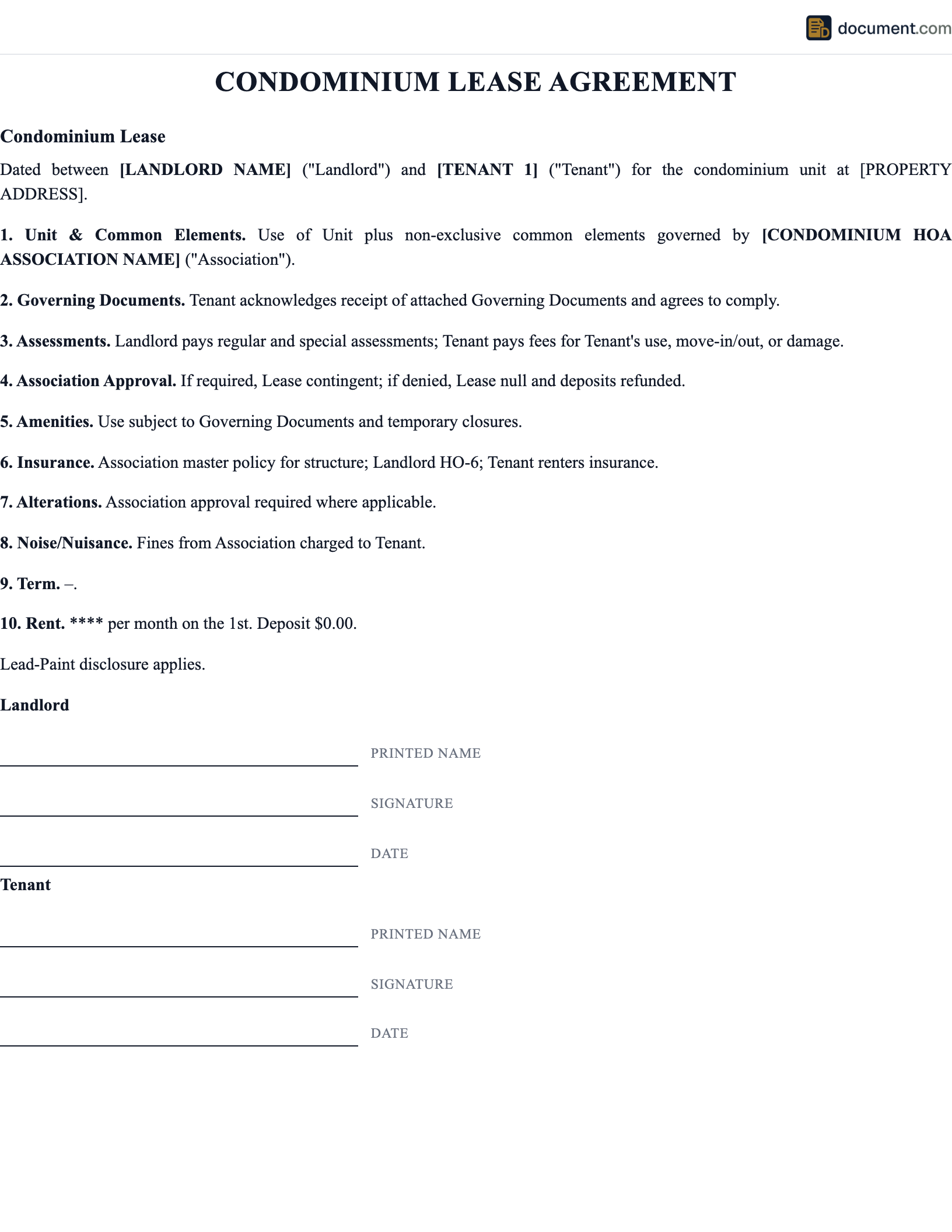



Oregon Condominium Lease Overview
Renting a condominium in Oregon involves additional considerations beyond a standard residential lease. Oregon condo leases must address HOA rules and restrictions, condo association approval requirements, shared amenity access, and the three-way split of maintenance responsibilities between the unit owner, HOA, and tenant. Under OR landlord-tenant law, condo tenants have Enhanced protections that cover habitability, security deposits, and eviction procedures.
Oregon requires landlords to disclose HOA rules and restrictions to tenants before or at the start of the tenancy. Condo association approval in Oregon must be completed within 30 days per state law or association bylaws. The lease should be contingent on association approval to protect both parties.
Required
HOA Disclosure
Tenant protections
Condo Conversion Rules
Enhanced protections
Tenant Rights
30 days
Approval Timeframe
Oregon HOA & Association Requirements
Association Approval
Most Oregon condo associations require board approval before a tenant can move in. The approval process typically involves submitting a rental application, paying an application fee, providing references, and sometimes a background check. In Oregon, the approval timeframe is 30 days.
HOA Rules Compliance
Tenants renting a condo in Oregon must comply with all HOA rules, bylaws, and CC&Rs. Common rules include noise restrictions, pet policies, parking regulations, common area usage, and guest policies. The lease should require the tenant to acknowledge receipt of and agree to follow all association rules.
Oregon Condo Maintenance Responsibilities
In Oregon condo rentals, maintenance responsibilities are split three ways between the HOA, the unit owner, and the tenant. The lease should clearly define each party's obligations to prevent disputes.
- HOA: Building exterior, roof, common areas, elevators, landscaping, shared systems
- Unit Owner: In-unit appliances, HVAC, plumbing, electrical, windows, major repairs
- Tenant: Day-to-day cleaning, minor upkeep, reporting issues promptly
Oregon Condo Insurance Requirements
Condo tenants in Oregon should carry renter's insurance to protect their personal belongings and provide liability coverage. The HOA's master insurance policy covers the building structure and common areas but does not cover the tenant's personal property.
Insurance Best Practices
Most Oregon condo associations and landlords require tenants to maintain renter's insurance with minimum liability coverage (typically $100,000). The lease should specify the required coverage amounts and require the tenant to name the unit owner as an additional interested party on the policy.
Oregon Condo Lease Details
| Item | Oregon Rule |
|---|---|
| HOA Disclosure Required | Required |
| Condo Conversion Rules | Tenant protections |
| Tenant Rights in Condos | Enhanced protections |
| Association Approval Timeframe | 30 days |
| Renter's Insurance | Recommended / Often required by HOA |
| Lead Paint Disclosure | Required (pre-1978 properties) |
Other Oregon Lease Agreement Types
Need a different type of lease agreement for Oregon? We offer state-specific templates for every type of rental arrangement.
Oregon Condominium Lease FAQ
Answers to common questions about Oregon condominium lease agreements and condo rental law.
Create your Oregon Condominium Lease Agreement in under 5 minutes.
Answer a few questions and download a Oregon-compliant document, ready for the state agency.