
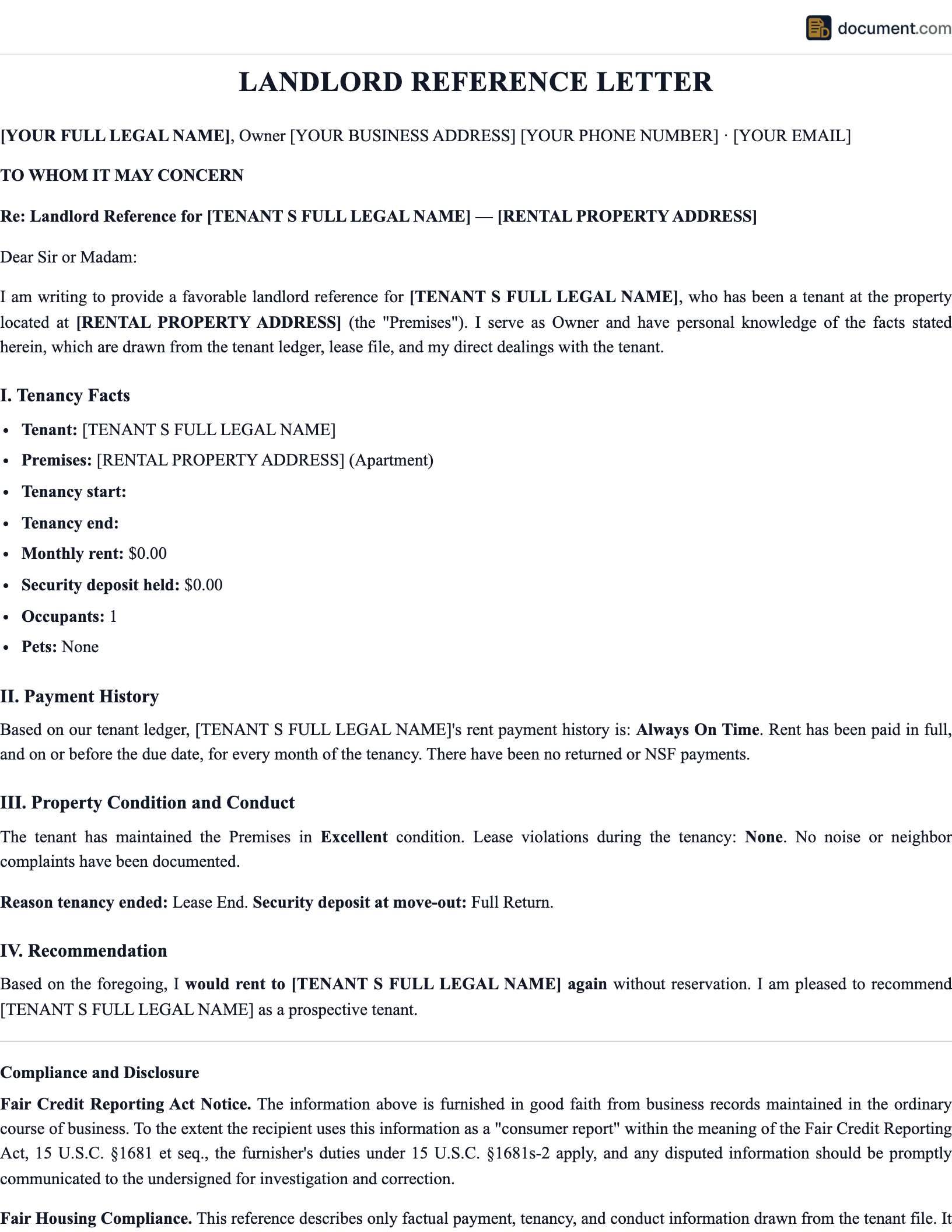



What Is a Landlord Reference Letter?
A landlord reference letter is a written document from a current or former landlord that provides a prospective landlord with information about a tenant's rental history. The letter typically covers the tenant's payment history, how well they maintained the property, whether they complied with the lease terms, how they interacted with neighbors and management, and whether the landlord would recommend them as a tenant. This letter is one of the most important tools in the tenant screening process.
For tenants, a strong landlord reference letter can be the difference between being approved or denied for a competitive rental. In markets with low vacancy rates, prospective landlords receive many applications and use reference letters to differentiate between equally qualified candidates. A letter that confirms timely rent payments, respectful property care, and cooperative communication can significantly strengthen an application, especially for tenants with limited credit history or other screening challenges.
For landlords, writing a reference letter carries both practical and legal considerations. The letter must be truthful — providing false positive or negative information can have legal consequences. Landlords must also be mindful of Fair Housing Act requirements and state privacy laws, which restrict what information can be shared and prohibit discrimination based on protected characteristics. A well-written reference letter focuses on verifiable facts and avoids subjective or potentially discriminatory content.
The letter can take several forms: a formal letter on the landlord's letterhead, a completed reference form provided by the prospective landlord, or a simple signed statement. Regardless of the format, the core information should include the tenancy dates, rent amount, payment timeliness, property condition, lease compliance, and an overall recommendation. Some property management companies have standardized forms that they use for all reference requests to ensure consistency and legal compliance.
Payment History
Confirm timely rent payments, amounts, and consistency over the tenancy
Property Condition
Document how well the tenant maintained and cared for the property
Recommendation
Overall assessment and willingness to rent to the tenant again
Landlord Reference Letter Form Preview
Our template includes all standard reference fields while maintaining Fair Housing compliance.
LANDLORD REFERENCE LETTER
Tenant Rental History Verification
LANDLORD INFORMATION
Name: [Full Name]
Property Management Co: [Company Name]
Phone: [Phone] Email: [Email]
TENANT & TENANCY DETAILS
Tenant Name: [Full Name]
Property Address: [Address, Unit #]
Tenancy Period: [Start] to [End]
Monthly Rent: $[Amount]
TENANT EVALUATION
Payment Timeliness: [Always On Time / Occasionally Late / Frequently Late]
Property Condition at Move-Out: [Excellent / Good / Fair / Poor]
Lease Compliance: [Full / Minor Violations / Major Violations]
Would Rent Again: [Yes / No / With Reservations]
SIGNATURE
Signature: [Signature]
Printed Name: [Full Name]
Date: [Date]
How to Write a Landlord Reference Letter
Follow these steps to write an effective, truthful, and Fair Housing-compliant reference letter.
Verify the Tenant's Identity and Request
Before writing a reference letter, confirm that the request is legitimate. Verify the identity of the person requesting the reference and confirm that the tenant has authorized the release of their rental information. Some landlords require a signed authorization from the tenant before releasing any information. This protects the landlord from unauthorized disclosure of tenant information and potential privacy law violations. Many prospective landlords will include a signed tenant authorization with their reference request.
Include Basic Tenancy Information
Start the letter with verifiable facts: your name and contact information, the tenant's full name, the rental property address, the exact dates of the tenancy, and the monthly rent amount. This basic information confirms the tenant lived where they claimed and paid the rent they stated on their application. Include your title (owner, property manager, etc.) and the name of any property management company.
Address Payment History
Provide an honest assessment of the tenant's payment history. Was rent consistently paid on time? Were there any late payments, and if so, how many and how late? Were there any bounced checks or payment disputes? Did the tenant pay all financial obligations (rent, utilities they were responsible for, any additional charges)? This is typically the most important section for the prospective landlord, as payment reliability is the primary concern in tenant screening.
Describe Property Condition
Describe the condition of the property during and at the end of the tenancy. Did the tenant maintain the property in good condition? Was the property left clean and in the same condition as at move-in (accounting for normal wear and tear)? Were there any damage issues? Was the full security deposit returned, or were deductions necessary? Be specific but factual — "The property was returned in excellent condition with full deposit returned" is more useful than vague statements.
Note Lease Compliance
Address whether the tenant complied with all lease terms during the tenancy. Were there any noise complaints from neighbors? Did the tenant respect occupancy limits? Were any unauthorized pets or occupants discovered? Did the tenant provide proper notice when vacating? Did the tenant follow community rules and building policies? Again, focus on factual, documented events rather than subjective impressions.
Provide Your Recommendation
Conclude with your overall recommendation. Would you rent to this tenant again? A clear "yes, I would rent to this tenant again without hesitation" is the strongest possible endorsement. If the tenant had some issues but was generally acceptable, you might say "I would consider renting to this tenant again." If you cannot recommend the tenant, you can simply state the facts without an explicit recommendation. Always ensure your recommendation is consistent with the facts you have presented.
Review for Fair Housing Compliance
Before finalizing, review the letter to ensure it does not contain any information that could be considered discriminatory under the Fair Housing Act. Remove any references to the tenant's race, color, national origin, religion, sex, familial status, disability, or other protected characteristics. Do not mention the tenant's family composition, whether they have children, their source of income (unless specifically relevant and legal in your state), or any personal characteristics unrelated to their tenancy performance.
Key Components of a Landlord Reference Letter
A complete landlord reference letter should include these components to give the prospective landlord a thorough picture of the tenant.
| Component | Description |
|---|---|
| Landlord Name & Contact | Full name, phone, email, and company name for verification |
| Tenant Name | Full legal name of the tenant being referenced |
| Property Address | Complete address of the rental property including unit number |
| Tenancy Dates | Move-in and move-out dates covering the full tenancy period |
| Monthly Rent Amount | The rent amount paid during the tenancy |
| Payment Timeliness | Assessment of whether rent was paid on time consistently |
| Property Condition | How well the tenant maintained the property during tenancy |
| Lease Compliance | Whether the tenant followed all lease terms and community rules |
| Deposit Disposition | Whether the full deposit was returned or deductions were made |
| Notice Compliance | Whether proper move-out notice was given per lease requirements |
| Recommendation | Overall recommendation and willingness to rent to the tenant again |
| Landlord Signature | Signed and dated by the landlord or authorized property manager |
Legal Requirements for Landlord References
Providing tenant references involves legal considerations around Fair Housing, privacy, and defamation that landlords should understand.
Important: Fair Housing Compliance
The Fair Housing Act prohibits discrimination based on race, color, national origin, religion, sex, familial status, and disability. Reference letters must not contain information about protected characteristics. Landlords must apply the same reference standards for all tenants — selectively providing or withholding references based on protected status could constitute discrimination.
Key Legal Considerations
- Truthfulness: All information in the reference letter must be truthful and based on documented facts; false statements can lead to defamation claims
- Consistency: Apply the same reference policy to all tenants; do not provide references for some and refuse others based on protected characteristics
- Privacy: Some states limit what rental information can be disclosed; obtain tenant authorization before sharing information with third parties
- Source of Income: Many states prohibit discrimination based on source of income; do not reference whether the tenant used housing vouchers or public assistance
Sample Landlord Reference Letter
Below is a sample positive landlord reference letter. Your customized document will reflect your specific tenant's history.
LANDLORD REFERENCE LETTER
Date: [Month Day, Year]
To Whom It May Concern:
I am writing to provide a rental reference for [Tenant Name], who rented my property at [Address] from [Start Date] to [End Date]. The monthly rent was $[Amount].
During the tenancy, [Tenant Name] consistently paid rent on time and in full. The property was well-maintained throughout the tenancy, and it was returned in excellent condition at move-out with the full security deposit returned. The tenant complied with all lease terms and was respectful of neighbors.
I would gladly rent to [Tenant Name] again and recommend them without reservation. Please feel free to contact me at [Phone/Email] for any additional questions.
Landlord Signature
Printed Name: _______________
Date: _______________
Frequently Asked Questions
Find answers to common questions about landlord reference letters, Fair Housing compliance, and tenant screening.
Official Resources
Use these resources for information about Fair Housing requirements and landlord-tenant reference laws.
HUD Fair Housing
Fair Housing Act requirements for landlords and property managers
HUD Fair Housing Complaint
File a discrimination complaint with HUD Office of Fair Housing
CFPB Housing Resources
Consumer guides on rental screening and tenant rights
Nolo Landlord-Tenant Law
Legal guides on references, screening, and tenant rights
Related Rental Documents
These documents complement the landlord reference letter and support the tenant screening process.
Lease Agreement
Comprehensive residential rental agreement
Rent Receipt
Document payment history to support applications
Move-In/Move-Out Checklist
Document property condition for reference support
Security Deposit Return
Deposit return documentation as reference support
Notice to Vacate
Formal tenancy termination notice
Intent to Vacate
Tenant move-out notice letter
Create your Landlord Reference Letter in under 10 minutes.
Answer a few questions and download a compliant, attorney-drafted document ready for your state.