
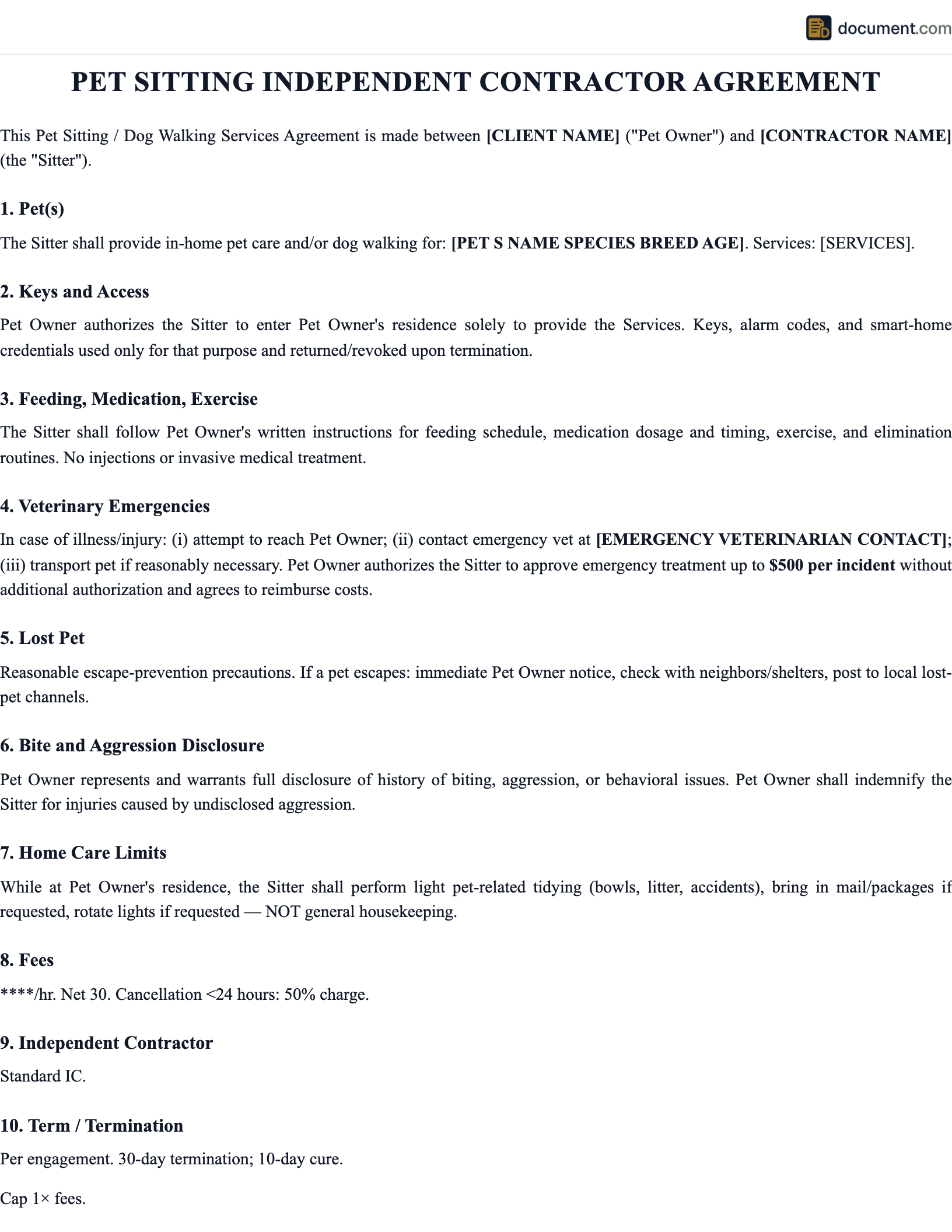



What Is a Pet Sitting Contract?
A pet sitting contract is a legally binding agreement between a pet owner and a professional pet sitter (or pet care company) that defines every aspect of the care arrangement. The contract identifies the specific animals being cared for, their individual needs, the services the sitter will provide, the dates and schedule of care, the sitter's access to the owner's home, veterinary emergency authorization, compensation, liability limitations, and cancellation policies.
The U.S. pet care services industry generates over $12 billion annually, and professional pet sitting is one of its fastest-growing segments. With pet ownership at record levels and travel resuming post-pandemic, demand for reliable, professional pet care has never been higher. Yet the majority of pet sitting arrangements — particularly those arranged through personal referrals or informal networks — operate without written contracts, leaving both parties exposed to disputes over care standards, liability for injuries, property damage, and payment.
A written pet sitting contract transforms an informal arrangement into a professional engagement with clear expectations. The owner knows exactly what care their pet will receive, the sitter knows exactly what is expected and what they will be paid, and both parties have a documented framework for handling emergencies, cancellations, and disputes. For professional pet sitters who serve multiple clients, a standardized contract is a hallmark of a legitimate business operation.
Detailed Care Plans
Feeding, medication, exercise, and behavioral notes for each pet.
Emergency Protocols
Veterinary authorization, emergency contacts, and spending limits.
Home Access
Key exchange, alarm codes, parking, and security protocols.
Pet Sitting Contract Form Preview
Pet Sitting Service Agreement
In-Home Pet Care Contract
Section 1: Parties & Pets
Section 2: Care Instructions
Section 3: Emergency Vet
Primary Vet: Riverside Animal Hospital, (555) 123-4567. Sitter authorized to approve emergency treatment up to $1,500.
Key Components
| Component | Description |
|---|---|
| Pet Information | Name, species, breed, age, weight, temperament, and behavioral notes for each pet |
| Care Instructions | Feeding schedule, portion sizes, medication dosages, exercise requirements, and special needs |
| Service Dates & Schedule | Start/end dates, daily visit times, overnight vs. drop-in, and walk schedule |
| Veterinary Authorization | Primary vet contact, emergency vet, treatment spending limit, and pet insurance info |
| Home Access | Key exchange protocol, alarm codes, parking, and authorized areas of the home |
| Emergency Contacts | Owner travel contact, secondary emergency contact, and neighbor contact |
| Compensation | Per-visit, daily, or overnight rates, multi-pet fees, holiday surcharges, and payment timing |
| Liability & Insurance | Sitter's insurance, hold-harmless provisions, and property damage responsibility |
| Cancellation Policy | Notice periods, cancellation fees, holiday deposit policy, and early return adjustments |
| Owner Disclosures | Known behavioral issues, bite history, escape tendencies, and other pet or home hazards |
How to Create a Pet Sitting Contract
Document pet information
Name, species, breed, age, weight, color/markings, microchip number, temperament, and any behavioral issues for each pet.
Write detailed care instructions
Feeding schedule and portions, medication names/dosages/times, exercise needs, grooming requirements, and any special instructions (e.g., crate at night, no off-leash).
Set dates and service schedule
Care start/end dates, daily visit times or overnight schedule, walk times and routes, and any schedule variations.
Complete veterinary authorization
Primary vet name/address/phone, after-hours emergency vet, authorized treatment spending limit, pet insurance policy number, and allergies.
Establish home access and security
Key handoff method, alarm code, garage code, WiFi password, and instructions for mail, trash, lights, and plants.
Define compensation and cancellation
Per-visit or daily rate, multi-pet surcharge, holiday rates, payment method and timing, cancellation notice period, and cancellation fees.
Include liability and insurance provisions
Sitter's insurance coverage, owner's disclosure of known risks, hold-harmless clause, and property damage process.
Liability & Insurance
Liability allocation is essential because pet sitting involves three distinct risk categories: injury to the pet, injury to the sitter (or third parties), and damage to the owner's property. Each requires separate contractual and insurance treatment.
General Liability
Covers third-party bodily injury and property damage. Essential if the pet bites a passerby during a walk or damages a neighbor's property.
Care, Custody & Control
Covers injury or death of the pet while in the sitter's custody. Standard GL policies often exclude animals in your care.
Dishonesty Bond
Protects the owner against theft of property by the sitter. Demonstrates professionalism and accountability.
Owner Disclosures
Owner must disclose bite history, aggression, escape behavior, and known hazards. Non-disclosure shifts liability to the owner.
Frequently Asked Questions
Official Resources
PSI - Pet Sitters International
Professional association with certification, insurance, and business resources.
NAPPS - National Association of Professional Pet Sitters
Industry standards, insurance programs, and professional development.
AVMA - American Veterinary Medical Association
Veterinary care standards and pet health resources.
IRS - Independent Contractor Defined
Worker classification guidance for pet care professionals.
SBA - Business Structure
Choosing an LLC or sole proprietorship for a pet sitting business.
Humane Society of the United States
Animal welfare resources and pet care best practices.
Create Your Pet Sitting Contract
Answer a few questions and download a professional pet sitting agreement that protects both your pets and your sitter.
Create DocumentNo account required. Free to create and preview.