



New Jersey Business Purchase Agreement Overview
Purchasing a business in New Jersey requires a comprehensive purchase agreement that addresses the state's specific requirements for business transfers, entity filings, tax obligations, and regulatory compliance. New Jersey business purchase agreements must account for the deal structure (asset purchase vs. stock/equity purchase), due diligence findings, non-compete provisions, employee transitions, and post-closing obligations.
New Jersey's business environment includes specific requirements for Secretary of State filings (approximately $125 for entity formation), bulk sale compliance under UCC Article 6 (active), and non-compete enforceability rules that are enforceable. Understanding these New Jersey-specific requirements is critical to structuring a successful business acquisition.
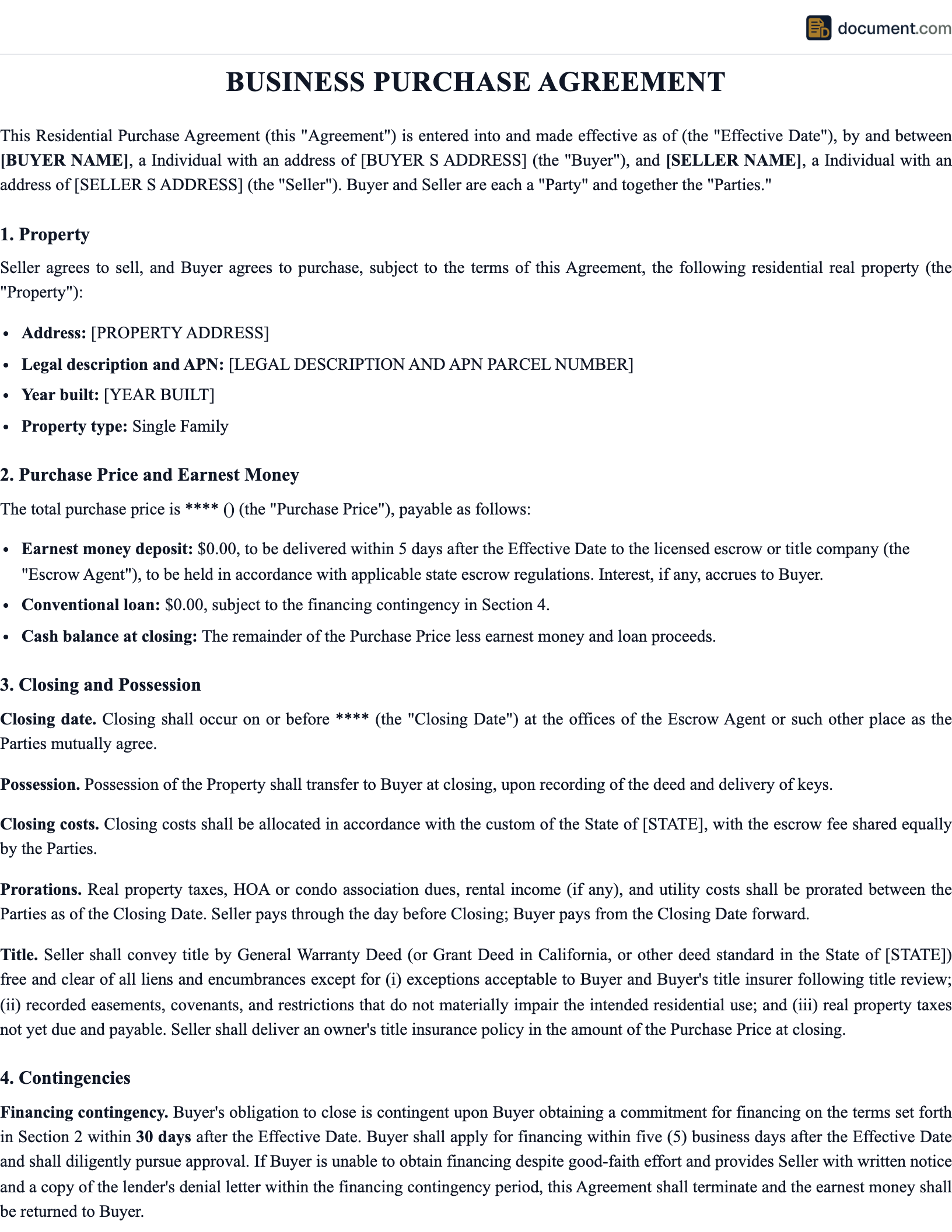
Our New Jersey-specific business purchase agreement template covers all essential provisions including purchase price allocation, representations and warranties, indemnification clauses, closing conditions, and post-closing covenants. The template is designed to comply with New Jersey business law while providing comprehensive protection for both buyer and seller.
UCC Article 6
Bulk sale notice
Enforceable
Non-compete enforceability
None
Business transfer tax
Required
SOS filing
New Jersey Business Transfer Legal Requirements
New Jersey has specific legal requirements that must be met when transferring business ownership. Failure to comply can result in personal liability, regulatory penalties, or an invalid transfer.
Important: New Jersey Bulk Sale Requirements
New Jersey maintains active bulk sale laws under UCC Article 6 (active). When purchasing business assets in bulk, you must notify the seller's creditors before closing. Failure to comply can make you personally liable for the seller's unpaid debts.
New Jersey Filing & Compliance Requirements
- Secretary of State Filing: Required — new entity formation ($125), amendments, or dissolution filings as needed
- Business License Transfer: New Jersey business licenses and permits must be transferred or new ones obtained by the buyer
- Tax Clearance: Obtain a tax clearance certificate from New Jersey's Department of Revenue to confirm no outstanding tax obligations
- UCC Lien Search: Search for any UCC filings against the business assets to identify existing security interests
- EIN / Tax Registration: The buyer must obtain a new EIN from the IRS and register with New Jersey's tax authority
Due Diligence Documents to Request
- Financial Records: 3-5 years of tax returns, P&L statements, balance sheets, and bank statements
- Contracts & Leases: All customer contracts, vendor agreements, equipment leases, and the commercial lease
- Employee Information: Roster, compensation, benefits, employment agreements, and non-competes
- Intellectual Property: Trademarks, patents, copyrights, trade secrets, domain names, and licenses
How to Complete Your New Jersey Business Purchase Agreement
Follow these steps to properly complete your New Jersey-specific business purchase agreement.
Identify the Parties & Business
Enter the full legal names and addresses of buyer and seller. Describe the business including trade name/DBA, type of business, location, and entity structure. For New Jersey entities, include the SOS filing number and formation date.
Define the Deal Structure
Specify whether this is an asset purchase or stock/equity purchase. For asset purchases, create detailed schedules of included and excluded assets. The structure has major tax and liability implications under New Jersey law.
Set Purchase Price & Allocation
Document the total purchase price, payment terms, and the allocation among asset categories per IRS Section 1060. New Jersey does not impose a specific business transfer tax, but sales tax may apply to tangible asset transfers in New Jersey.
Include Representations & Warranties
The seller should represent that the business is in good standing in New Jersey, financial statements are accurate, there is no undisclosed litigation, and all material contracts are disclosed. Specify the survival period (typically 12-24 months) and indemnification provisions.
Add Non-Compete & Transition Provisions
Include a non-compete covenant (non-competes in New Jersey business sales are enforceable). Define the restricted period, geographic scope, and prohibited activities. Add seller transition assistance and employee transition terms.
Execute and Close
Both parties sign the purchase agreement. At closing, execute all ancillary documents: bill of sale, assignment agreements, non-compete agreement, promissory note if applicable, and New Jersey Secretary of State filings. Complete bulk sale notifications, UCC-3 termination statements, and transfer licenses, permits, and registrations in New Jersey.
Asset vs. Stock Purchase in New Jersey
The choice between an asset purchase and stock purchase has significant legal and tax implications in New Jersey.
Asset Purchase (Most Common)
- Buyer selects specific assets to acquire
- Generally avoids inheriting liabilities
- Buyer gets stepped-up tax basis
- Requires individual asset transfers
- Bulk sale notification required in New Jersey
- New Jersey sales tax may apply to tangible assets
Stock/Equity Purchase
- Buyer acquires the entire legal entity
- All assets and liabilities transfer automatically
- Contracts and licenses stay with entity
- Seller may get favorable capital gains treatment
- Buyer inherits entity tax basis (no step-up)
- Greater risk of unknown liabilities for buyer
New Jersey Business Transfer Taxes & Fees
Understanding the tax implications of a business purchase in New Jersey is critical for structuring the deal and budgeting for closing costs.
| Tax / Fee | Details |
|---|---|
| Business Transfer Tax | No specific business transfer tax |
| Sales Tax on Assets | May apply to tangible personal property transfers |
| SOS Entity Filing | $125 (new entity formation) |
| UCC Filing Fees | $25-$50 per filing |
| Business License Transfer | Varies by license type and jurisdiction |
| Attorney & Accounting Fees | $3,000-$15,000+ depending on deal complexity |
Sample New Jersey Business Purchase Agreement
Below is a preview of our New Jersey-specific business purchase agreement.
STATE OF NEW JERSEY
BUSINESS PURCHASE AGREEMENT
Asset / Equity Acquisition Contract
SELLER:
Name/Entity: [Seller Name]
Address: [New Jersey Address]
BUYER:
Name/Entity: [Buyer Name]
Address: [Buyer Address]
BUSINESS DESCRIPTION
Business Name: [Trade Name / DBA]
Location: [New Jersey Address]
Purchase Price: $[Amount]
New Jersey Business Purchase Agreement FAQ
Answers to common questions about New Jersey business purchase agreements, deal structures, and regulatory requirements.
Official New Jersey Resources
Create your New Jersey Business Purchase Agreement in under 5 minutes.
Answer a few questions and download a New Jersey-compliant document, ready for the state agency.