
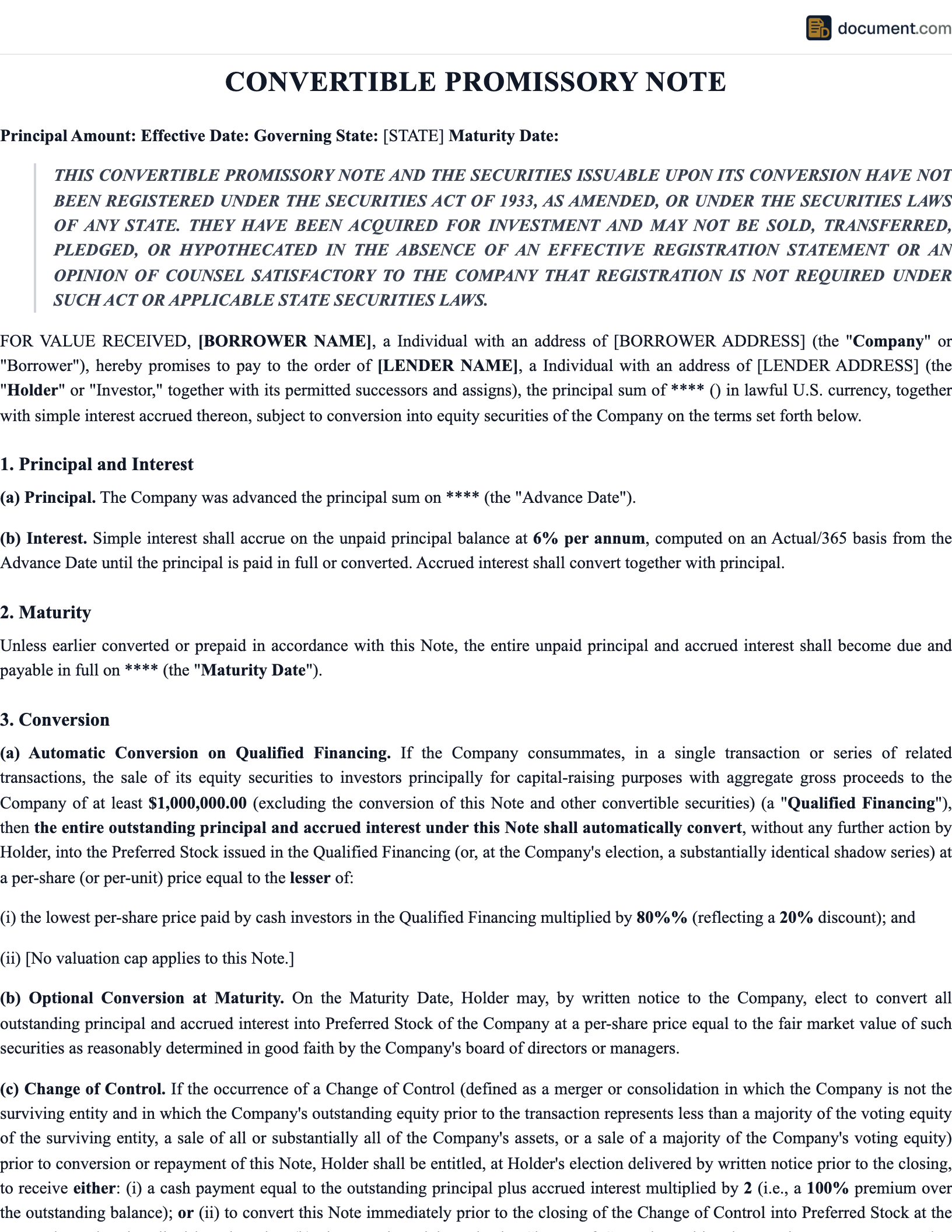



Illinois Convertible Promissory Note Overview
A convertible promissory note in Illinois is a debt instrument commonly used in startup financing that converts into equity upon a triggering event. As a security, it must comply with both federal regulations (SEC Rule 506 under Regulation D) and Illinois's state securities laws. The primary state exemption is: 815 ILCS 5/4 exemption.
Illinois requires Form D filing required when issuing convertible notes. The state provides enhanced protections for note holders through its securities regulatory framework. The interest rate must comply with Illinois's 9% usury limit, though most convertible note rates (2-8%) fall well below this threshold. Companies should work with an attorney familiar with Illinois securities law to ensure full compliance.
Available
Securities exemption
Required
SOS filing
9%
Usury rate
Enhanced
Investor protections
Illinois Requirements
Illinois has specific requirements for convertible promissory notes that both parties should understand before entering into the agreement.
- Interest Rate: Must not exceed Illinois's usury limit of 9%
- Written Agreement: Must be in writing and signed by the borrower (maker)
- Clear Terms: Principal amount, interest rate, payment schedule, and maturity date must be clearly stated
- Default Terms: Late fees, grace periods, and acceleration clause must comply with Illinois law
- Governing Law: The note should specify Illinois as the governing jurisdiction
How to Create a Illinois Convertible Promissory Note
Follow these steps to create a Illinois-compliant convertible promissory note using our template.
Enter Party Information
Provide the full legal names and Illinois addresses of both the lender (payee) and borrower (maker). Include the date the note is being executed.
Define Loan Terms
Specify the principal amount, interest rate (within Illinois's 9% usury limit), payment schedule, and maturity date. Our template calculates the payment breakdown automatically.
Set Default and Late Payment Terms
Define the grace period, late fee amount, acceleration clause triggers, and notice requirements. Our Illinois template includes compliant default language.
Sign and Execute
The borrower must sign and date the note. Consider notarization for added legal protection. Both parties should retain a copy. If secured by collateral, file the appropriate security instrument with Illinois's recording office.
Securities Compliance in Illinois
When issuing convertible promissory notes in Illinois, you must comply with the state securities exemption (815 ILCS 5/4 exemption), file the required Form D filing required, ensure the interest rate stays within the 9% usury limit, and follow Illinois's investor protection requirements (enhanced protections). Federal Form D must be filed with the SEC within 15 days of the first sale. Our Illinois-specific template ensures compliance with both state and federal securities regulations.
Illinois Usury Warning
Illinois's usury limit is 9%. Charging interest above this rate can render your promissory note unenforceable and may subject the lender to penalties under Illinois law. Our template automatically validates your interest rate against Illinois's current limits.
Illinois Convertible Promissory Note FAQ
Answers to common questions about convertible promissory notes in Illinois.
Official Illinois Resources
Use these official resources to verify Illinois requirements for your convertible promissory note.
Other Illinois Promissory Note Types
Need a different type of promissory note for Illinois? We offer state-specific templates for every type of promissory note.
Illinois Installment Promissory Note
Installment Promissory Note for Illinois
Illinois Balloon Promissory Note
Balloon Promissory Note for Illinois
Illinois Secured Promissory Note
Secured Promissory Note for Illinois
Illinois Unsecured Promissory Note
Unsecured Promissory Note for Illinois
Illinois Demand Promissory Note
Demand Promissory Note for Illinois
Create your Illinois Convertible Promissory Note in under 5 minutes.
Answer a few questions and download a Illinois-compliant document, ready for the state agency.