
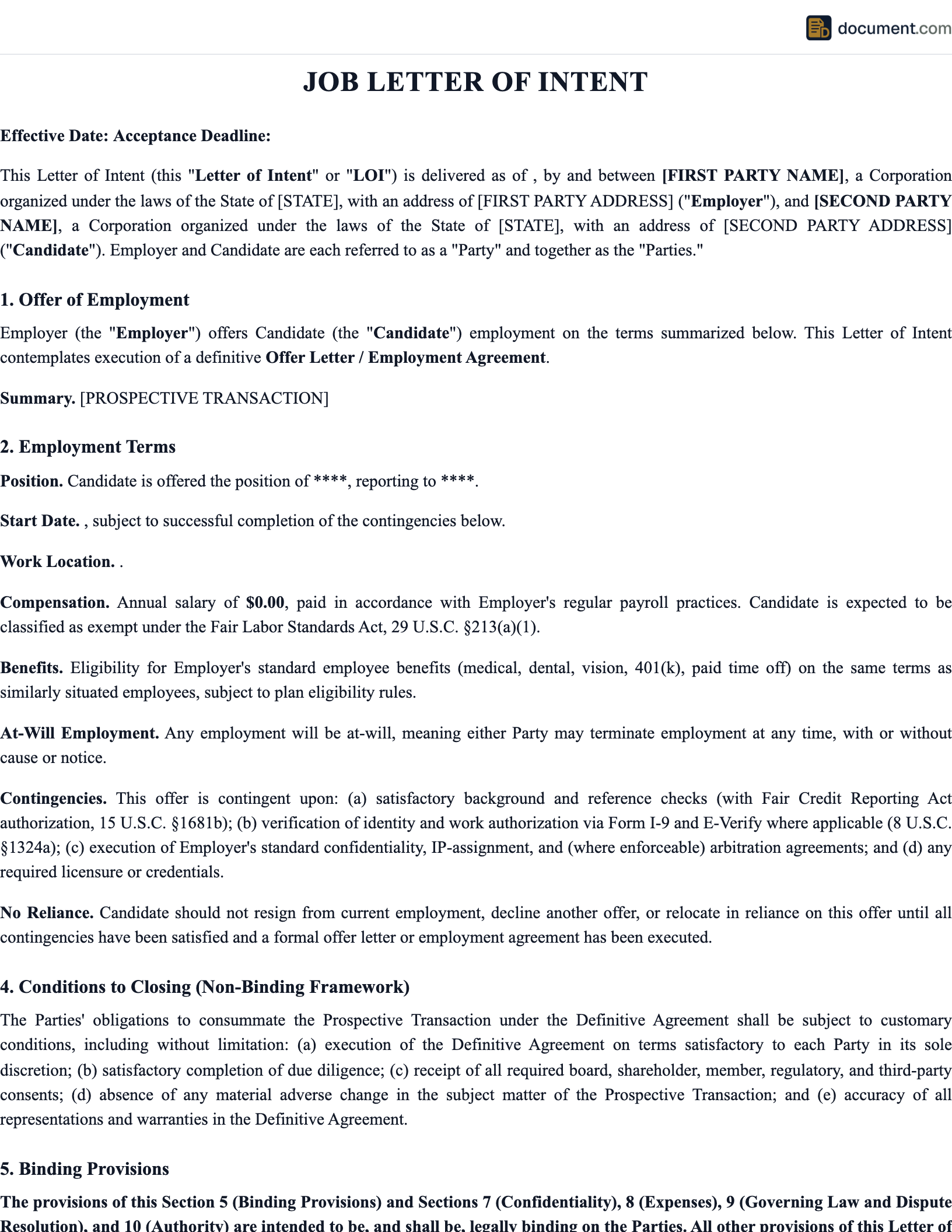



What Is a Letter of Intent to Continue Working?
A letter of intent to continue working is a formal professional document through which an employee communicates their desire and rationale for remaining employed beyond an established end point. This end point could be a fixed-term contract expiration, an approaching retirement date, the conclusion of a temporary or project-based assignment, or a previously communicated resignation date. The LOI transforms what might otherwise be an informal conversation into a structured, documented request that HR departments and senior leadership can evaluate through established decision-making processes.
The document serves multiple strategic functions beyond simply asking to keep one's job. It provides the employee with an opportunity to propose modified terms that may better suit their evolving circumstances and the employer's needs: transitioning from full-time to part-time status, shifting from an operational role to a mentoring or advisory capacity, adjusting compensation to reflect a different scope of work, or restructuring benefits to align with the employee's post-retirement financial planning. By putting these proposals in writing, the employee initiates a negotiation that can lead to a mutually beneficial arrangement rather than a binary stay-or-go decision.
From the employer's perspective, a continue-working LOI provides valuable workforce planning information. The document signals that a valued employee wants to remain, which can reduce recruitment and training costs associated with turnover. It also creates an opportunity for the employer to restructure the role in ways that address organizational needs, such as retaining institutional knowledge through a knowledge-transfer arrangement or filling a part-time gap that doesn't justify a new full-time hire. The LOI framework allows both parties to explore these possibilities in a professional context.
Employment Extension
Formally requests continuation beyond the established employment end date.
Flexible Terms
Proposes modified hours, role changes, or phased retirement arrangements.
Benefits Protection
Addresses health coverage, retirement contributions, and other benefit continuations.
Continue Working LOI Form Preview
Letter of Intent
Request to Continue Employment
1. EMPLOYEE AND EMPLOYMENT DETAILS
I, , currently employed as , with a current employment end date of , hereby express my intent to continue employment beyond this date.
2. PROPOSED EXTENDED TERMS
I propose to continue in a capacity for an additional period of , with the following modifications to my current arrangement:
3. VALUE AND JUSTIFICATION
My continued employment benefits the organization by:
EMPLOYEE
DATE
Key Components
A comprehensive continue-working LOI should address these essential elements to provide the employer with a clear, actionable proposal:
| Component | Purpose | Key Details |
|---|---|---|
| Current Status | Establishes context | Current title, department, contract end date, retirement date, years of service |
| Extension Request | Defines the proposed arrangement | Duration, full-time vs. part-time, role modifications, schedule adjustments |
| Business Justification | Demonstrates organizational value | Institutional knowledge, project continuity, training obligations, client relationships |
| Compensation Terms | Addresses financial arrangements | Salary adjustments, pro-rated compensation, consulting fees, bonus eligibility |
| Benefits Continuation | Clarifies coverage during extension | Health insurance, retirement contributions, PTO accrual, life insurance, disability coverage |
| Knowledge Transfer | Plans for eventual departure | Documentation, successor training, mentoring commitments, transition milestones |
How to Write a Letter of Intent to Continue Working
State Your Current Employment Status
Open the LOI by clearly identifying your name, current position, department, and the specific date or event that triggers the end of your current employment arrangement. Whether it is a contract expiration, mandatory retirement age, the end of a temporary assignment, or a previously submitted resignation date, precision about the current end point is essential. This information allows HR and management to verify the timeline and begin evaluating the request within the appropriate administrative framework.
Articulate Your Reasons for Continuing
Explain why you want to continue working, focusing on professional motivations that align with organizational needs rather than purely personal reasons. While financial considerations are legitimate, the LOI is more persuasive when it emphasizes the value you provide: ongoing projects that benefit from your continued involvement, institutional knowledge that is difficult to transfer quickly, client relationships that depend on your presence, or mentoring responsibilities that support succession planning. Frame your continued employment as a benefit to the organization, not just to yourself.
Propose Specific Terms and Modifications
Detail the specific terms you propose for the continued employment period. If you want to transition to part-time, specify the days and hours. If you propose a consulting arrangement, outline the scope and hourly rate. If you want to remain full-time but in a modified role, describe the new responsibilities. Specificity shows that you have thought through the practical implications and are not simply asking for an indefinite extension of the current arrangement. Include a proposed duration or review period so the employer does not perceive the request as open-ended.
Address Benefits and Compensation
Discuss how you propose handling compensation and benefits during the extended period. If transitioning to part-time, specify whether you expect pro-rated salary and benefits or a different arrangement. Address health insurance continuation, retirement plan contributions, paid time off accrual, and any other benefits that may be affected by the change in status. For employees near retirement age, discuss how continued employment interacts with pension benefits, Social Security timing, and required minimum distributions from retirement accounts.
Include a Knowledge Transfer Plan
Demonstrate forward thinking by outlining how you will use the extended period to transfer institutional knowledge. Identify key processes, relationships, and expertise that need to be documented or taught to successors. Propose a structured approach with milestones and deliverables so the employer can see that the continued employment period has defined objectives beyond simply prolonging the status quo. This element is particularly compelling because it reframes the extension as a knowledge-preservation investment rather than a cost.
Close with Flexibility and Next Steps
Express willingness to discuss and modify the proposed terms while maintaining the core request to continue working. Suggest a meeting to discuss the LOI in detail and indicate your availability. If the request involves complex benefits or compensation changes, suggest involving HR or the benefits administrator in the discussion. Close by reaffirming your commitment to the organization and your desire to contribute during the extended period.
Legal Considerations
Several legal frameworks affect the right to continue working and the terms under which extended employment operates. The Age Discrimination in Employment Act (ADEA) prohibits employers from forcing employees to retire based on age, with narrow exceptions for bona fide executives and high policymakers who have reached age 65 and are entitled to employer-funded retirement benefits of at least $44,000 annually. Public safety employees (firefighters, law enforcement) may also be subject to mandatory retirement ages under state law.
For employees on fixed-term contracts, the terms of the existing agreement govern the renewal process. Some contracts include automatic renewal clauses that extend the agreement unless either party provides timely notice of non-renewal. Others require affirmative agreement by both parties for continuation. The LOI should reference the specific contractual provisions that apply and propose terms that are consistent with or modify those provisions by mutual agreement.
Benefits law adds another layer of complexity. The Employee Retirement Income Security Act (ERISA) governs employer-sponsored benefit plans and may affect how benefits are administered during an extended employment period. The Consolidated Omnibus Budget Reconciliation Act (COBRA) provides continuation coverage rights when employment terminates, but continuation of active employment eliminates the COBRA triggering event. The Affordable Care Act's employer mandate requirements may also affect the employer's obligations regarding health coverage for employees who transition to part-time status.
Frequently Asked Questions
Official Resources
Authoritative resources on employment continuation, retirement planning, and workplace rights.
EEOC - Age Discrimination
EEOC guidance on age discrimination protections under the ADEA, including mandatory retirement prohibitions and employer obligations.
DOL - Retirement Plans and ERISA
Department of Labor resources on ERISA requirements, retirement plan administration, and employee benefit protections.
SSA - Delayed Retirement Credits
Social Security Administration guidance on how delayed retirement affects benefit amounts and claiming strategies.
IRS - Required Minimum Distributions
IRS guidance on RMD requirements and the still-working exception for employees who continue past age 73.
DOL - COBRA Continuation Coverage
Department of Labor resources on COBRA rights, qualifying events, and how continued employment affects coverage eligibility.
AARP - Working at 50+
Resources for older workers on employment rights, age discrimination protections, and strategies for extending working years.
Create Your Continue Working LOI
Draft a professional letter of intent to continue working that outlines your proposed terms, addresses benefits, and presents a compelling case for extended employment.
Create DocumentNo account required. Free to create and preview.