



What Is a Job Promotion Letter of Intent?
A job promotion letter of intent is a formal written document through which an employee communicates their interest in advancing to a higher position within their current organization. The document functions as both an expression of professional ambition and a structured argument for why the employee is the right candidate for the elevated role. Unlike external job applications where candidates must introduce themselves from scratch, a promotion LOI builds on an established track record of performance, institutional knowledge, and demonstrated alignment with the organization's culture and strategic direction.
The strategic significance of a promotion LOI lies in its ability to shape the decision-making process before it formally begins. When an employee submits a well-constructed LOI, they frame the conversation around their specific accomplishments, measurable contributions, and vision for the role rather than leaving the promotion decision entirely to managerial discretion or informal reputation. The document creates a written record that can circulate among decision-makers who may not interact with the employee daily, ensuring that the promotion case reaches stakeholders beyond the employee's immediate supervisor.
From a legal and HR perspective, the promotion LOI also serves important documentation purposes. In organizations subject to equal employment opportunity regulations, a written promotion request creates a contemporaneous record of the employee's interest and qualifications. If the promotion is denied and the employee later believes the decision was influenced by discriminatory factors, the LOI establishes that they were a qualified, interested candidate who formally applied through proper channels. This documentation function is particularly important in industries and organizations where promotion decisions have historically lacked transparency or objective criteria.
Career Advancement
Formally positions you as a candidate and frames the promotion discussion on your terms.
Performance Documentation
Creates a written record of accomplishments and qualifications for decision-makers to reference.
Professional Credibility
Demonstrates initiative, strategic thinking, and readiness for leadership responsibilities.
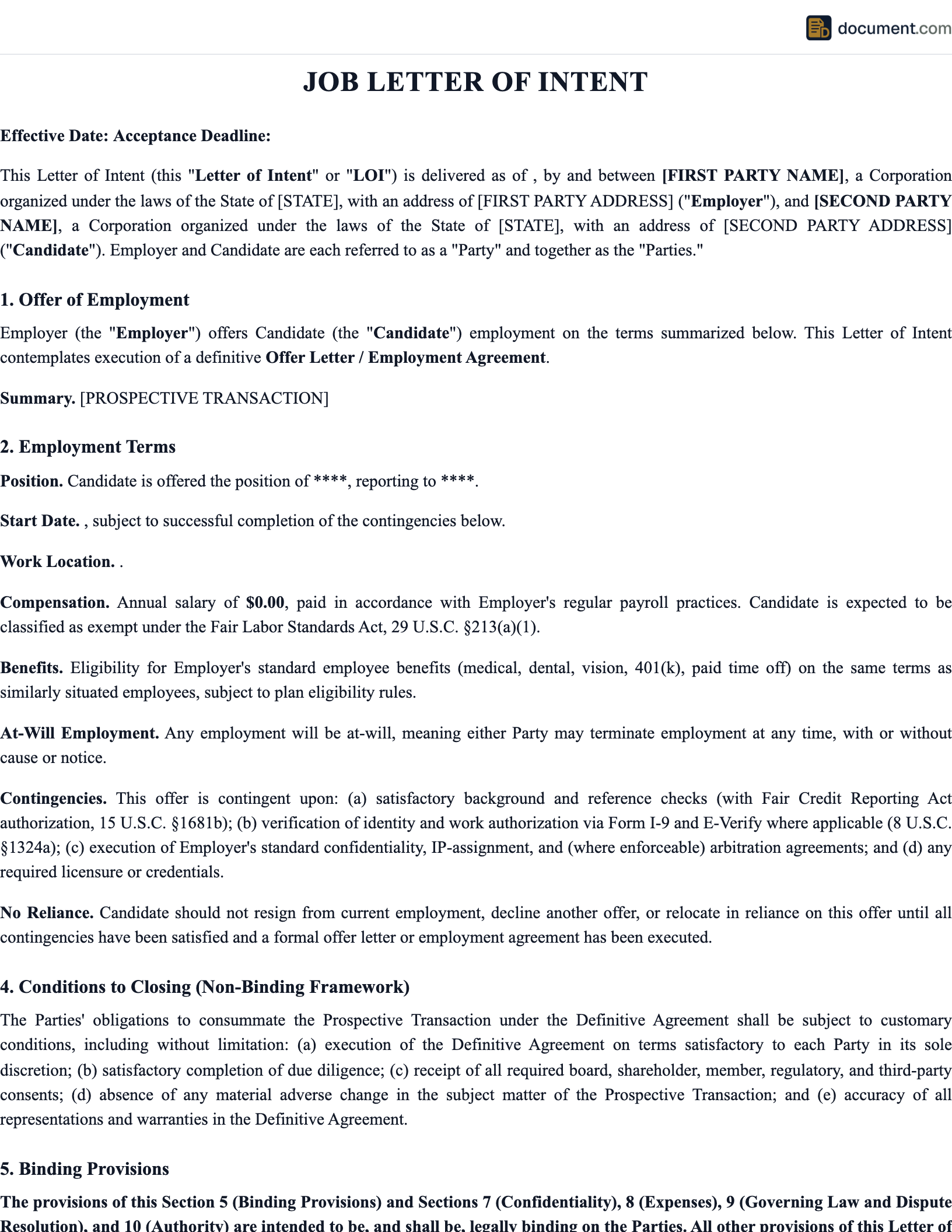
Promotion LOI Form Preview
Letter of Intent
Request for Promotion
1. EMPLOYEE INFORMATION
I, , currently employed as in the department, hereby express my intent to be considered for promotion to the position of .
2. QUALIFICATIONS AND ACCOMPLISHMENTS
During my tenure of years, I have achieved the following results:
3. PROPOSED TRANSITION PLAN
I propose a transition period of days to transfer current responsibilities and onboard into the new role.
EMPLOYEE
DATE
Key Components
An effective promotion LOI must address these essential elements to present a comprehensive and persuasive case for advancement:
| Component | Purpose | Key Details |
|---|---|---|
| Current Role Summary | Establishes baseline and tenure | Title, department, reporting structure, years in role, scope of current responsibilities |
| Target Position | Identifies specific advancement goal | Desired title, department, grade level, reporting line, scope of authority |
| Performance Evidence | Demonstrates readiness for promotion | Quantified achievements, project outcomes, revenue impact, leadership examples, awards |
| Skills Alignment | Maps qualifications to role requirements | Technical competencies, certifications, leadership training, cross-functional experience |
| Compensation Expectations | Frames salary negotiation | Salary range, bonus structure, equity, benefits adjustments, market benchmarks |
| Transition Plan | Shows operational readiness | Knowledge transfer, successor training, timeline, milestone checkpoints |
| Strategic Vision | Demonstrates leadership thinking | Goals for new role, initiatives planned, department improvements, alignment with company objectives |
How to Write a Promotion Letter of Intent
Research the Target Position
Before drafting, thoroughly research the position you are seeking. Review the job description, speak with current or former holders of the role, understand the reporting structure, and identify the key performance indicators the organization uses to evaluate success in that position. This research ensures your LOI addresses the specific qualifications and competencies that decision-makers are evaluating, rather than presenting generic statements about your work ethic or enthusiasm.
Document Your Accomplishments with Metrics
Compile a comprehensive list of your achievements in your current role, emphasizing quantifiable outcomes. Revenue generated or costs saved, percentage improvements in efficiency or customer satisfaction, number of projects completed or teams managed, and specific awards or recognition received. Decision-makers respond to concrete evidence of impact, not assertions of capability. Frame each accomplishment in terms of the value it created for the organization.
Map Your Qualifications to Role Requirements
Create a direct connection between your skills and experience and the requirements of the target position. If the role requires team leadership and you have managed three direct reports, state that explicitly. If it requires budget oversight and you have managed a departmental budget, specify the amount. If it requires cross-functional collaboration and you have led initiatives across departments, describe those projects. This alignment demonstrates that you are not simply interested in the title but prepared for the responsibilities.
Present a Transition Plan
Outline how you propose to transition from your current role to the promoted position with minimal disruption to operations. Identify who would assume your current responsibilities, how long the transition would take, what training or handoff documentation you would create, and any interim arrangements needed. A detailed transition plan signals organizational awareness and managerial maturity, showing that you have considered the promotion's impact beyond your own career advancement.
Address Compensation Thoughtfully
Reference your compensation expectations by citing market data, internal salary bands, or industry benchmarks rather than arbitrary numbers. Indicate that you expect the promotion to include a compensation adjustment that reflects the expanded scope, but express willingness to discuss specifics after the promotion decision. This approach demonstrates professionalism and avoids the perception that the promotion request is primarily financially motivated.
Close with Vision and Next Steps
Conclude the LOI by articulating your vision for the role: what you plan to accomplish in the first 90 days, what strategic initiatives you would pursue, and how your promotion aligns with broader departmental and organizational goals. Then propose a specific next step, such as scheduling a meeting to discuss the request in detail, rather than leaving the follow-up entirely in the recipient's hands.
When to Use a Promotion Letter of Intent
A promotion LOI is most effective in specific organizational contexts. When a formal vacancy opens for a position above your current level, the LOI serves as your internal application, distinguishing you from colleagues who merely express verbal interest. During annual or semi-annual performance review cycles, submitting the LOI before the review meeting gives your manager a structured document to present to the promotion committee, rather than relying solely on the manager's summary of your qualifications.
The LOI is also valuable when you are proposing the creation of a new position or a title change that reflects expanded responsibilities you have already assumed. In many organizations, employees gradually take on duties beyond their job description without formal recognition. The LOI documents these expanded responsibilities and presents the business case for formalizing the role change, including the cost of losing the employee to an external opportunity versus the relatively modest investment of a title and compensation adjustment.
Organizations undergoing restructuring, mergers, or rapid growth present another ideal scenario for a promotion LOI. During these transitions, new leadership positions are created and existing hierarchies are reshuffled. Employees who proactively submit LOIs during these periods demonstrate initiative and strategic awareness, positioning themselves as candidates who are already thinking about how to contribute at a higher level rather than waiting to be assigned to a role.
Frequently Asked Questions
Official Resources
Authoritative resources on career advancement, employment law, and workplace promotion practices.
Bureau of Labor Statistics - Occupational Outlook Handbook
Comprehensive occupational data including median pay, job outlook, and qualification requirements for hundreds of occupations.
EEOC - Employer Resources
Equal Employment Opportunity Commission guidance on fair promotion practices, anti-discrimination requirements, and workplace equity.
DOL - Wages and Compensation
Department of Labor resources on wage standards, pay equity, and compensation regulations relevant to promotion-related salary adjustments.
SHRM - Career Development Toolkit
Society for Human Resource Management resources on career development frameworks, promotion criteria, and advancement best practices.
OPM - Classification and Qualifications
Office of Personnel Management standards for federal position classification, grade-level determinations, and promotion eligibility.
NLRB - Rights and Obligations
National Labor Relations Board guidance on employee rights in unionized workplaces where promotions may be governed by collective bargaining agreements.
Create Your Promotion Letter of Intent
Build a professional promotion LOI that documents your accomplishments, maps your qualifications to the target role, and presents a clear transition plan.
Create DocumentNo account required. Free to create and preview.