



Kansas Sublease Agreement Overview
A Kansas sublease agreement lets an existing tenant (the sublessor) rent all or part of their unit to a new occupant (the sublessee) for some portion of the remaining lease term. Because Kansas has no specific residential subletting statute, the rights and restrictions that apply come entirely from the lease itself and general contract law. Most Kansas residential leases require the landlord's written consent before any subletting can occur, and the original tenant remains fully responsible to the landlord for rent and property condition throughout the sublease period.
Subletting is common in Kansas college towns like Lawrence, Manhattan, and Wichita, where students often need to leave before their lease ends. It also happens in the Kansas City metro area when tenants relocate for work mid-lease. Whatever the reason, a properly written sublease agreement keeps expectations clear and helps avoid disputes between all three parties.
A well-drafted Kansas sublease agreement spells out the rent amount, payment schedule, utility responsibilities, security deposit terms, and the sublease duration, all within the boundaries set by the original lease. It also documents the landlord's consent so there is no ambiguity about whether the arrangement was authorized.
Per lease
Subletting default
Yes
Consent required
Yes
Tenant remains liable
1 month's
Deposit rules
Kansas Subletting Laws
Understanding Kansas's subletting laws is essential before entering into a sublease agreement. Here are the key legal requirements in KS:
Important: Kansas Landlord Consent
Most Kansas residential leases require written landlord approval before you can sublet. Kansas courts will enforce a no-subletting clause or a consent requirement in your lease. Subletting without required consent can give your landlord grounds to terminate your lease for cause. Always get the landlord's approval in writing and attach it to your sublease agreement before the sublessee moves in.
Sublessor (Original Tenant) Obligations
- Obtain Landlord Consent: Get written approval from the landlord before subletting under KS law
- Remain Liable: The original tenant stays responsible for all rent and lease obligations in Kansas
- Screen Sublessee: Verify the sublessee's ability to pay and comply with lease terms
- Provide Original Lease: Give the sublessee a copy of the original lease terms they must follow
Sublessee Obligations
- Pay Rent on Time: Pay the agreed sublease rent to the sublessor by the due date
- Follow Lease Terms: Comply with all rules in the original lease and sublease agreement
- Maintain Property: Keep the rental unit in good condition and report maintenance issues
- Vacate on Time: Leave the property by the sublease end date in clean condition
How to Fill Out a Kansas Sublease Agreement
Follow these steps to properly complete your Kansas sublease agreement. Our template guides you through each field to ensure compliance with KS subletting requirements.
Obtain and Attach Landlord Consent
Before completing the sublease, obtain written consent from your Kansas landlord. Submit the proposed sublessee's information and wait for written approval. Attach the consent letter to the sublease agreement.
Enter Party Information
Include the full legal names and contact information of the sublessor (original tenant), sublessee (new occupant), and landlord. Reference the original lease by date. Include the complete Kansas property address.
Set Sublease Terms
Specify the sublease start and end dates (the sublease cannot run past the original Kansas lease term), monthly rent amount, payment due date and methods, security deposit amount (Kansas limits deposits to one month's rent for unfurnished units), and utility responsibilities including heating, electric, and any shared costs.
Sign and Distribute
Both the sublessor and sublessee must sign and date the agreement. Provide copies to all parties including the Kansas landlord. Attach the landlord's written consent, a copy of the original lease, and a move-in condition checklist with photos.
Landlord Consent for Subletting in Kansas
Understanding the landlord consent requirements in Kansas is critical for a valid sublease.
| Topic | Kansas Rules |
|---|---|
| Subletting Default | Per lease terms |
| Landlord Consent | Yes, typically required |
| Original Tenant Liability | Yes, original tenant liable |
| Security Deposit | 1 month's rent max (unfurnished) |
| Eviction Process | Must follow KS formal eviction procedures |
Sample Kansas Sublease Agreement
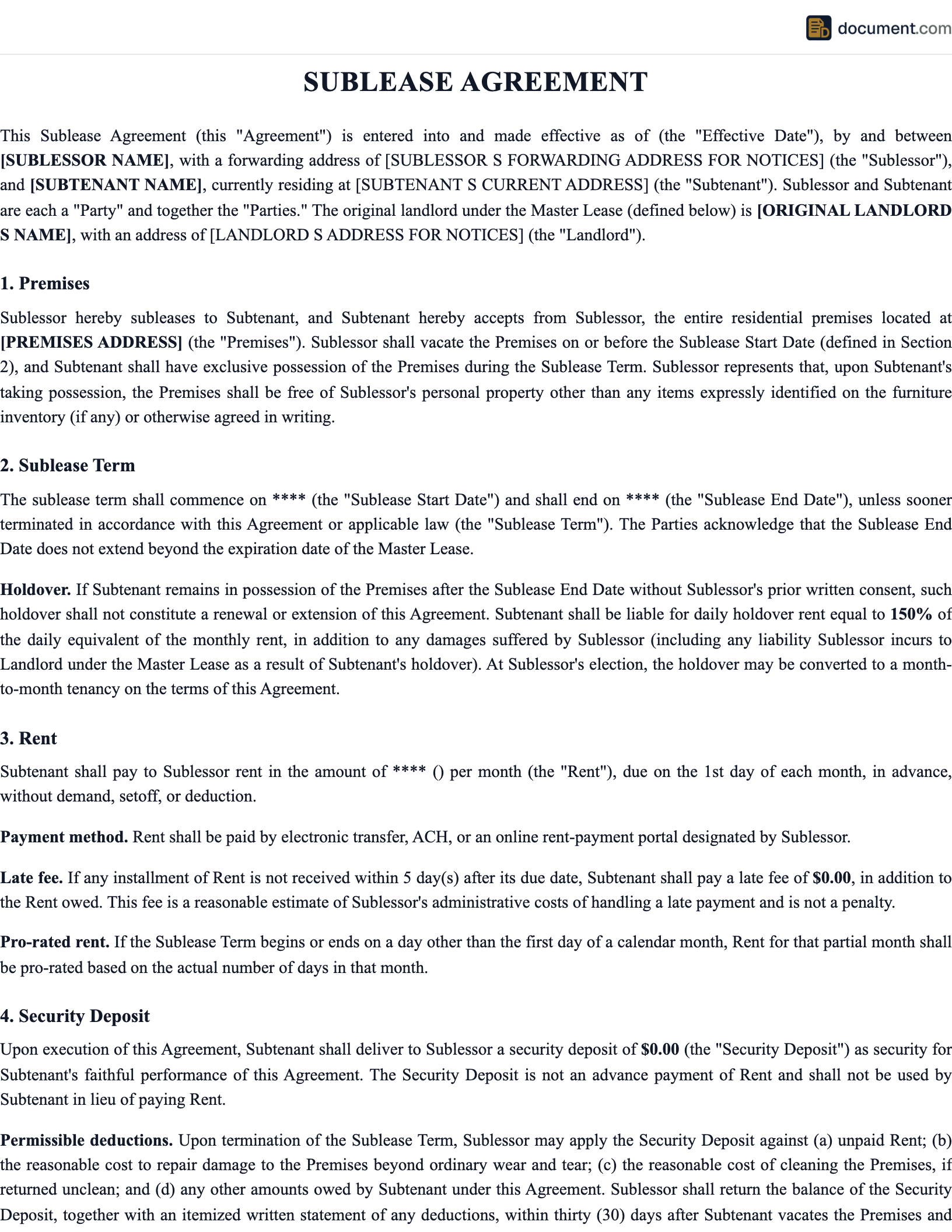
Below is a preview of our Kansas-specific sublease agreement. Your customized document will include all provisions required under KS law.
STATE OF KANSAS
SUBLEASE AGREEMENT
Residential Subletting Contract
SUBLESSOR (Original Tenant):
Name: [Sublessor Name]
Address: [Kansas Address]
SUBLESSEE (New Occupant):
Name: [Sublessee Name]
Current Address: [Address]
SUBLEASE TERMS
Start Date: [Date]
End Date: [Date]
Monthly Rent: $[Amount]
Security Deposit: $[Amount]
Kansas Sublease Agreement FAQ
Answers to common questions about sublease agreements in Kansas.
Other Kansas Lease Agreement Templates
Need a different type of lease agreement for Kansas? We offer state-specific templates for every type of rental arrangement.
Kansas Residential Lease
Standard rental agreements
Kansas Month-to-Month Lease
Flexible short-term rentals
Kansas Vacation Rental
Short-term vacation properties
Kansas Commercial Lease
Business and retail spaces
Kansas Roommate Agreement
Shared living arrangements
Kansas Rent-to-Own
Lease with purchase option
Kansas Equipment Lease
Equipment rental agreements
Kansas Land Lease
Land rental agreements
Kansas Room Rental
Individual room rentals
Create your Kansas Sublease Lease Agreement in under 5 minutes.
Answer a few questions and download a Kansas-compliant document, ready for the state agency.