



What Is a Land Lease Agreement?
A land lease agreement (also called a ground lease) is a contract that allows a tenant to use a parcel of land owned by another party for a specified period and purpose. Unlike a standard residential or commercial lease where a building is included, a land lease covers only the land itself — the tenant may use the land as-is or may have the right to construct improvements on it.
Land leases serve a wide range of purposes including agricultural farming and ranching, commercial development (ground leases), hunting and recreational access, cell tower and telecommunications installations, solar and wind energy projects, parking facilities, and timber harvesting. Each use type has unique terms, risk considerations, and regulatory requirements.
A well-drafted land lease agreement protects both the landowner's property rights and the tenant's investment in improvements or operations. Critical terms include the permitted use of the land, lease duration, rent structure, property tax responsibility, mineral and water rights, improvement ownership at lease expiration, insurance requirements, and environmental compliance obligations.
Agricultural Leases
Cropland, pasture, and farm operation agreements with flexible rent structures
Ground Leases
Long-term commercial leases with development rights and improvement provisions
Recreational Leases
Hunting, fishing, and outdoor recreation access with liability protections
Land Lease Agreement by State
Land lease laws vary significantly by state, particularly regarding agricultural lease protections, recording requirements, mineral rights, and maximum lease terms. Select your state below for a template that addresses your specific legal requirements.
How to Write a Land Lease Agreement
A comprehensive land lease agreement must address the unique characteristics of land-only rental arrangements. Follow these steps to create a thorough and enforceable agreement.
Identify the Parties and Property
Include the full legal names and addresses of both the landowner (lessor) and tenant (lessee). Provide the complete legal description of the property including the parcel number, acreage, county, and a metes-and-bounds or plat description. Attach a survey or plat map as an exhibit if available. For partial parcels, clearly delineate the leased area.
Define the Permitted Use
Clearly specify how the land may be used — agricultural (crops, livestock, grazing), commercial development, hunting/recreation, energy production (solar, wind), telecommunications (cell towers), parking, or other purposes. Include any use restrictions and compliance requirements with local zoning ordinances. Address whether the tenant may make improvements or alterations to the land.
Set the Lease Term and Renewal Options
Specify the start date, end date, and total duration of the lease. Include any renewal or extension options, how renewal is exercised (written notice, automatic), and the deadline for renewal notice. For long-term ground leases, address rent escalation provisions and periodic rent resets. Some states impose maximum lease terms for certain land types.
Establish Rent and Payment Terms
Define the rent amount, payment frequency (monthly, annual, per-acre), and payment method. For agricultural leases, specify whether rent is cash-based or crop-share. Include rent escalation clauses (CPI adjustment, fixed percentage, periodic market resets), late payment penalties, and any additional costs the tenant is responsible for (property taxes, insurance, maintenance — i.e., net lease terms).
Address Mineral, Water, and Timber Rights
Specify whether mineral rights (oil, gas, coal, metals) are included or reserved by the landowner. Address water rights, well access, and irrigation use. If timber is present, define harvesting rights, replanting obligations, and revenue sharing. In states where mineral rights are commonly severed from surface rights, this section is particularly critical.
Define Improvement and Reversion Terms
Clearly state what happens to any buildings, structures, fencing, irrigation systems, or other improvements made by the tenant when the lease expires. Options include reversion to the landowner, removal by the tenant, or purchase by the landowner at fair market value. Include environmental restoration obligations and the condition in which the land must be returned. Record the agreement with the county to protect both parties.
Key Components of a Land Lease Agreement
A thorough land lease agreement should include all of the following elements to provide maximum protection and clarity for both the landowner and the tenant.
| Component | Description |
|---|---|
| Legal Description | Parcel number, acreage, metes and bounds, survey reference |
| Permitted Use | Specific allowed activities and use restrictions |
| Lease Term | Duration, renewal options, and termination conditions |
| Rent & Payment | Amount, frequency, escalation clauses, payment method |
| Property Taxes | Which party is responsible for tax payments |
| Mineral & Water Rights | Subsurface rights, water access, and extraction terms |
| Improvements | Building rights, ownership of structures, reversion at expiration |
| Insurance | Liability, property, and environmental insurance requirements |
| Recording | Whether the lease or memorandum of lease must be recorded |
| Signatures | Landowner and tenant signatures, notarization if required |
Types of Land Leases
Land leases are used for a broad range of purposes, each with unique legal and practical considerations. Our templates are designed to address the specific requirements of each type.
Important: Check Zoning and Land Use Regulations
Before entering a land lease, verify that the intended use is permitted under local zoning ordinances. Agricultural land may have conservation easements or use restrictions. Commercial development requires zoning approval. Cell towers and solar farms often need special use permits or conditional use approval. Environmental regulations may restrict activities near wetlands, waterways, or protected habitats.
Agricultural / Farm Lease
Cropland, pasture, and farming operations with crop-share or cash rent arrangements
Ground Lease (Commercial)
Long-term leases where tenants construct buildings on leased land — common in retail and commercial development
Hunting / Recreational Lease
Hunting rights, fishing access, and recreational use of rural land with liability protections
Cell Tower / Telecom Lease
Lease of land or rooftop space to wireless carriers for cell tower installation and maintenance
Solar Farm / Wind Energy Lease
Renewable energy installations including solar panel arrays and wind turbine operations
Parking Lot Lease
Commercial or residential parking lot and garage land use agreements
Timber / Logging Lease
Timber harvesting rights with selective cutting, replanting, and environmental compliance terms
Development / Construction Lease
Land leased for residential or commercial development projects with build-out timelines
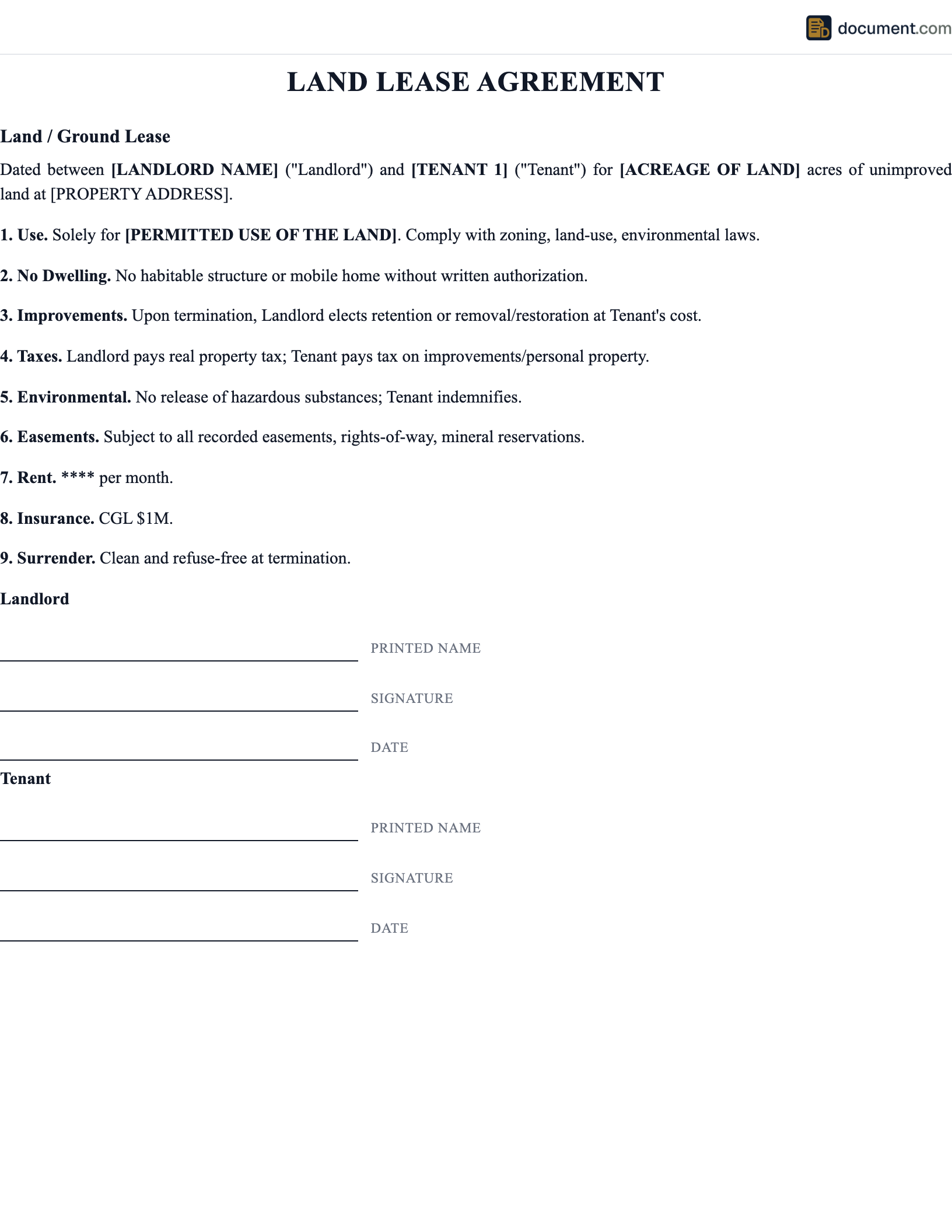
Sample Land Lease Agreement
Below is a preview of our land lease agreement template. Your customized document will include all terms required for your state and specific land use type.
LAND LEASE AGREEMENT
Ground Lease / Land Rental Contract
This Land Lease Agreement is entered into on[Date]between:
LANDOWNER (Lessor):
Name: [Landowner Name]
Address: [Landowner Address]
TENANT (Lessee):
Name: [Tenant Name]
Address: [Tenant Address]
1. PROPERTY DESCRIPTION
Location: [Property Address / Legal Description]
Parcel #: [Parcel Number] Acres: [Acreage]
2. PERMITTED USE
[Agricultural / Commercial / Recreational / Energy]
3. LEASE TERM & RENT
Term: [Start Date] to [End Date]
Annual Rent: $[Amount] per year
Frequently Asked Questions
Find answers to common questions about land lease agreements, ground leases, agricultural leases, and property rights.
Create your Land Lease Agreement in under 10 minutes.
Answer a few questions and download a compliant, attorney-drafted document ready for your state.