



What Is a Eviction Notice for Illegal Activity?
A eviction notice for illegal activity is a formal legal document that landlords use to notify tenants of a lease violation and provide a specific timeframe to either remedy the issue or vacate the rental property. Create a free eviction notice for illegal activity on the rental premises. This notice type typically allows for immediate or expedited eviction proceedings when a tenant engages in criminal activity such as drug manufacturing, violence, or other unlawful conduct.
This type of notice serves as the mandatory first step in the formal eviction process in many jurisdictions. Without properly serving this notice and allowing the full notice period to expire, a landlord cannot file an eviction lawsuit in court. The notice must comply with state-specific requirements regarding content, format, and method of delivery to be legally valid. Courts strictly enforce these requirements, and any deficiency can result in the dismissal of subsequent eviction proceedings.
The notice period begins counting from the day after proper service on the tenant. Calendar days are used in most jurisdictions, including weekends and holidays, though many states extend the deadline to the next business day if the final day falls on a weekend or legal holiday. For notices served by mail, additional mailing days may be added to the notice period depending on state law. The tenant retains all rights under the lease and applicable law during the notice period.
It is important to understand that this notice is not an eviction itself. An eviction can only occur through a court order after a judge has reviewed the case and entered a judgment of possession. Self-help eviction measures such as changing locks, removing doors, shutting off utilities, or removing tenant belongings are illegal in all 50 states and can expose the landlord to significant civil liability and potential criminal charges. The notice is simply the first step in a legal process that must be followed precisely.
Common reasons for serving this notice include non-payment of rent, unauthorized pets or occupants, excessive noise or disturbances, property damage beyond normal wear and tear, conducting illegal activities on the premises, violation of no-smoking policies, failure to maintain the unit in a sanitary condition, and other breaches of the lease agreement. The specific grounds and notice period requirements vary by state and sometimes by local ordinance, so landlords should always verify the applicable rules before serving any eviction notice.
Non-Payment
Demand overdue rent with a formal notice specifying the amount owed and cure deadline
Lease Violations
Address unauthorized pets, noise, damage, or other breaches of the rental agreement
Legal Compliance
Meet state-mandated notice requirements before filing for formal eviction in court
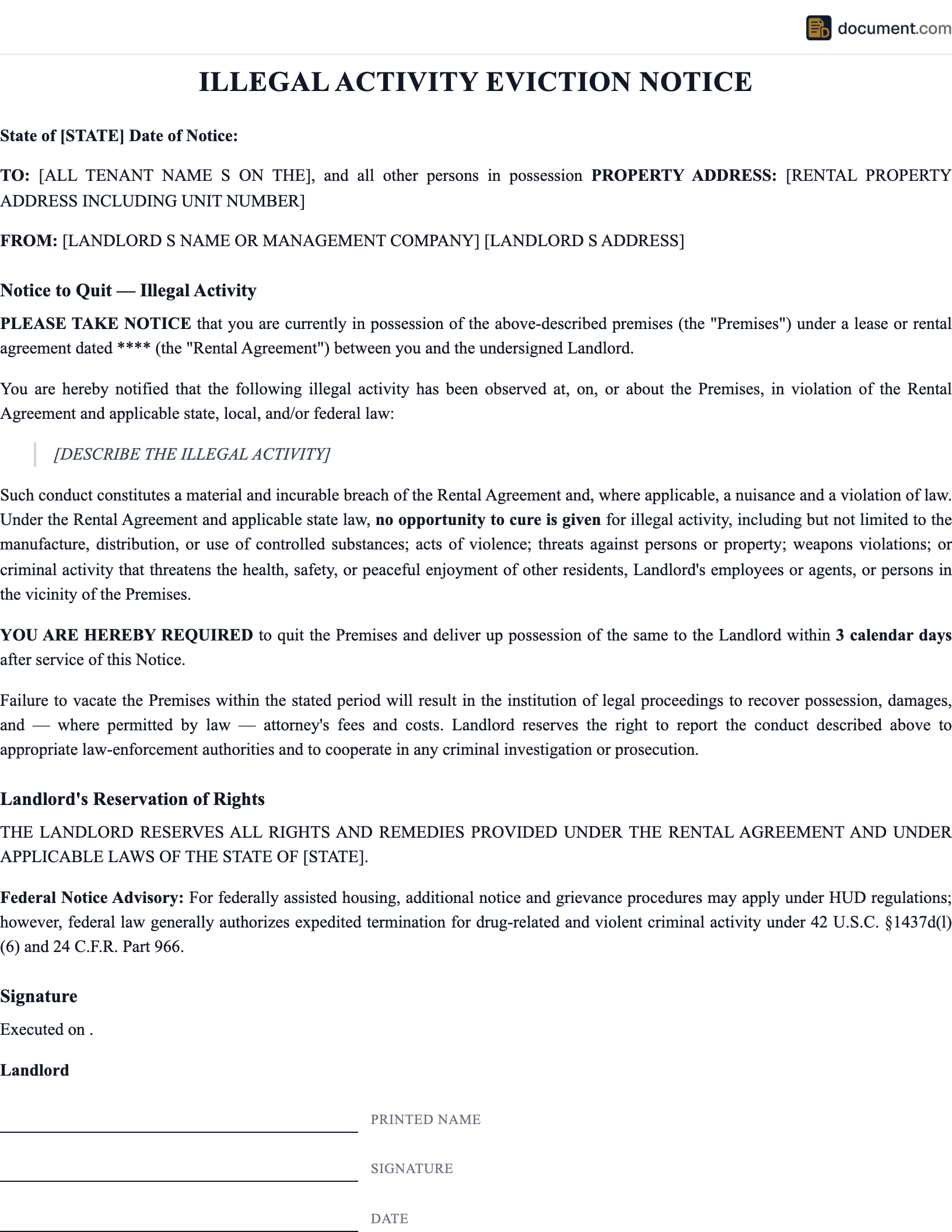
Eviction Notice for Illegal Activity Form Preview
Our eviction notice for illegal activity form includes all fields required for a legally valid notice. Below is a preview of the key sections. Your customized document will be tailored to your state's specific requirements and service methods.
EVICTION NOTICE FOR ILLEGAL ACTIVITY
Notice to Cure or Vacate
LANDLORD INFORMATION
Name: [Full Legal Name]
Address: [Street, City, State, ZIP]
Phone: [Phone Number]
TENANT INFORMATION
Name: [Tenant Full Name]
Rental Address: [Property Address]
Unit #: [Unit Number]
NOTICE DETAILS
Violation Type: [Non-Payment / Lease Violation]
Amount Owed: $[Amount]
Violation Description: [Specific Violation]
Lease Provision: [Section Reference]
CURE OR VACATE REQUIREMENT
You are hereby notified that you must cure the above violation or vacate the premises within the time period specified by applicable law from the date of service of this notice. If you fail to comply, legal proceedings will be initiated to recover possession of the premises.
SERVICE INFORMATION
Date Served: [Date]
Method of Service: [Personal / Posted / Mailed]
Served By: [Name]
When to Use a Eviction Notice for Illegal Activity
Understanding when to use this specific notice type is critical for a valid eviction process. Create a free eviction notice for illegal activity on the rental premises. This notice type typically allows for immediate or expedited eviction proceedings when a tenant engages in criminal activity such as drug manufacturing, violence, or other unlawful conduct. The notice period must match your state's requirements for the type of violation being addressed.
Non-Payment of Rent
When a tenant fails to pay rent by the due date (after any applicable grace period), this notice demands the full amount owed within the specified timeframe or requires the tenant to vacate the premises
Lease Violations
Unauthorized pets, excessive noise, unauthorized occupants, smoking violations, property damage, or other breaches of the rental agreement that the tenant can potentially cure
Health and Safety Violations
When tenant behavior creates health or safety hazards for other residents, such as hoarding, blocking fire exits, or tampering with smoke detectors
Repeated Violations
When a tenant repeatedly violates the same lease term, this notice creates a documented pattern that may support an unconditional quit notice for future violations
How to Serve the Notice
Proper service of the eviction notice is critical. Improper service is one of the most common reasons eviction cases are dismissed, requiring landlords to start the process over.
Personal Service (Preferred)
Hand-deliver the notice directly to the tenant. This is the most reliable method and is preferred by courts in every state. Have a witness present or use a process server for documentation
Substituted Service
Leave the notice with a competent adult at the tenant's residence and mail a copy via first-class mail. Accepted in most states when personal service is not possible
Post and Mail
Post the notice conspicuously on the property door and mail a copy via first-class mail. This method is typically a last resort when the tenant cannot be located
Certified Mail
Send via certified mail with return receipt requested. Provides proof of delivery but may add additional days to the notice period in some states
Legal Requirements
A valid eviction notice must meet specific legal requirements to be enforceable. These requirements vary by state, but the following elements are universally required or strongly recommended.
Important Legal Note
Eviction laws vary significantly by state and locality. Some cities and counties have additional requirements beyond state law, including longer notice periods, just-cause eviction protections, and mandatory relocation assistance. Always verify your local requirements before serving any notice.
- Written Notice: The notice must be in writing — verbal notices are not legally sufficient for eviction purposes in any state
- Tenant Identification: Include the full legal name of all tenants listed on the lease agreement
- Property Address: Clearly identify the rental property by full street address including unit number
- Violation Description: Specifically describe the lease violation or the exact amount of rent owed
- Cure Period: State the number of days the tenant has to cure the violation or vacate
- Proper Service: Deliver the notice using a legally acceptable method as defined by your state law
After Serving the Notice
After properly serving the eviction notice, the landlord must wait for the full notice period to expire before taking any further legal action. During this waiting period, there are several important considerations and potential outcomes.
If the tenant cures the violation within the notice period (pays the rent owed, removes the unauthorized pet, stops the prohibited behavior, etc.), the eviction process stops and the tenancy continues. The landlord must accept a valid cure. If the tenant does not cure or vacate, the landlord can file an eviction lawsuit with the court after the notice period expires. Filing before the period expires will result in dismissal.
Throughout the process, landlords must never engage in self-help eviction measures. Changing locks, removing doors, shutting off utilities, removing tenant belongings, or physically blocking access to the property are illegal in all 50 states and can result in significant damages awarded to the tenant, even if the tenant owes substantial back rent. Always follow the legal process.
Documentation Tip
Keep meticulous records of everything related to the eviction: copies of the notice, proof of service, any communications with the tenant, photographs of property damage, records of missed rent payments, and documentation of the lease violation. These records will be essential if the case proceeds to court.
Eviction Notice for Illegal Activity by State
Select your state below to access state-specific forms, requirements, and filing information. Each state has unique rules and procedures that must be followed for a valid document.
Sample Eviction Notice for Illegal Activity
Below is a condensed sample of our eviction notice for illegal activity template. Your customized document will include all required sections, state-specific language, and proper formatting for your jurisdiction.
EVICTION NOTICE FOR ILLEGAL ACTIVITY
Sample Template - For Illustration Only
This document is provided as a sample only and should not be used without customization for your specific situation and state requirements. The actual template includes comprehensive provisions, state-specific language, and all legally required disclosures.
Key sections included in the full template:
- Complete party identification and property description
- Detailed terms and conditions specific to your transaction
- State-specific legal language and required disclosures
- Signature blocks with proper acknowledgment format
- Service/delivery certification where applicable