



Connecticut Illegal Activity Eviction Overview
Connecticut's eviction process for illegal activity is among the most complex and tenant-protective in the nation. Under Connecticut General Statutes Section 47a-15, the landlord must first serve a pretermination notice giving the tenant a specified period (typically 15 days) to cure or vacate, followed by a formal notice to quit. However, for serious criminal activity including drug convictions, landlords may argue that the violation is incurable.
Connecticut's Housing Court system handles all eviction cases, and these courts are known for carefully protecting tenant rights. The state does not have a specific expedited timeline for illegal activity - even drug-related evictions must follow the standard summary process procedure. This multi-step approach means Connecticut evictions for illegal activity typically take 4-8 weeks from initial notice to physical eviction.
Landlords in Connecticut must navigate several potential pitfalls. The pretermination notice must be properly formatted and served. If the activity constitutes a serious nuisance (CGS 47a-11h), the court may act more quickly. For public housing and subsidized housing, federal One-Strike provisions may supplement state law. Consultation with a Connecticut landlord-tenant attorney is strongly advised given the complexity.
15 Days
Pretermination notice
$175-$350
Filing fees
No Cure
For criminal acts
4-8 wks
Court process
Legal Grounds & Connecticut Statutes
Connecticut provides statutory authority for landlords to pursue eviction when illegal activity occurs on rental premises. Understanding these laws strengthens the landlord's position in court.
Connecticut Multi-Step Notice Requirement
Unlike most states, Connecticut requires TWO notices before filing: first, a pretermination notice under CGS 47a-15, and then a formal notice to quit. Skipping the pretermination notice or failing to follow proper format and service requirements will result in dismissal. Even for serious criminal activity, Connecticut courts enforce this requirement strictly.
Key Connecticut Statutes
- CGS 47a-15: Governs pretermination notices for lease violations including illegal activity, requiring specific notice before the landlord can proceed to termination
- CGS 47a-23: Authorizes the notice to quit (formal termination notice) that must follow the pretermination notice before an eviction action can be filed
- CGS 47a-11h: Serious nuisance provision allowing eviction when tenant conduct substantially interferes with other tenants' safety or comfort
- CGS 21a-277 through 21a-279: Connecticut's controlled substance statutes defining drug offenses relevant to illegal activity evictions
- CGS 47a-26 through 47a-42: Summary process (eviction) procedure statutes governing how cases proceed through Connecticut Housing Court
Connecticut Notice Requirements for Illegal Activity
For illegal activity evictions in Connecticut, the notice must meet specific content and delivery requirements to be enforceable in CT courts.
Required Notice Elements
- Pretermination Notice First: Under CGS 47a-15, must serve a pretermination notice before the formal notice to quit. This is a mandatory first step in Connecticut
- Written Notice to Quit: After the pretermination period, serve a formal written notice to quit citing the grounds for termination under Connecticut law
- Specific Activity: Describe the illegal activity with specificity including dates, nature, and how it violates the lease and/or Connecticut criminal statutes
- Proper Service: Both notices must be served in compliance with CGS 47a-23a: true and attested copy by a state marshal or proper officer
- All Occupants Named: Notice must name all tenants and occupants. Connecticut courts require proper identification of all parties
- Court Filing Warning: State that a summary process action will be filed in Connecticut Housing Court if the tenant does not vacate
How to Serve an Illegal Activity Eviction Notice in Connecticut
Proper service is critical in Connecticut. Improper service is one of the most common reasons illegal activity eviction cases are dismissed in CT courts.
Gather Evidence
Document evidence: police reports from Connecticut State Police or local department, witness statements, incident reports, and any evidence of criminal activity on the premises.
Prepare the Notice
Serve the pretermination notice under CGS 47a-15. For serious criminal activity, state that the violation is incurable and no cure period applies. Wait the required period.
Serve Using Connecticut-Approved Methods
After the pretermination period, serve the formal notice to quit (CGS 47a-23) via Connecticut state marshal or proper officer. The notice must demand possession by a specific date.
Document Service and Wait
Both notices must be served by a state marshal or constable in Connecticut. Keep all returns of service. The notice to quit requires at least 3 days before the return date.
File Eviction if Tenant Remains
File a summary process complaint in Connecticut Housing Court ($175-$350). The court schedules a return date, and the case proceeds through the summary process timeline. A trial may be scheduled within 2-4 weeks.
Qualifying Criminal Activities in Connecticut
The following categories of criminal conduct are recognized by Connecticut courts as grounds for illegal activity eviction proceedings.
Drug Activity
Manufacturing, distributing, or possessing with intent under CGS 21a-277/278. Drug activity on or near the premises is grounds for eviction. Connecticut has drug-free zone provisions near schools and public housing.
Serious Nuisance (47a-11h)
Conduct that substantially interferes with other tenants' safety, comfort, or enjoyment. This includes violent behavior, repeated disturbances, and criminal activity that creates dangerous conditions in the building.
Violent Crimes
Assault (CGS 53a-59 through 53a-61), domestic violence, sexual assault, weapons brandishing, and other violent crimes on the premises that endanger other residents.
Prostitution & Organized Crime
Using the premises for prostitution (CGS 53a-82), gambling operations, or organized criminal enterprise. Connecticut treats the use of residential property for these crimes as grounds for termination.
Connecticut Court Process & Timeline
Connecticut Housing Courts handle all eviction cases through the summary process. Cases are managed carefully with attention to tenant rights. Even illegal activity cases follow the standard process timeline, though judges may expedite scheduling when safety concerns are documented. Contested cases can take 4-8 weeks or longer.
| Stage | Timeline | Details |
|---|---|---|
| Serve Pretermination Notice | Day 1-15 | CGS 47a-15 pretermination notice (15 days typical) |
| Serve Notice to Quit | Day 16+ | Formal notice to quit via state marshal |
| File Summary Process | After notice to quit | File in CT Housing Court ($175-$350) |
| Return Date/Trial | 2-4 weeks after filing | Court hearing in Housing Court |
| Execution | 5-10 days post-judgment | State marshal enforces the judgment |
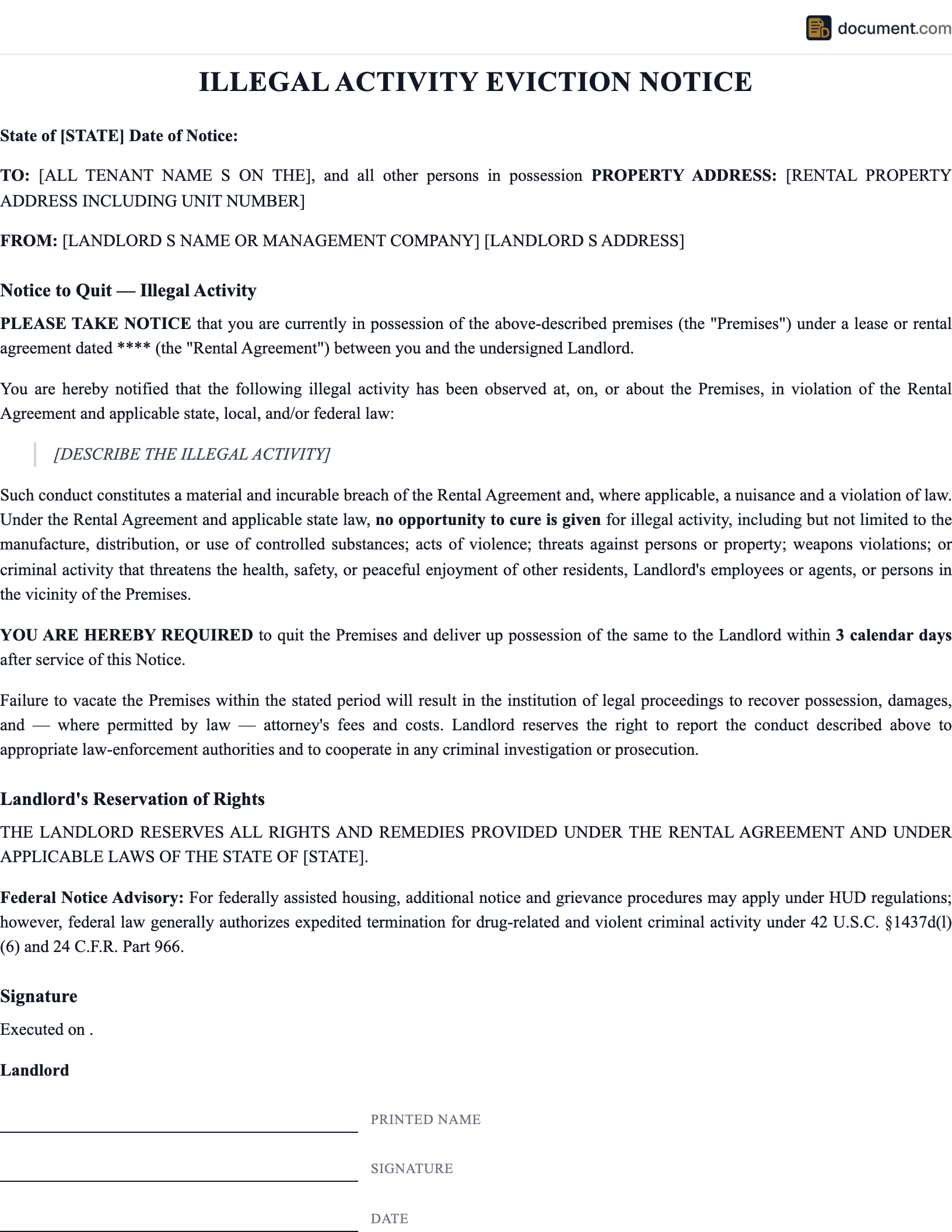
Sample Connecticut Illegal Activity Eviction Notice
Below is a preview of a Connecticut-specific eviction notice for illegal activity. Your completed document will include all required elements for CT court proceedings.
NOTICE TO QUIT FOR ILLEGAL ACTIVITY
STATE OF CONNECTICUT
Pursuant to CGS 47a-23
TO TENANT(S):
Name: [Full Legal Name]
Rental Address: [Connecticut Address]
NOTICE OF ILLEGAL ACTIVITY:
You have engaged in illegal activity on the above premises constituting a violation of your lease and Connecticut law. Specifically: [Description] on [Date(s)].
DEMAND TO VACATE
Pursuant to CGS 47a-23, you are hereby notified to quit possession of the premises on or before [Date]. This violation is incurable. Failure to vacate will result in the commencement of summary process proceedings in Connecticut Housing Court.