



New Jersey Illegal Activity Eviction Overview
New Jersey's approach to illegal activity evictions is governed by N.J.S.A. 2A:18-61.1(b). When a tenant engages in criminal activity on the rental premises - including drug offenses defined under N.J.S.A. 2C:35, violent crimes, and other serious criminal conduct - the landlord has legal authority to pursue eviction with a 3 days notice. This provision reflects the state's recognition that criminal activity in residential settings demands action to protect other tenants and the community.
New Jersey law treats illegal activity as an incurable lease violation in most circumstances. When the criminal conduct involves drug manufacturing, distribution, violent felonies, or weapons offenses, no cure period is typically available. The tenant must vacate within the notice period regardless of any promise to cease the criminal activity. New Jersey courts evaluate the evidence presented and will enforce the eviction when the landlord demonstrates the illegal activity occurred on or near the premises.
The eviction process in New Jersey begins with proper written notice to the tenant. If the tenant does not vacate after the notice period expires, the landlord files an eviction action in the appropriate NJ court. The court schedules a hearing, and if the landlord prevails, a judgment for possession is entered. The sheriff or constable then enforces the writ of possession. Throughout this process, New Jersey landlords must avoid self-help eviction methods.
3 Days
Must prove in court
$50-$200
Filing fees
No Cure
For criminal acts
4-8 wks
Court process
Legal Grounds & New Jersey Statutes
New Jersey provides statutory authority for landlords to pursue eviction when illegal activity occurs on rental premises. Understanding these laws strengthens the landlord's position in court.
New Jersey Court Proof Requirement
New Jersey is among the most tenant-protective states. Under N.J.S.A. 2A:18-61.1(b), illegal activity is grounds for eviction, but the landlord must prove the case in Superior Court. The tenant has the right to a full trial. Legal representation is strongly recommended.
Key New Jersey Statutes
- N.J.S.A. 2A:18-61.1(b): Primary statute authorizing eviction for illegal activity on the rental premises in New Jersey
- N.J.S.A. 2C:35: New Jersey's controlled substances statutes defining drug offenses that qualify as grounds for illegal activity eviction
- New Jersey Landlord-Tenant Act: Establishes tenant obligations including not engaging in criminal activity on the premises and maintaining the unit in a safe condition
- New Jersey Eviction Procedure: Governs the court eviction process after the notice period expires, including filing requirements and hearing procedures
- New Jersey Self-Help Prohibition: Prohibits landlords from changing locks, shutting off utilities, or removing tenant property without a court order
New Jersey Notice Requirements for Illegal Activity
For illegal activity evictions in New Jersey, the notice must meet specific content and delivery requirements to be enforceable in NJ courts.
Required Notice Elements
- Written Notice: Must be in writing. Verbal notice is not sufficient under New Jersey law for any eviction action
- 3 Days Notice Period: Provide 3 days written notice to vacate under N.J.S.A. 2A:18-61.1(b) for illegal activity violations
- Criminal Activity Description: Describe the specific illegal activity with dates, nature of conduct, and reference to NJ criminal statutes
- Unconditional Language: State that no cure period is available for criminal activity violations and the tenant must vacate
- Tenant/Property Identification: Include full names of all tenants on the lease and complete rental property address
- Court Action Warning: Inform the tenant that an eviction action will be filed in New Jersey court if they fail to vacate
How to Serve an Illegal Activity Eviction Notice in New Jersey
Proper service is critical in New Jersey. Improper service is one of the most common reasons illegal activity eviction cases are dismissed in NJ courts.
Gather Evidence
Document all evidence: police reports from New Jersey law enforcement, arrest records, witness statements, photographs, and any incident reports. File a police report if one has not been made.
Prepare the Notice
Prepare the notice citing N.J.S.A. 2A:18-61.1(b). Describe the criminal activity with specificity, reference the NJ criminal statute violated, and state the tenant has 3 days to vacate with no cure option.
Serve Using New Jersey-Approved Methods
Serve using New Jersey-approved methods: personal delivery to the tenant, delivery to a competent adult at the premises, or posting and mailing. Use a process server or witness for documentation.
Document Service and Wait
Record the date, time, method of service, and any witnesses. The notice period begins the day after service. Do not accept rent during this period as it may waive the notice.
File Eviction if Tenant Remains
If the tenant does not vacate, file an eviction action in New Jersey court ($50-$200 filing fee). Include the notice, proof of service, and all evidence. Courts typically schedule hearings within 7-21 days.
Qualifying Criminal Activities in New Jersey
The following categories of criminal conduct are recognized by New Jersey courts as grounds for illegal activity eviction proceedings.
Drug Manufacturing & Distribution
Manufacturing, distributing, or possessing with intent to deliver controlled substances on the premises in violation of N.J.S.A. 2C:35. Drug activity is one of the strongest grounds for illegal activity eviction in New Jersey.
Violent Crimes
Assault, battery, domestic violence, robbery, and other violent felonies committed on or near the rental premises. New Jersey courts recognize violence as an incurable violation.
Weapons Offenses
Illegal weapons possession, firearms trafficking, illegal discharge on the property, or use of weapons in the commission of a crime. New Jersey treats these as serious grounds for eviction.
Criminal Enterprise & Nuisance
Using the premises for prostitution, illegal gambling, gang activity, or organized crime. Criminal conduct creating a public nuisance under New Jersey law also qualifies.
New Jersey Court Process & Timeline
New Jersey courts handle illegal activity evictions through the standard eviction process. After filing, the court schedules a hearing typically within 7-21 days. If the landlord presents credible evidence of criminal activity, the court will rule for possession. The entire process from notice to enforcement typically takes 4-8 wks.
| Stage | Timeline | Details |
|---|---|---|
| Serve 3 Days Notice | Day 1-3 | 3 Days notice per N.J.S.A. 2A:18-61.1(b) |
| File Eviction | Day 4 | File in New Jersey court ($50-$200) |
| Court Hearing | 7-21 days after filing | Hearing scheduled in NJ court |
| Judgment | Hearing day | Judge rules on evidence presented |
| Writ of Possession | 3-10 days after judgment | Sheriff/constable enforces writ |
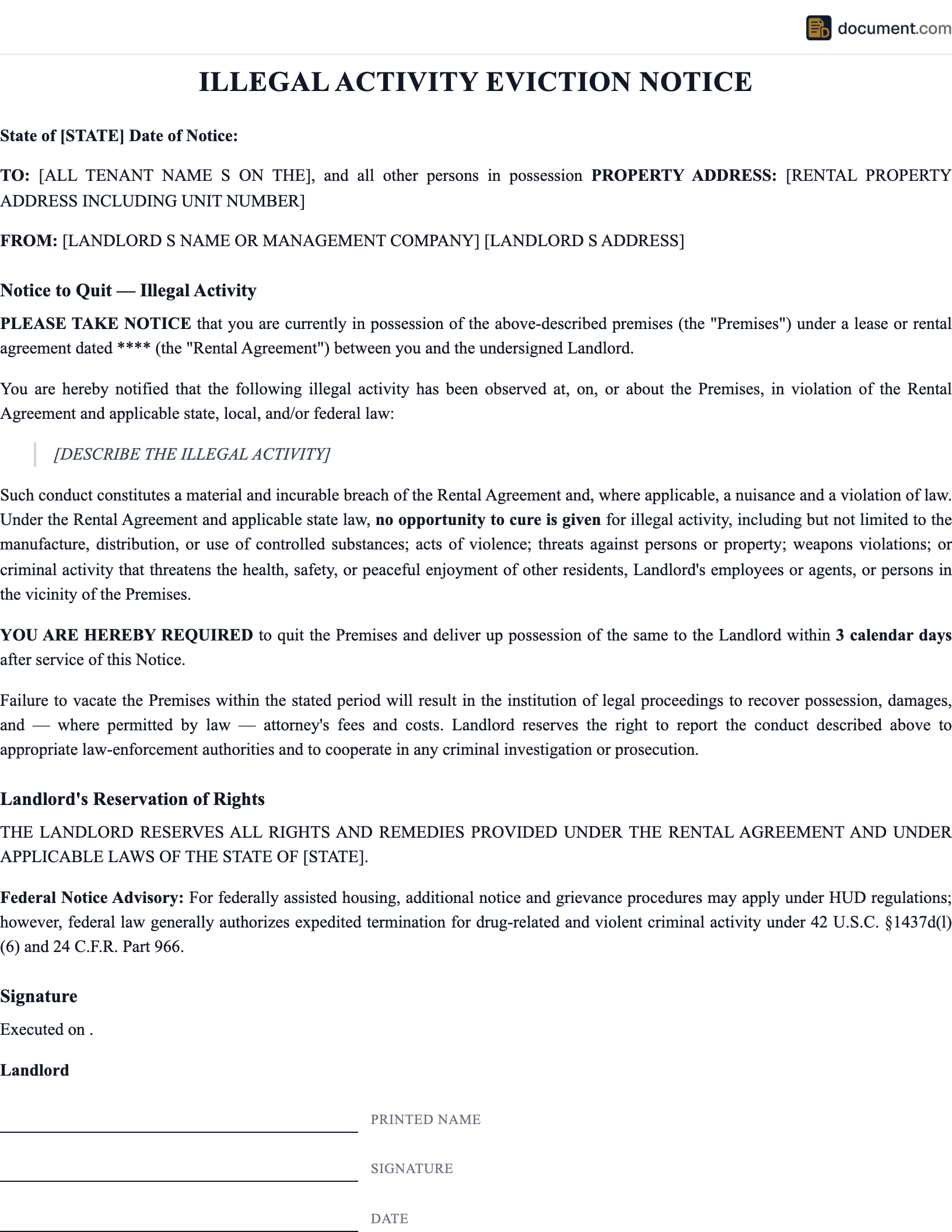
Sample New Jersey Illegal Activity Eviction Notice
Below is a preview of a New Jersey-specific eviction notice for illegal activity. Your completed document will include all required elements for NJ court proceedings.
NOTICE TO QUIT FOR ILLEGAL ACTIVITY
STATE OF NEW JERSEY
Pursuant to N.J.S.A. 2A:18-61.1(b)
TO TENANT(S):
Name: [Full Legal Name]
Rental Address: [New Jersey Address]
NOTICE OF ILLEGAL ACTIVITY:
You have engaged in illegal activity on the above premises in violation of your lease and New Jersey law. Specifically: [Description] on [Date(s)].
DEMAND TO VACATE
Pursuant to N.J.S.A. 2A:18-61.1(b), you must vacate within 3 DAYS. No cure period is available for criminal activity violations. Failure to vacate will result in the filing of an eviction action in New Jersey court.