



Virginia Vehicle Bill of Sale Overview
The Commonwealth of Virginia offers a favorable environment for private party vehicle sales, with a motor vehicle sales and use tax rate of just 4.15% — notably lower than Virginia's general retail sales tax. A bill of sale is an essential document for any vehicle transaction in Virginia, providing the official record of the purchase that the Virginia DMV uses to calculate the tax owed and verify the transfer details.
The Virginia Department of Motor Vehicles manages all vehicle titling and registration across the Commonwealth. Virginia also offers DMV Select locations — authorized private businesses that can process many DMV transactions, including title transfers, often with shorter wait times. Emissions testing is required in Northern Virginia and the Richmond metro area but not in the rest of the state.
Virginia does not require notarization for vehicle bills of sale or title assignments, and the transfer must be completed within 30 days. The Commonwealth also charges a highway use fee for electric and fuel-efficient vehicles to offset reduced fuel tax revenue. With relatively low fees and a straightforward process, Virginia makes private party vehicle transfers reasonably simple.
4.15%
Vehicle SUT rate
30 Days
Transfer deadline
No
Notarization required
Select
Emissions (areas)
Virginia DMV Requirements
Virginia's vehicle transfer process is managed by the Virginia DMV, with additional support from DMV Select authorized agents. Here are the requirements for a successful private party transfer.
Important: Virginia's 30-Day Transfer Rule
Virginia law requires the buyer to transfer the title within 30 days of the purchase date. Late transfer penalties may apply after 30 days. The date written on your bill of sale starts this countdown. Visit a Virginia DMV office or DMV Select location promptly to avoid fees and potential liability issues.
What the Seller Must Provide
- Signed Vehicle Title: The seller must sign the title assignment section and fill in the buyer's name, sale date, sale price, and odometer reading
- Bill of Sale: A completed bill of sale with all transaction details (buyer/seller info, vehicle details, VIN, price, date, signatures)
- Odometer Disclosure: Federal requirement — mileage and accuracy must be stated on the title
- Lien Release: If the vehicle had a loan, a lien release from the lender is required
What the Buyer Must Bring to the Virginia DMV
- Signed Title: With the seller's signature and completed assignment
- Bill of Sale: Signed by both parties
- Valid Photo ID: Virginia driver's license or state-issued ID
- Proof of Insurance: Virginia minimum liability coverage
- Emissions Inspection: Required in Northern Virginia and Richmond metro (valid within 15 days of registration)
- Safety Inspection: Current valid Virginia safety inspection sticker
- Payment: Title fee ($15), registration ($30.75-$45.75), and 4.15% SUT
How to Fill Out a Virginia Vehicle Bill of Sale
Follow these six steps to complete your Virginia vehicle bill of sale. Our template ensures your document includes all the information the Virginia DMV needs for a smooth title transfer.
Enter Seller Information
Include the seller's full legal name exactly as it appears on the Virginia title, current mailing address, and phone number. If the title lists multiple owners, check the conjunction — "and" means all owners must sign, while "or" allows any listed owner to complete the transfer independently.
Enter Buyer Information
Provide the buyer's full legal name as it will appear on the new Virginia title, current address, and contact information. The buyer's location determines whether emissions testing is required — Northern Virginia and Richmond metro residents must pass emissions inspections.
Describe the Vehicle
Record the year, make, model, body style, and exterior color. Enter the complete 17-character VIN from the dashboard or door jamb and verify it matches the title exactly. Include the current Virginia license plate number if applicable. For electric or hybrid vehicles, note the fuel type as it may affect the highway use fee.
Record the Odometer Reading
Document the current odometer mileage at the time of sale and indicate whether the reading is accurate, has exceeded mechanical limits, or does not reflect the actual mileage. This is a federal requirement under NHTSA regulations. Vehicles 20 years old or older and those over 16,000 lbs GVWR are exempt.
State the Sale Price
Enter the agreed sale price in both numbers and words. Virginia calculates the 4.15% SUT based on this figure. If the stated price is significantly below the vehicle's fair market value, the DMV may use the book value instead. If the vehicle is a gift, write "$0 — Gift" and note the relationship between buyer and seller — gifts between immediate family members may qualify for a tax exemption.
Sign and Date
Both the buyer and seller sign and date the bill of sale. Print at least two copies for each party's records. Virginia does not require notarization. The buyer should visit a Virginia DMV office or DMV Select location within 30 days to complete the title transfer and registration. Schedule an appointment online to reduce wait times.
Virginia Title Transfer Process
After completing the bill of sale and signing the title, the buyer must visit a Virginia DMV office or an authorized DMV Select location to finalize the transfer. Virginia's process is straightforward and can often be completed in a single visit.
Complete the Sale
Sign the bill of sale, sign the title assignment, exchange payment and keys
Get Insurance & Inspections
Obtain Virginia liability insurance, get a safety inspection, and emissions test if in NoVA or Richmond area
Visit a Virginia DMV or DMV Select
Bring the signed title, bill of sale, proof of insurance, inspection certificates, and photo ID
Pay Fees and Taxes
Title fee ($15), registration ($30.75-$45.75), 4.15% SUT, and highway use fee if applicable
Receive Your New Title and Registration
Virginia issues a new title in the buyer's name and provides registration cards and license plates
Virginia Vehicle Sales & Use Tax & Fees
Virginia charges a 4.15% Sales and Use Tax (SUT) on vehicle purchases — lower than the general state sales tax rate of 5.3%. There are no additional local taxes on vehicle purchases, making the total tax predictable. Here's a complete breakdown:
| Fee / Tax | Amount |
|---|---|
| Sales and Use Tax (SUT) | 4.15% of sale price |
| Title Transfer Fee | $15 |
| Registration Fee | $30.75 - $45.75 (based on vehicle weight) |
| Safety Inspection | $20 (required annually) |
| Emissions Inspection | $28 (NoVA and Richmond areas, every 2 years) |
| Highway Use Fee | Varies (electric and fuel-efficient vehicles) |
| Duplicate Title | $15 (if title is lost) |
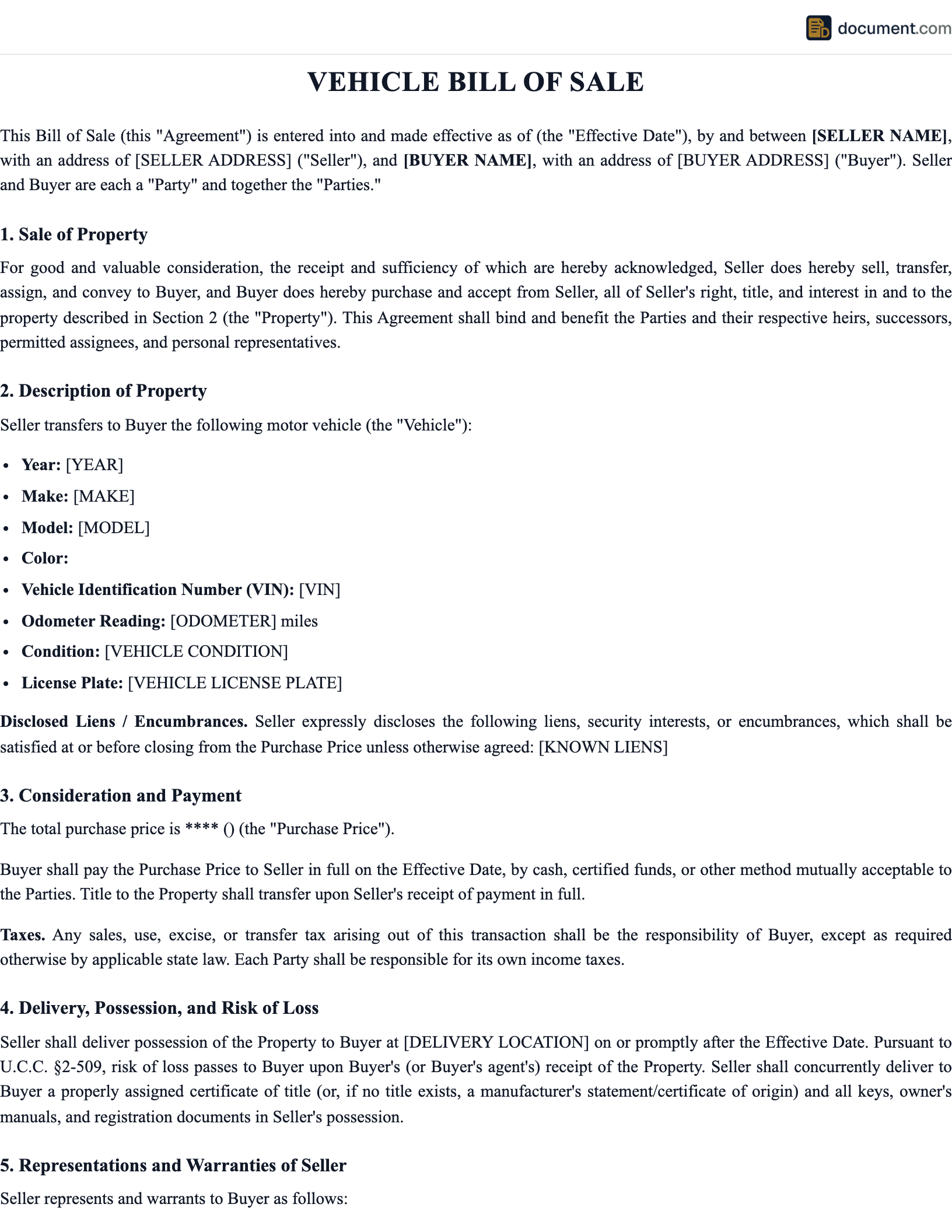
Sample Virginia Vehicle Bill of Sale
Below is a preview of our Virginia-specific vehicle bill of sale. Your completed document will include all fields required by the Virginia DMV for a successful title transfer.
COMMONWEALTH OF VIRGINIA
VEHICLE BILL OF SALE
Private Party Motor Vehicle Transfer
SELLER:
Name: [Seller Name]
Address: [Virginia Address]
City/County: [City/County]
BUYER:
Name: [Buyer Name]
Address: [Virginia Address]
City/County: [City/County]
VEHICLE INFORMATION
Year: [Year] Make: [Make] Model: [Model]
VIN: [17-digit VIN]
Odometer: [Miles] miles
Sale Price: $[Amount]
Virginia Vehicle Bill of Sale FAQ
Answers to common questions about Virginia vehicle bills of sale, title transfers, and DMV requirements.
Official Virginia Resources
Use these official Commonwealth and federal resources to verify requirements, find your nearest DMV office, and access government forms for your Virginia vehicle transaction.
Virginia Department of Motor Vehicles
Title transfers, registration, and fee information
Virginia DMV — Title Transfer Guide
Step-by-step title transfer instructions and forms
Virginia Emissions Inspection Program
Emissions requirements for NoVA and Richmond areas
NHTSA — Odometer Fraud Prevention
Federal odometer disclosure requirements and fraud reporting
NICB VINCheck — Free Vehicle History
Check if a vehicle has been reported stolen or salvaged
NHTSA VIN Decoder
Decode any VIN to verify year, make, model, and specifications
Other Virginia Bill of Sale Templates
Need a different type of bill of sale for Virginia? We offer state-specific templates for every type of property transfer across the Commonwealth.
Virginia Boat Bill of Sale
Boats, jet skis, and watercraft
Virginia Motorcycle Bill of Sale
Motorcycles, scooters, and mopeds
Virginia Trailer Bill of Sale
Utility, travel, and cargo trailers
Virginia Firearm Bill of Sale
Handguns, rifles, and shotguns
Virginia General Bill of Sale
Furniture, electronics, and personal property
Virginia ATV Bill of Sale
ATVs, UTVs, and off-road vehicles
Virginia Horse Bill of Sale
Horses, cattle, and livestock
Virginia Mobile Home Bill of Sale
Manufactured and mobile homes
Create your Virginia Vehicle Bill of Sale in under 5 minutes.
Answer a few questions and download a Virginia-compliant document, ready for the state agency.