



What Is a Cat Bill of Sale?
A cat bill of sale is a legal document that records the sale or transfer of a cat from one party to another. It identifies the animal by breed, color, markings, age, and microchip number, and it establishes the buyer as the new owner. The document also typically records the cat's health status, vaccination history, and any conditions or guarantees associated with the sale.
Cat bills of sale are used by private individuals selling or rehoming cats, licensed breeders transferring purebred kittens, rescue organizations placing adopted cats, and anyone who needs written proof that a cat changed hands on a specific date for a specific price. The document protects the buyer by confirming what they purchased and the health representations made at the time of sale, and it protects the seller by documenting that the transfer occurred and that the buyer accepted the animal.
For purebred cats registered with the Cat Fanciers' Association (CFA) or The International Cat Association (TICA), a bill of sale also serves as supporting documentation for transferring the cat's registration to the new owner. Many registries require proof of purchase before they will update ownership records, making the bill of sale an essential part of any pedigreed cat transaction.
Ownership Proof
Documents transfer with identifying details
Health Records
Captures vaccinations, FeLV/FIV, and vet history
Legal Protection
Protects both buyer and seller in disputes
Why You Need a Cat Bill of Sale
A bill of sale may seem unnecessary for a cat transaction, but it serves several important legal and practical functions that protect both parties.
Proof of Legal Ownership
Ownership disputes over cats are more common than most people realize, especially after breakups, roommate changes, or when a lost cat is found by someone else. A bill of sale provides clear, dated, signed documentation that you legally purchased or received the cat. Courts consistently look for written evidence of ownership when adjudicating pet disputes.
Health Guarantee Documentation
Many cat sales — particularly from breeders — include health guarantees that promise the cat is free of certain genetic conditions or contagious diseases at the time of sale. If a health problem emerges later, the buyer needs the written terms of the guarantee to seek a refund, replacement, or veterinary cost reimbursement. Without a bill of sale, these verbal promises are nearly impossible to enforce.
State Compliance
Several states have pet lemon laws that give buyers specific rights when purchasing an animal that turns out to be ill. These laws typically require written documentation of the sale to activate the buyer's protections. States like New York, New Jersey, Connecticut, and Virginia have detailed pet purchase protection statutes, and a bill of sale is the starting point for any claim under these laws.
How to Write a Cat Bill of Sale
A cat bill of sale should capture enough detail to uniquely identify the animal and document the terms of the sale. Follow these steps for a complete document.
Record Buyer and Seller Information
Include the full legal names, addresses, phone numbers, and email addresses of both buyer and seller. If the seller is a breeder, include the cattery name and any state breeder license number. Note whether the seller is a private individual, licensed breeder, or rescue organization.
Identify the Cat
Describe the cat's breed (or "domestic shorthair/longhair" for mixed breeds), color and pattern (tabby, calico, solid, etc.), sex, date of birth or approximate age, and any distinguishing features. Include the microchip number and registry if the cat is microchipped. For purebred cats, include the registered name, registration number, and the names of the sire and dam.
Document Health Information
List vaccinations administered (rabies, FVRCP, FeLV), the date of the most recent veterinary exam, spay/neuter status, FeLV and FIV test results, deworming history, and any known health conditions. Attach copies of veterinary records. Note whether a health certificate from a licensed veterinarian is included, as some states require this for animal sales.
State the Sale Price and Terms
Record the sale price in numerals and words. Note whether the sale includes any health guarantee (and its specific terms), spay/neuter requirements, breeding restrictions, or return clauses. If the cat is being gifted or adopted with no purchase price, state "$0 — Gift/Adoption" and note any adoption fee separately.
Sign and Exchange Documents
Both buyer and seller should sign and date two copies — one for each party. The buyer should also receive copies of veterinary records, the microchip registration information, pedigree papers (if applicable), and any breed registry transfer forms. Keep the bill of sale with your permanent records.
Key Components of a Cat Bill of Sale
A complete cat bill of sale includes all of the following elements to properly document the transaction and protect both parties.
| Component | Description |
|---|---|
| Buyer & Seller Names | Full legal names, addresses, and contact information |
| Breed | Purebred name or "domestic shorthair/longhair" |
| Color & Markings | Primary color, pattern (tabby, calico, etc.), distinguishing marks |
| Sex & Age | Male/female, date of birth or approximate age |
| Microchip Number | Chip number and registry (HomeAgain, 24PetWatch, etc.) |
| Vaccination History | Rabies, FVRCP, FeLV vaccines with dates |
| Spay/Neuter Status | Whether altered, date of procedure, or spay/neuter agreement |
| Health Guarantee | Terms of any health warranty or as-is condition |
| Sale Price | Amount in numbers and words, payment method |
| Signatures & Date | Both parties sign and date the document |
Health Guarantees & Disclosures
Health representations are the most important and most frequently disputed part of a cat sale. Clearly documenting health information in the bill of sale prevents misunderstandings and provides a reference point if problems arise later.
Buyer Reminder: Veterinary Exam Within 72 Hours
Many states with pet lemon laws require the buyer to have the cat examined by a licensed veterinarian within 72 hours of purchase to activate buyer protections. Even if your state does not mandate this, scheduling a prompt vet visit is the best way to identify any health issues early and establish a baseline health record under your ownership.
- FeLV/FIV Testing: Feline Leukemia and Feline Immunodeficiency Virus test results and dates
- Vaccination Records: Complete vaccination history with dates and veterinarian information
- Genetic Testing: For purebreds, results of breed-specific genetic health screens (HCM, PKD, etc.)
- Known Conditions: Any diagnosed conditions, ongoing medications, or dietary requirements
- Spay/Neuter Agreement: If not yet altered, terms and timeline for spay/neuter procedure
Official Cat & Pet Sale Resources
Use these official resources for cat registration, health standards, and animal sale regulations.
Sample Cat Bill of Sale
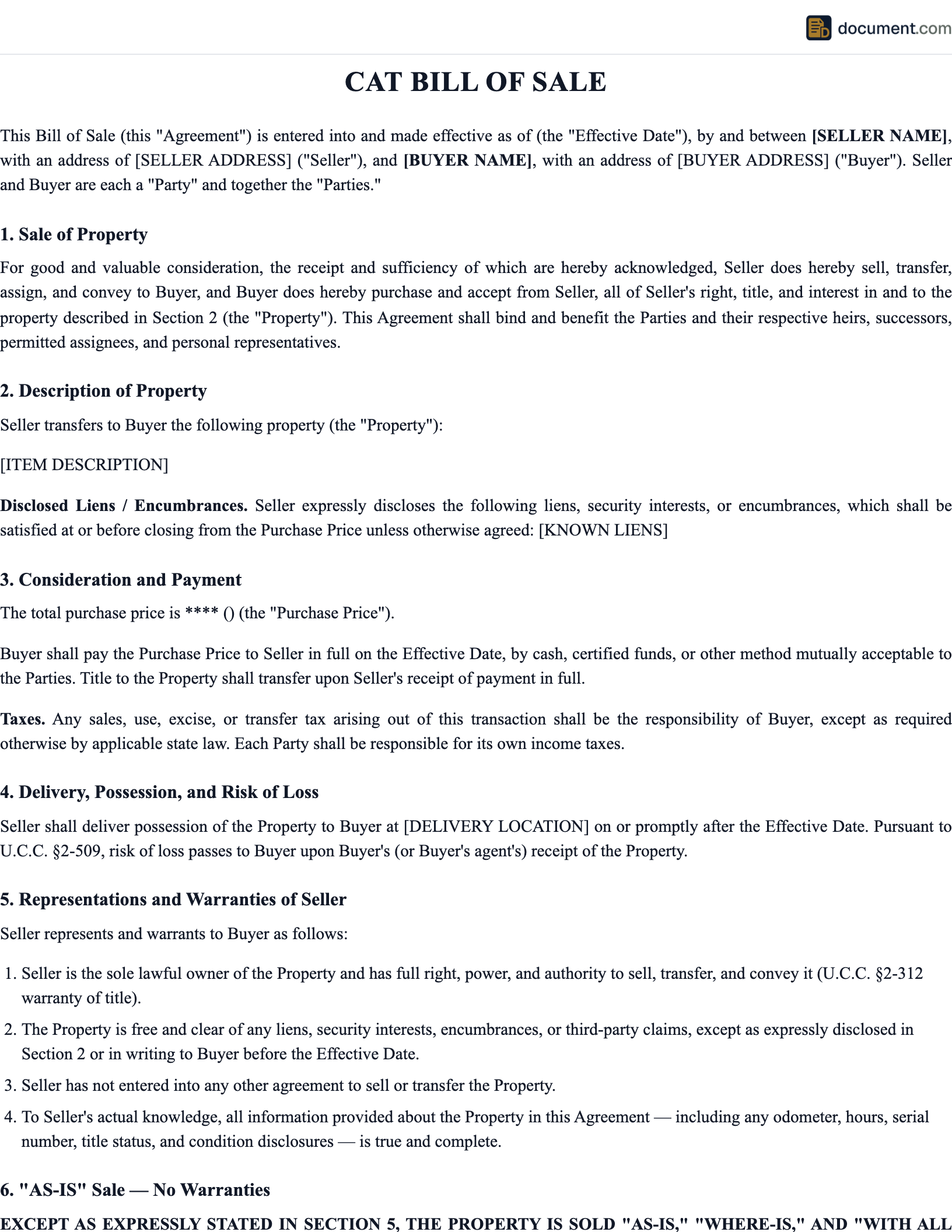
Below is a preview of our cat bill of sale template. Your customized document will include all fields needed for a complete feline transfer.
CAT BILL OF SALE
Feline Transfer Document
This Cat Bill of Sale is entered into on[Date]between:
SELLER:
Name: [Seller Name]
Address: [Seller Address]
BUYER:
Name: [Buyer Name]
Address: [Buyer Address]
1. CAT DESCRIPTION
Breed: [Breed] Color: [Color]
Sex: [M/F] DOB: [Date of Birth]
Microchip #: [Number]
2. SALE PRICE
$[Amount]([Amount in Words] Dollars)
Frequently Asked Questions
Find answers to common questions about cat bills of sale, pet ownership transfers, and health disclosures.
Create your Cat Bill of Sale in under 10 minutes.
Answer a few questions and download a compliant, attorney-drafted document ready for your state.