
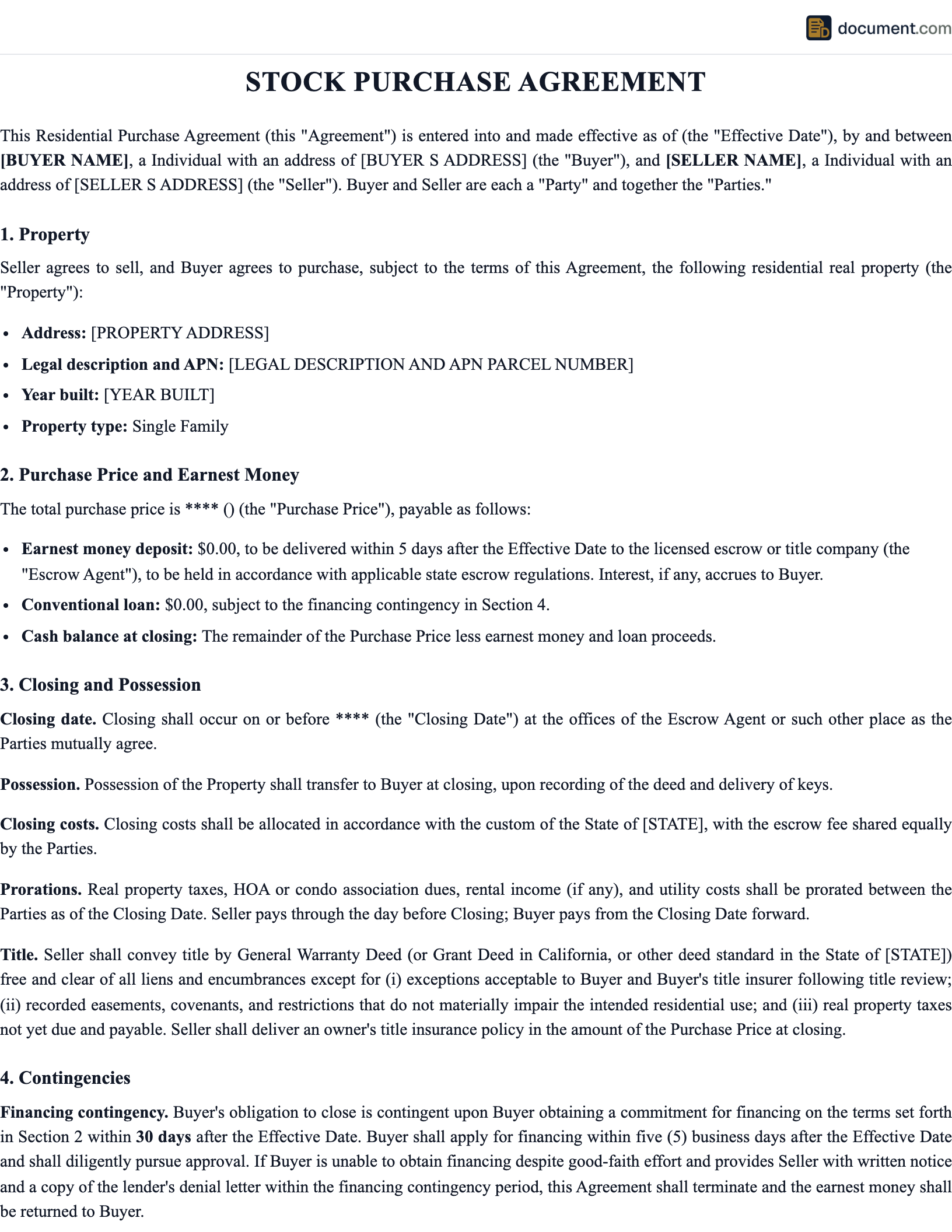



Kentucky Stock / Equity Purchase Agreement Overview
A stock/equity purchase agreement in Kentucky transfers ownership of a business by selling shares of a corporation or membership interests of an LLC. The transaction is governed by Kentucky Business Corporation Act (KRS Chapter 271B) and must comply with both state and federal securities laws.
Kentucky provides limited offering exemptions under KRS 292.410. Kentucky corporations file an annual report for just $15.
Kentucky Securi
Securities exemption
$15
SOS filing fee
None
Stock transfer tax
Kentucky Busine
Corporate law
Kentucky Stock Purchase Requirements
Kentucky does not impose a stock transfer tax.
Kentucky follows the Kentucky Business Corporation Act (Chapter 271B).
Essential Steps for Kentucky Stock Purchases
- Securities Compliance: Confirm the transaction qualifies for exemption under Kentucky Securities Act (KRS 292.410) — limited offering and applicable federal exemptions
- Due Diligence: Conduct thorough investigation of all company assets, liabilities, contracts, and legal matters
- Share Valuation: Obtain a professional business valuation or agree on a valuation methodology
- Update Corporate Records: File updated officer/director information with Kentucky ($15 annual report)
- Stock Certificate Transfer: Cancel existing certificates and issue new ones to the buyer under Kentucky Business Corporation Act (KRS Chapter 271B)
Key Provisions for Kentucky Stock Purchase Agreements
Representations & Warranties
The seller represents that the company is properly organized under Kentucky Business Corporation Act (KRS Chapter 271B), all shares are validly issued, financial statements are accurate, there is no undisclosed litigation, and the company complies with all applicable laws.
Escrow Holdback
Typically 5-15% of the purchase price is held in escrow for 12-24 months after closing to secure the seller's indemnification obligations. This protects the buyer if the seller breaches any representations or undisclosed liabilities surface.
Non-Compete & Employment
The seller typically agrees to a non-compete clause (often 2-5 years within a defined geographic area). Key employees may receive employment agreements with defined compensation, roles, and responsibilities post-closing.
Earnout Provisions
When buyer and seller disagree on valuation, an earnout allows a portion of the purchase price to be contingent on the business meeting specified performance targets after closing — aligning incentives between both parties.
Kentucky Stock / Equity Purchase Agreement FAQ
Answers to common questions about stock / equity purchase agreements in Kentucky.
Create your Kentucky Stock Purchase Agreement in under 5 minutes.
Answer a few questions and download a Kentucky-compliant document, ready for the state agency.