
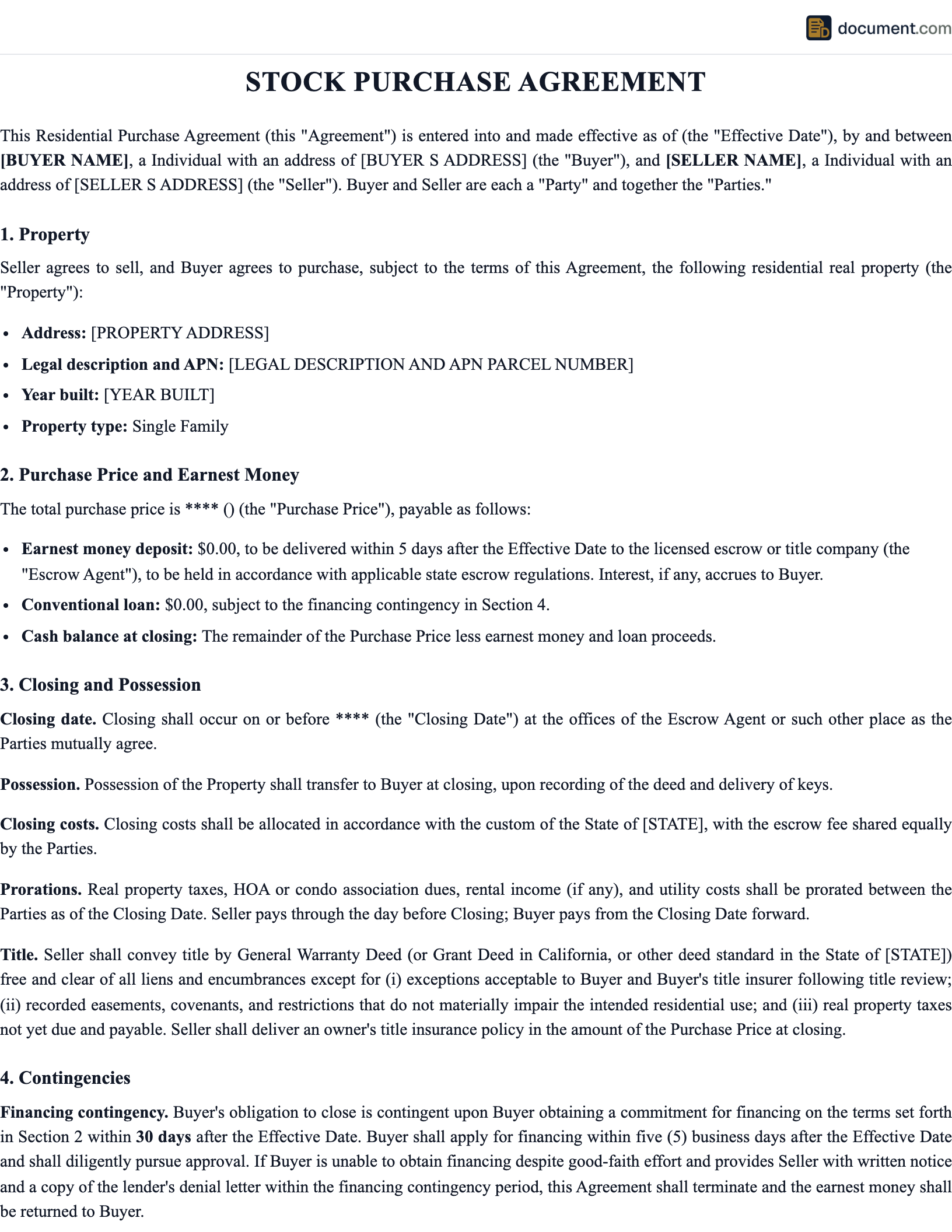



Indiana Stock / Equity Purchase Agreement Overview
A stock/equity purchase agreement in Indiana transfers ownership of a business by selling shares of a corporation or membership interests of an LLC. The transaction is governed by Indiana Business Corporation Law (IC 23-1) and must comply with both state and federal securities laws.
Indiana provides limited offering exemptions under IC 23-19-2. Indiana corporations file a biennial report for approximately $31.
Indiana Uniform
Securities exemption
$31
SOS filing fee
None
Stock transfer tax
Indiana Busines
Corporate law
Indiana Stock Purchase Requirements
Indiana does not impose a stock transfer tax.
Indiana follows the Indiana Business Corporation Law (IC 23-1).
Essential Steps for Indiana Stock Purchases
- Securities Compliance: Confirm the transaction qualifies for exemption under Indiana Uniform Securities Act (IC 23-19-2) — limited offering and applicable federal exemptions
- Due Diligence: Conduct thorough investigation of all company assets, liabilities, contracts, and legal matters
- Share Valuation: Obtain a professional business valuation or agree on a valuation methodology
- Update Corporate Records: File updated officer/director information with Indiana ($31 biennial business entity report)
- Stock Certificate Transfer: Cancel existing certificates and issue new ones to the buyer under Indiana Business Corporation Law (IC 23-1)
Key Provisions for Indiana Stock Purchase Agreements
Representations & Warranties
The seller represents that the company is properly organized under Indiana Business Corporation Law (IC 23-1), all shares are validly issued, financial statements are accurate, there is no undisclosed litigation, and the company complies with all applicable laws.
Escrow Holdback
Typically 5-15% of the purchase price is held in escrow for 12-24 months after closing to secure the seller's indemnification obligations. This protects the buyer if the seller breaches any representations or undisclosed liabilities surface.
Non-Compete & Employment
The seller typically agrees to a non-compete clause (often 2-5 years within a defined geographic area). Key employees may receive employment agreements with defined compensation, roles, and responsibilities post-closing.
Earnout Provisions
When buyer and seller disagree on valuation, an earnout allows a portion of the purchase price to be contingent on the business meeting specified performance targets after closing — aligning incentives between both parties.
Indiana Stock / Equity Purchase Agreement FAQ
Answers to common questions about stock / equity purchase agreements in Indiana.
Create your Indiana Stock Purchase Agreement in under 5 minutes.
Answer a few questions and download a Indiana-compliant document, ready for the state agency.