
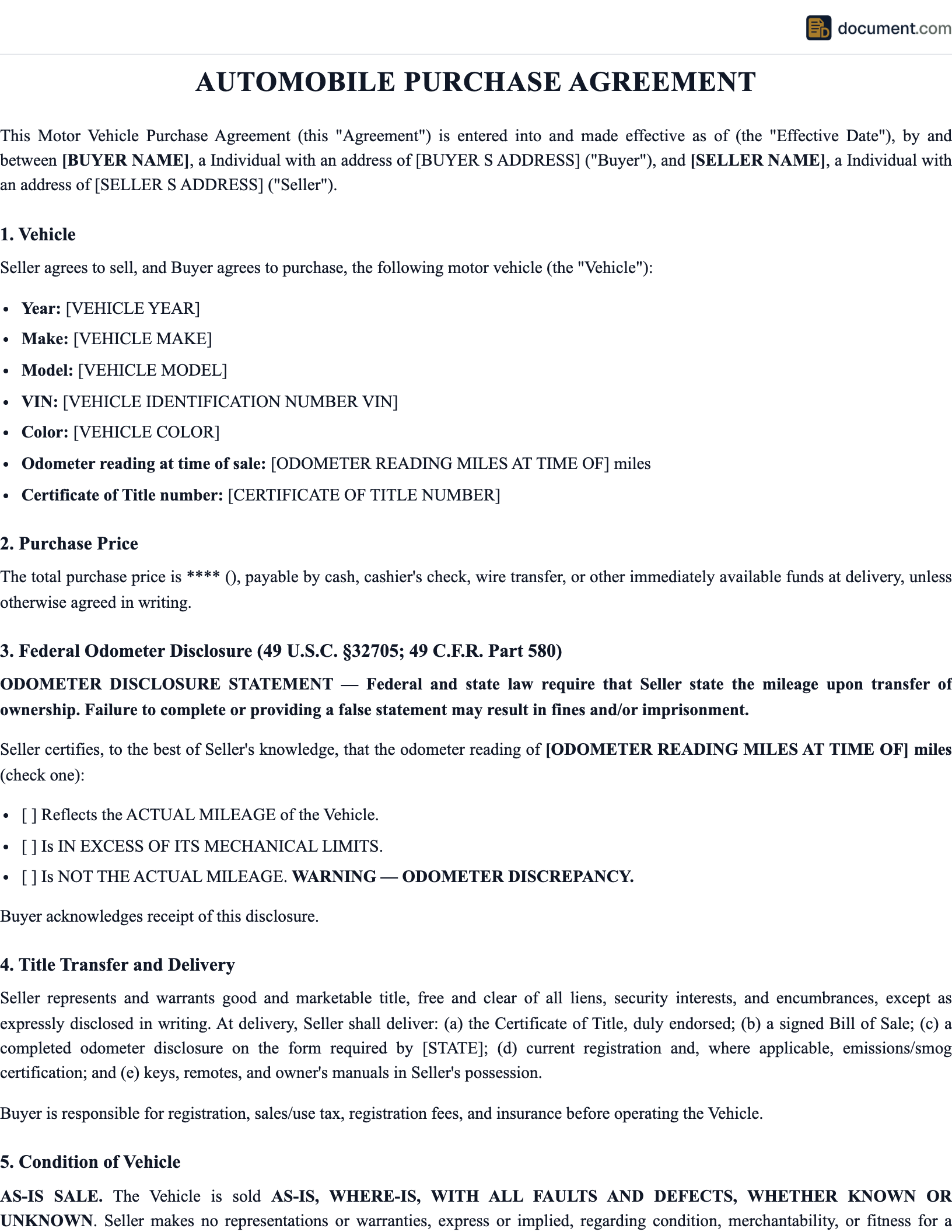



California Automobile Purchase Agreement Overview
An automobile purchase agreement in California is a pre-sale contract that establishes all terms and conditions before the vehicle transaction closes. This is different from a bill of sale, which simply records a completed sale. The purchase agreement protects both parties by defining the price, financing, inspection contingencies, warranty terms, and conditions for closing.
California has the highest base state vehicle sales tax at 7.25%, with combined rates reaching 10.75%. California's Song-Beverly Consumer Warranty Act and Tanner Consumer Protection Act provide some of the nation's strongest lemon law protections, covering both new and used vehicles with warranties.
7.25%
Sales tax
Strong Lemon
Lemon law
10 calendar
Transfer deadline
Smog
Emissions test
California Automobile Purchase Requirements
California has a strict 10-day deadline for the seller to notify the DMV of the sale (Release of Liability).
California requires smog certification for almost all vehicle sales; only vehicles 4 model years old or newer are exempt.
Purchase Agreement vs. Bill of Sale
An automobile purchase agreement is signed BEFORE the sale closes and establishes conditions (financing approval, inspection results, lien payoff). A bill of sale is signed AFTER/AT closing as a receipt. For complex transactions involving financing, trade-ins, or lien payoffs, a purchase agreement provides far more protection than a bill of sale alone.
What to Include in Your California Automobile Purchase Agreement
- Vehicle Details: Year, make, model, VIN, mileage, color, and condition
- Purchase Price & Payment: Agreed price, payment method, financing terms, and deposit amount
- Trade-In: Trade-in vehicle details, agreed trade-in value, and lien payoff (if applicable)
- Inspection Contingency: Buyer's right to have the vehicle inspected by a mechanic before closing
- Warranty / As-Is: Whether any warranty applies or the vehicle is sold as-is
Key Provisions for California
Financing Terms
If the buyer is financing the purchase, the agreement should include a financing contingency allowing the buyer to cancel if they cannot obtain financing within a specified period. Include the anticipated loan amount, interest rate, and term.
Lemon Law Protection
Strong Lemon Law — new AND used vehicles (Song-Beverly Act + Tanner Act). California extends lemon law protection to certain used vehicles, providing additional consumer protection.
VIN Verification & History
The agreement should require the seller to verify that the VIN matches all documents, disclose whether the vehicle has a salvage or rebuilt title, and allow the buyer to obtain a vehicle history report. This protects against odometer fraud, undisclosed accidents, and title washing.
Lien Payoff Process
If the seller has an outstanding loan on the vehicle, the agreement must address how the lien will be satisfied. Typically, the buyer's payment goes through escrow to pay off the lien first, with the remainder going to the seller. The seller must deliver a clean title within a specified timeframe.
California Automobile Purchase Agreement FAQ
Answers to common questions about automobile purchase agreements in California.
Create your California Automobile Purchase Agreement in under 5 minutes.
Answer a few questions and download a California-compliant document, ready for the state agency.