



Kansas Property Management Agreement
A property-management agreement appoints a manager to perform identified services for an owner. It should describe the actual property, parties, term, licensing basis, authority and limits. It does not transfer ownership or authorize a person to perform work that requires a license they do not hold.
Choose residential, commercial, industrial, mixed-use, short-term rental or special-purpose operations to match the intended use. Mixed-use and special-purpose properties need a clear allocation of which units, activities and operators are covered.
Select services and owner-paid fees
Select tenant placement, lease signing, rent collection, maintenance, inspections or the other services actually agreed. Define the maximum lease term and minimum rent when lease negotiation is included. State when placement and renewal fees are earned instead of accepting a prefilled commission.
Owner-paid compensation does not authorize charging the same fee to applicants or tenants. Set separate emergency and ordinary repair limits, vendor markups, insurance amounts and reporting duties. A spending limit cannot excuse mandatory safety duties or permit using protected tenant funds.
Client funds and security deposits
Decide who receives and holds rent, deposits and operating funds. When Manager has custody, specify the bank and required account structure, beneficiary ledgers, monthly reconciliation, reserve and Owner distributions. When Owner or another custodian holds funds, direct payments there and remove Manager rent-collection authority.
Write the actual deposit plan: holder, account, notices, interest, inspections, records, permissible deductions and return/claim deadlines. A management fee is not a tenant deposit deduction. Transfer to a new manager does not reset tenant deadlines or remove required notices.
Requirements to check in Kansas
For a property in Kansas, identify the regulator for the manager’s actual activities and verify licensing, supervision, exemptions and local permits. Separately check residential deposit, entry, screening, repair, notice and rent-regulation rules for each covered unit. Commercial, lodging and special-purpose uses can follow different rules. Record the supporting requirements and deadlines before signing; selecting Kansas in a builder does not itself establish coverage or compliance.
Use actual written screening criteria and complete any required preliminary notices, accommodations, conditional-offer or criminal-history process. A report-based denial or less favorable offer may require FCRA notices; a commercial applicant’s personal report still needs a permissible purpose.
Check lead disclosure and renovation requirements separately. A small repair is not automatically exempt from lead-safe rules, especially where windows, demolition or prohibited practices are involved. Apply tax-reporting thresholds for the actual year and payment type; reportable rents and service compensation do not use the same form in every case.
Review the actual agreement
Confirm license status or the exemption before work begins, identify the covered property and attach operational schedules. Review insurance, indemnity, termination, handover, dispute resolution and the optional liability cap with both parties.
The contract allocates duties between Owner and Manager. It does not remove obligations either has directly under law, waive tenant protections, establish that a notice was served, or certify that the property complies with every rule.
Sample and builder
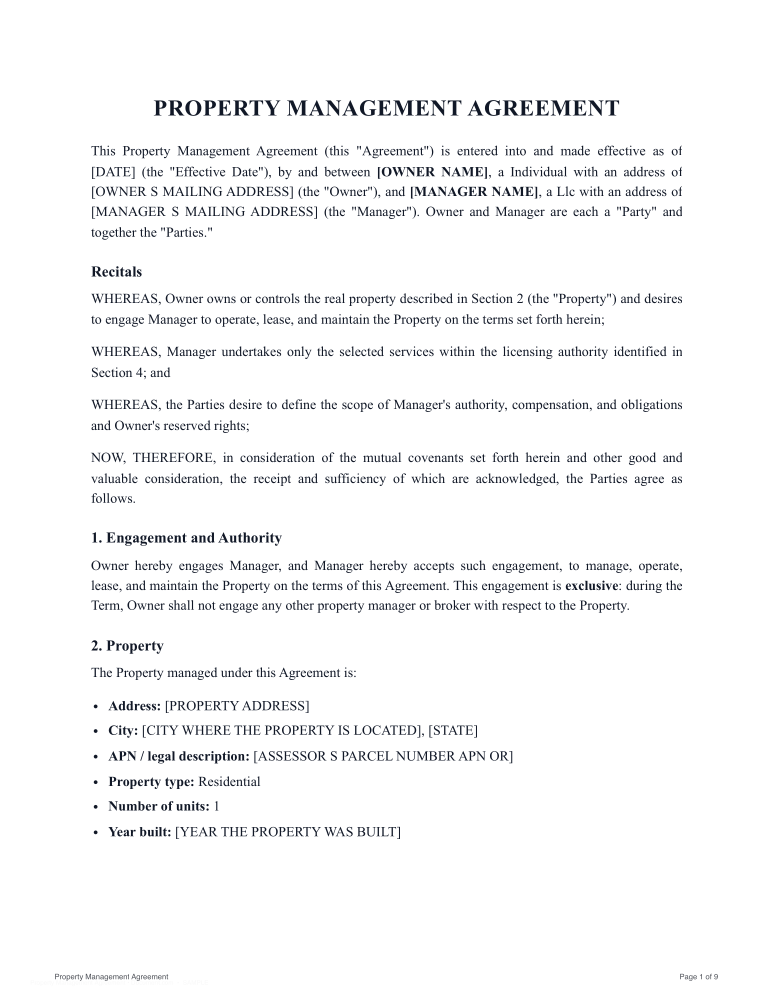
The sample illustrates the agreement with placeholders. Select services and supply real facts to generate the actual contract. Commercial and industrial clauses address the selected operations; covered-housing reminders should not be imported automatically into a commercial tenancy.