



What Is a Living Will?
A living will is an advance healthcare directive that states what kinds of life-sustaining treatment you want or do not want if you become unable to communicate and you are in a terminal, permanently unconscious, or otherwise qualifying medical condition under state law. It is meant to guide your physicians and relieve loved ones from guessing in a high-stakes moment.
Unlike a last will and testament, a living will takes effect while you are still alive. It focuses on medical decisions such as ventilation, feeding tubes, dialysis, and comfort-focused care. In many states it works alongside a healthcare power of attorney or is folded into a larger advance directive package.
The strongest living wills are specific, consistent with your other healthcare documents, and signed using the correct state formalities. That combination helps clinicians, agents, and family members rely on the document without unnecessary conflict or delay.
Life Support
State whether you want mechanical ventilation, dialysis, and other interventions that can prolong the dying process.
Artificial Nutrition
Explain your preferences for feeding tubes, IV hydration, and medically delivered nutrition if you cannot eat or drink.
Comfort Care
Clarify how strongly you want pain management, hospice support, and palliative measures prioritized over curative care.
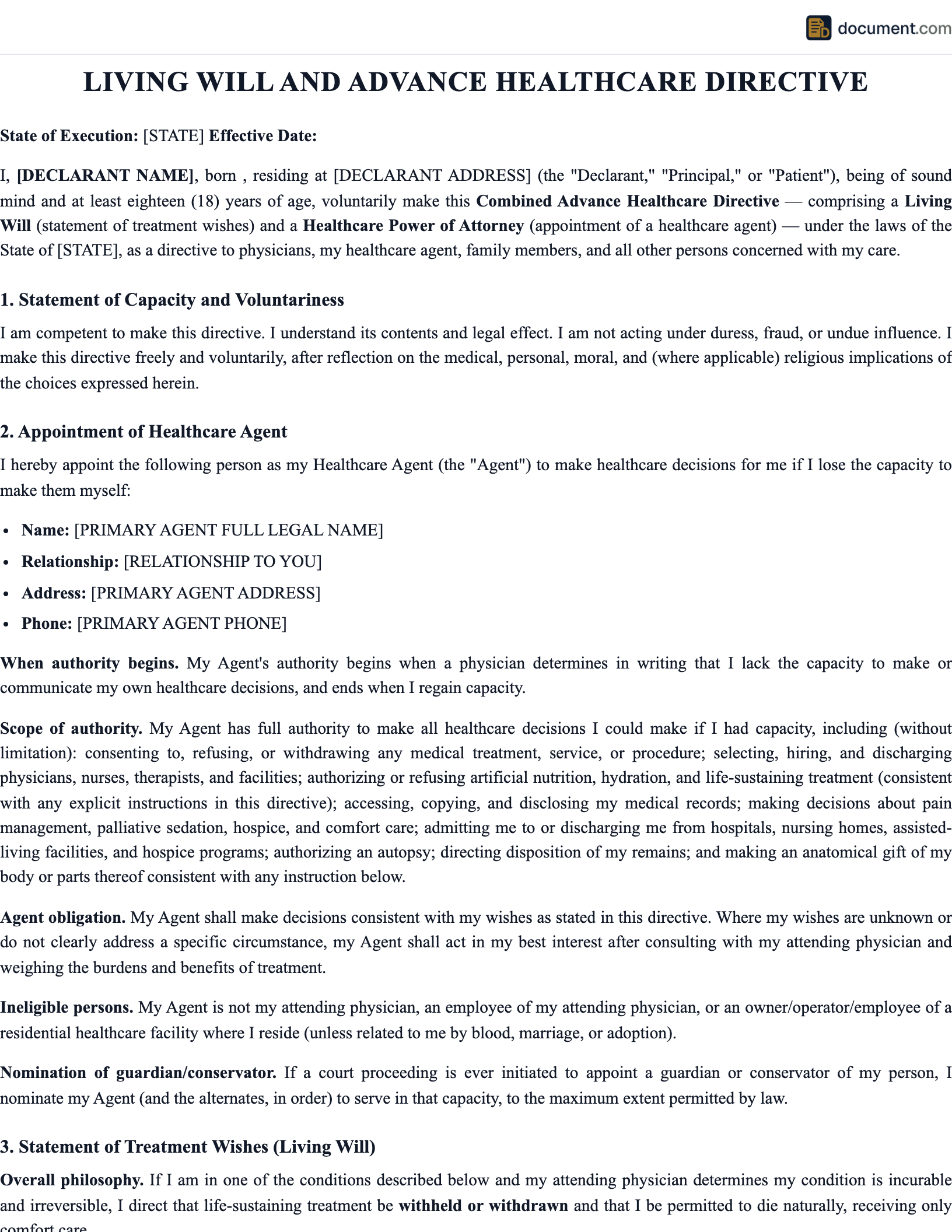
Living Will Form Preview
A typical living will identifies the declarant, states the medical situations in which the document should apply, and then spells out treatment preferences in plain language. The preview below shows the kind of structure most providers expect to see.
Living Will Declaration
Advance healthcare instructions for end-of-life care
1. Declaration
I direct my attending physicians and healthcare providers to follow the treatment instructions below if I cannot communicate and a qualifying condition exists.
2. Life-Sustaining Treatment
Mechanical ventilation, dialysis, artificial nutrition and hydration, antibiotics, and other interventions should be provided, withheld, or withdrawn as stated here.
3. Comfort and Pain Relief
I want medication and comfort care necessary to relieve pain and distress, even if doing so may indirectly shorten my life.
4. Organ Donation and Final Directions
Optional instructions regarding organ donation, autopsy, spiritual preferences, and contact information for the person coordinating care.
Treatment Decisions Covered in a Living Will
A living will usually addresses the core treatments that matter most when recovery is unlikely and the focus of care shifts toward comfort, dignity, and honoring personal values.
Artificial respiration and ventilation
State whether you want a breathing machine used if you cannot breathe on your own and whether you would want it discontinued if your condition does not improve.
Feeding tubes and hydration
Clarify whether medically supplied nutrition or fluids should be used short term, long term, or not at all once the document becomes operative.
Pain relief and hospice care
Most people want aggressive pain management and palliative support even if they decline other life-prolonging measures. A living will is where that preference belongs.
Living Will vs Other Documents
A living will is powerful, but it is only one piece of a complete healthcare planning package.
Living Will
Explains your own end-of-life treatment choices when you cannot communicate and a qualifying medical condition exists.
Advance Directive
Often combines a living will with a healthcare power of attorney so both your wishes and your decision-maker are documented.
Medical Power of Attorney
Appoints an agent to make a broad range of healthcare decisions, including situations a living will does not specifically address.
How to Create a Living Will
Think through treatment values
Decide how you feel about life support, artificial nutrition, comfort-focused care, and how much weight you place on quality of life versus length of life.
Review your state requirements
Witness, notarization, and statutory language rules vary by state. Your document needs to follow the rules where it will be used.
Write specific instructions
Avoid vague phrases like 'no heroic measures.' Spell out what treatments you do and do not want in terminal or permanently unconscious conditions.
Coordinate with other documents
Your living will should not conflict with your healthcare proxy, medical power of attorney, DNR, or POLST if you use those too.
Sign correctly
Complete the witnessing or notarization steps exactly as your state requires so providers can rely on the document when it matters.
Distribute copies
Give copies to your healthcare agent, primary doctor, close family members, and anyone likely to be with you in a medical emergency.
Key Components
Patient identification and declaration language
The clinical conditions that activate the living will
Directions for CPR, ventilation, dialysis, and related life-sustaining treatment
Instructions about feeding tubes, IV hydration, and pain relief
Organ donation or autopsy preferences when applicable
Execution block with state-specific witness or notary language
Legal Requirements
Most states require two adult witnesses, a notary, or allow either method depending on the statutory form.
Witness eligibility is often restricted. Healthcare agents, treating providers, and heirs are commonly disqualified.
Hospitals and physicians usually honor out-of-state directives if they were valid where signed, but local forms reduce friction.
A living will can usually be revoked at any time by a later writing, a verbal statement to providers, or destruction of the document.
Sample Living Will
LIVING WILL
Declaration: If I become unable to make healthcare decisions and I have a terminal or permanently unconscious condition, I direct my healthcare providers to follow these instructions.
Life Support: I do / do not want mechanical ventilation, dialysis, and other life-sustaining treatment if recovery is not reasonably expected.
Artificial Nutrition: I do / do not want feeding tubes or IV hydration used to prolong the dying process.
Comfort Care: I want pain relief and palliative care necessary to keep me comfortable.
Frequently Asked Questions
Official Resources
National Institute on Aging
Plain-language guidance on living wills, healthcare directives, and planning conversations.
CaringInfo
State-by-state advance directive and living will planning resources.
American Bar Association
Consumer-focused explanations of healthcare decision-making documents and legal planning issues.
National Hospice and Palliative Care Organization
Advance care planning and end-of-life care information from a leading hospice organization.
Ready to Create Your Living Will?
Build a living will that clearly explains your end-of-life treatment wishes and gives your family and providers a document they can actually use.
Create DocumentNo account required. Free to create and preview.