
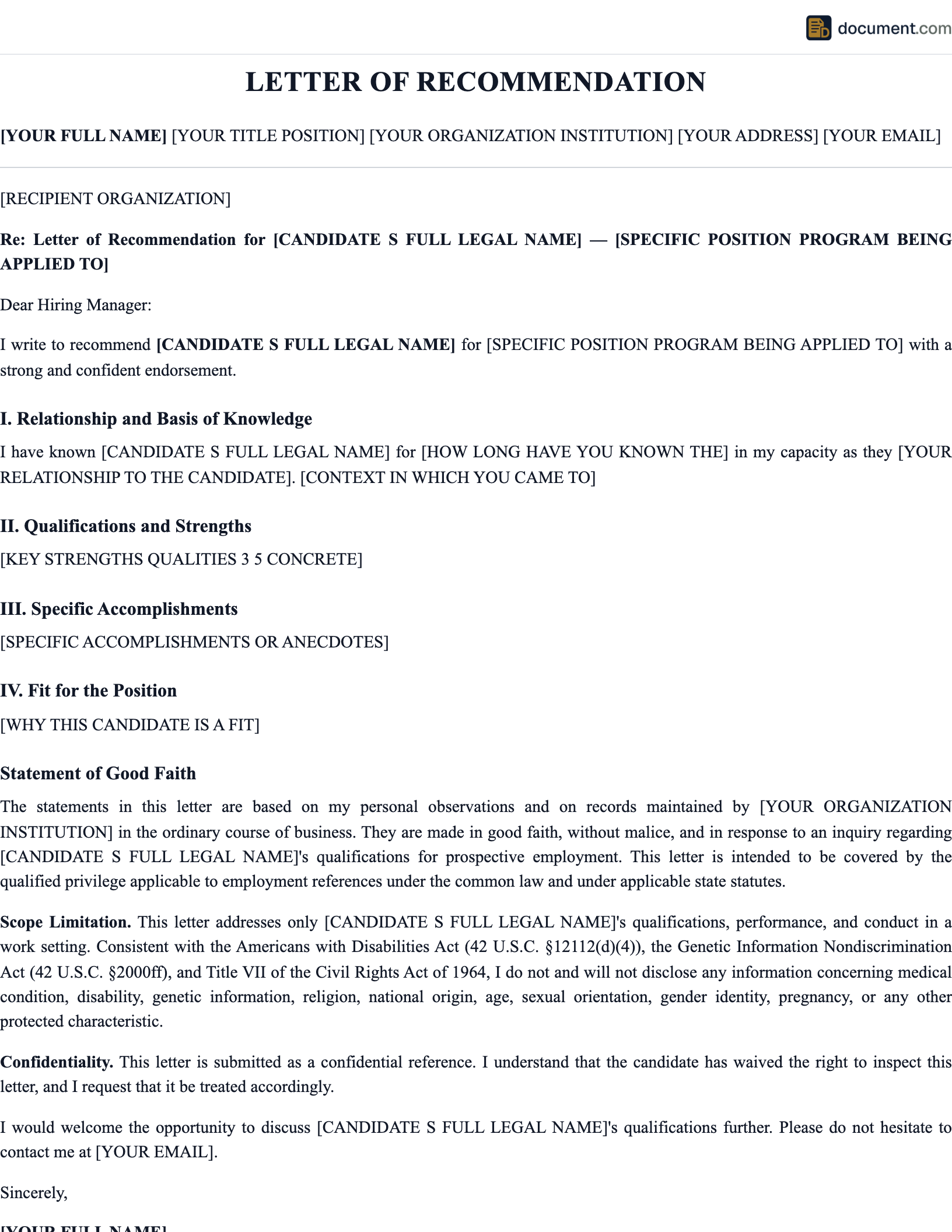



What Is a Character Reference Letter for Immigration?
A character reference letter for immigration is a personal attestation submitted to USCIS, an immigration judge, or a consular officer that speaks to the applicant's good moral character, community ties, and personal qualities. Immigration law places significant weight on moral character — the Immigration and Nationality Act requires naturalization applicants to demonstrate good moral character for a statutory period, and immigration judges consider character evidence when exercising discretion in removal proceedings, waiver applications, and asylum claims. These letters supplement the applicant's own testimony and documentary evidence by providing third-party corroboration of their character from people who interact with them in daily life.
The legal significance of character evidence in immigration proceedings stems from multiple statutory and regulatory sources. Section 316(a) of the INA requires naturalization applicants to have been "a person of good moral character" during the statutory period. Section 240A of the INA allows immigration judges to grant cancellation of removal to non-permanent residents who demonstrate, among other requirements, good moral character for ten years. The Board of Immigration Appeals has consistently held that character evidence from community members is relevant to discretionary determinations, and circuit courts have remanded cases where immigration judges failed to adequately consider character evidence in the record. A well-drafted character reference letter directly supports these legal standards by providing concrete evidence of the applicant's character.
The persuasive power of an immigration character reference depends on specificity and credibility. USCIS officers and immigration judges review thousands of cases and can readily distinguish substantive character testimony from generic support letters. The most effective letters come from writers who have known the applicant for several years, can describe specific instances of good character they personally witnessed, and can explain why the applicant's presence in the community matters. Letters from employers, religious leaders, teachers, neighbors, and community organization leaders carry particular weight because these individuals interact with the applicant in contexts where character is demonstrated through conduct rather than self-reporting.
Good Moral Character
Documents the applicant's moral standing as required by the Immigration and Nationality Act.
Community Integration
Shows the applicant's contributions, involvement, and ties to the local community.
Family Bonds
Demonstrates the applicant's role in the family and the impact of separation on dependents.
Immigration Character Reference Form Preview
Character Reference Letter
For Immigration Proceedings
TO WHOM IT MAY CONCERN
I, , am writing this letter in support of regarding their immigration matter before .
RELATIONSHIP AND DURATION
I have known the applicant for years. We are acquainted through .
MORAL CHARACTER AND COMMUNITY
Based on my personal knowledge, is a person of good moral character who .
SIGNED UNDER PENALTY OF PERJURY
Signature / Date
Key Components
An effective immigration character reference letter must address these essential elements to satisfy USCIS and immigration court requirements:
| Component | Purpose | Key Details |
|---|---|---|
| Writer Identification | Establishes credibility with USCIS | Full legal name, immigration status, occupation, address, contact info |
| Relationship Context | Shows basis of personal knowledge | How you met, duration, frequency of interaction, context |
| Good Moral Character | Addresses INA statutory requirement | Specific examples of honesty, integrity, responsibility, lawfulness |
| Community Contributions | Demonstrates integration and value | Employment, volunteering, civic participation, community service |
| Family Role | Supports hardship and equity arguments | Parenting, caregiving, spousal support, financial provider role |
| Perjury Declaration | Adds legal weight under 28 U.S.C. 1746 | Statement under penalty of perjury, signature, date, notarization |
How to Write an Immigration Character Reference Letter
Coordinate with the Immigration Attorney
Before writing, consult with the applicant's immigration attorney to understand the specific immigration benefit being sought, the legal standards that apply, and any particular character issues the letter should address. The attorney can advise on format requirements, whether notarization is needed, and whether the letter should be structured as a declaration under penalty of perjury. This coordination ensures the letter aligns with the overall legal strategy and does not inadvertently introduce harmful information.
Identify Yourself and Your Credentials
Begin with your full legal name, occupation, address, and — if applicable — your own citizenship or immigration status. Establishing your identity and standing gives USCIS confidence in the letter's authenticity. If you hold a position of community trust (teacher, clergy, business owner, elected official), state that clearly. Include your contact information and a statement that you are willing to be contacted to verify the contents of the letter.
Describe Your Relationship in Detail
Explain how you know the applicant, when you first met, the context of your relationship (work, neighborhood, religious community, school), and how frequently you interact. Be specific about the duration — 'I have known Maria for twelve years since our children attended the same elementary school and we have interacted regularly through school events, community fundraisers, and neighborhood gatherings.' The longer and deeper the relationship, the more weight the letter carries.
Provide Specific Character Evidence
The core of the letter should contain concrete examples of good moral character you have personally observed. Describe the applicant's honesty, reliability, generosity, work ethic, respect for laws, and treatment of others with specific anecdotes: 'When our community faced flooding, Ahmed organized relief supplies and spent three weekends helping elderly neighbors repair their homes.' These specific examples satisfy the INA's good moral character standard far more effectively than abstract praise.
Address Community and Family Impact
Document the applicant's community involvement — volunteering, employment, tax compliance, children's school participation, religious community engagement — and explain the impact on the community and family if the immigration benefit is denied. For removal defense cases, this section is particularly important because the immigration judge must weigh the equities, including the hardship to U.S. citizen family members and the loss to the community. Be factual and specific about the applicant's contributions.
Execute the Letter Properly
Close with a clear statement of your support and recommendation. If the attorney has requested a declaration format, include the statement: 'I declare under penalty of perjury under the laws of the United States that the foregoing is true and correct.' Sign the letter, print your name, and date it. If notarization is requested, sign before a notary public. Attach a copy of your government-issued identification if the attorney recommends it. Keep a copy for your records in case USCIS contacts you for verification.
Immigration Contexts Requiring Character References
Character reference letters serve different functions depending on the specific immigration proceeding. In naturalization cases (Form N-400), the letters help establish the good moral character requirement under INA Section 316(a) for the five-year statutory period (three years for spouses of U.S. citizens). The letters should address the applicant's conduct, community involvement, and compliance with laws during this specific timeframe. USCIS adjudicators use these letters alongside the applicant's testimony and background check results to make the character determination.
In removal defense proceedings, character references are critical evidence for cancellation of removal under INA Section 240A, which requires ten years of continuous physical presence and good moral character. The letters must also support the "exceptional and extremely unusual hardship" standard by demonstrating the applicant's importance to their U.S. citizen or permanent resident family members. For asylum cases, character letters can corroborate the applicant's credibility and provide context about their integration into the U.S. community. Waiver applications (I-601, I-212, I-601A) rely on character evidence to establish that the applicant merits a favorable exercise of discretion despite the ground of inadmissibility or deportability at issue.
Immigration Fraud Warning
Making false statements in an immigration character reference letter can constitute immigration fraud under 18 U.S.C. Section 1546 and may result in criminal prosecution, fines, and permanent inadmissibility for the applicant. Every statement in the letter must be truthful and based on your personal knowledge. If you are unsure about a fact, do not include it. The immigration attorney should review all letters before submission to ensure accuracy and consistency with the overall application.
Frequently Asked Questions
Official Resources
Authoritative resources on immigration character evidence, naturalization requirements, and removal defense procedures.
USCIS - Naturalization Process
Official guidance on naturalization requirements including the good moral character standard and supporting documentation.
USCIS Policy Manual - Good Moral Character
Comprehensive USCIS policy guidance on evaluating good moral character for naturalization applicants under INA Section 101(f).
DOJ EOIR - Immigration Court Practice Manual
Executive Office for Immigration Review guidance on submitting evidence, including character reference letters, in immigration court proceedings.
8 U.S.C. Section 1427 - Naturalization Requirements
Legal Information Institute text of the INA provisions governing naturalization eligibility including good moral character requirements.
AILA - American Immigration Lawyers Association
Professional organization providing resources on immigration law practice, including guidance on character evidence in immigration proceedings.
National Immigration Law Center
Legal resource center providing guidance on immigration rights, naturalization procedures, and removal defense strategies.
Create Your Immigration Character Reference Letter
Draft a professional character reference that demonstrates good moral character, community integration, and family bonds for immigration proceedings.
Create DocumentNo account required. Free to create and preview.