



What Is an Improvements Addendum?
An improvements and modifications lease addendum is a supplemental contract that establishes the rules and procedures for any physical change a tenant wishes to make to a rental property. Coverage extends from cosmetic work (paint, wallpaper, picture hanging) through fixtures (light fixtures, ceiling fans, built-in shelving), structural modifications (walls, flooring, plumbing, electrical), accessibility modifications under the Fair Housing Amendments Act (42 U.S.C. §3604(f)(3)(A)), low-voltage and smart-home installations (video doorbells, smart locks, mesh wifi), and HVAC modifications. Without an addendum, the main lease's generic 'no alterations without consent' clause leaves four critical questions open: what counts as an alteration requiring consent, who pays for the work, what the pre-existing condition was, and what happens at move-out under the doctrine of accession.
The addendum protects the landlord by requiring written approval before any modifications begin, defining who pays for the materials and labor, requiring licensed contractors and building permits where local code requires them (typically over $500 in cost or any electrical/plumbing/structural work), and establishing whether the property must be restored to its original condition at move-out. It protects the tenant by setting a definite landlord-response timeline (typically 14 to 30 days), specifying which improvements are pre-approved, and clarifying which items the tenant can remove versus which become the landlord's property. The addendum also addresses the Fair Housing Amendments Act reasonable-accommodation procedure for tenants with disabilities, including the 24 C.F.R. §100.203(a) escrow-deposit option for restoration cost.
Two federal statutes intersect at the addendum. The Fair Housing Amendments Act (42 U.S.C. §3604(f)(3)(A)) and 24 C.F.R. §100.203 require landlords to permit tenants with disabilities to make reasonable modifications at the tenant's expense. Section 504 of the Rehabilitation Act (29 U.S.C. §794) and 24 C.F.R. Part 8 apply to federally funded housing (HUD-assisted, Section 8 project-based, Section 202, Section 811) and require the landlord to pay for the modifications up to a structural-impossibility threshold. Refusal to permit reasonable modifications is a fair-housing violation under 42 U.S.C. §3613 with civil penalties of $24,792 first violation and up to $123,961 for repeat violations under the 2024 inflation adjustment of §3612(g)(3). The EPA Renovation, Repair, and Painting Rule (40 C.F.R. Part 745) imposes additional requirements for any work disturbing more than six square feet of painted surface in pre-1978 housing.
Cosmetic versus structural alterations
Cosmetic alterations include paint, wallpaper, removable shelving, picture hanging with adhesive strips or small nails (under 1/4-inch diameter), curtain rods, and area rugs. These are typically pre-approved subject to restoration at move-out. Structural alterations include any change to load-bearing walls, plumbing beyond fixture replacement, electrical work beyond outlet replacement, HVAC modifications, roof penetrations, and additions. These always require written landlord consent, building permits where local code requires them, and licensed-contractor performance under state licensing statutes (California Bus. & Prof. Code §7028, Florida Stat. §489.127, Texas Occ. Code §1305.151, New York General Business Law §770). The threshold for distinguishing the two affects who pays, whether permits are required, what insurance the contractor must carry, and what happens at move-out under the doctrine of accession.
FHA reasonable modifications and the Section 504 distinction
The two federal disability statutes that govern tenant modifications differ on who pays. The Fair Housing Amendments Act (42 U.S.C. §3604(f)(3)(A)) and 24 C.F.R. §100.203 apply to all rental housing and require landlords to permit reasonable modifications at the tenant's expense, with restoration required where reasonable. Section 504 of the Rehabilitation Act (29 U.S.C. §794) and 24 C.F.R. Part 8 apply to federally funded housing and require the landlord to pay for the modifications up to a structural-impossibility threshold. The distinction matters because the source of housing assistance (private market versus federally funded) determines who pays. Both statutes prohibit refusal of the modification request. Both require interactive dialogue with the tenant about the proposed modification. Both impose civil penalties for refusal under 42 U.S.C. §3613 and 29 U.S.C. §794a.
Approval Process
Written landlord approval required before any modifications, with 14-30 day response window
Cost Allocation
Tenant pays by default, landlord pays for federally funded housing under Section 504
FHA Compliance
Reasonable accommodation under 42 U.S.C. §3604(f)(3)(A) and 24 C.F.R. §100.203
Form Preview
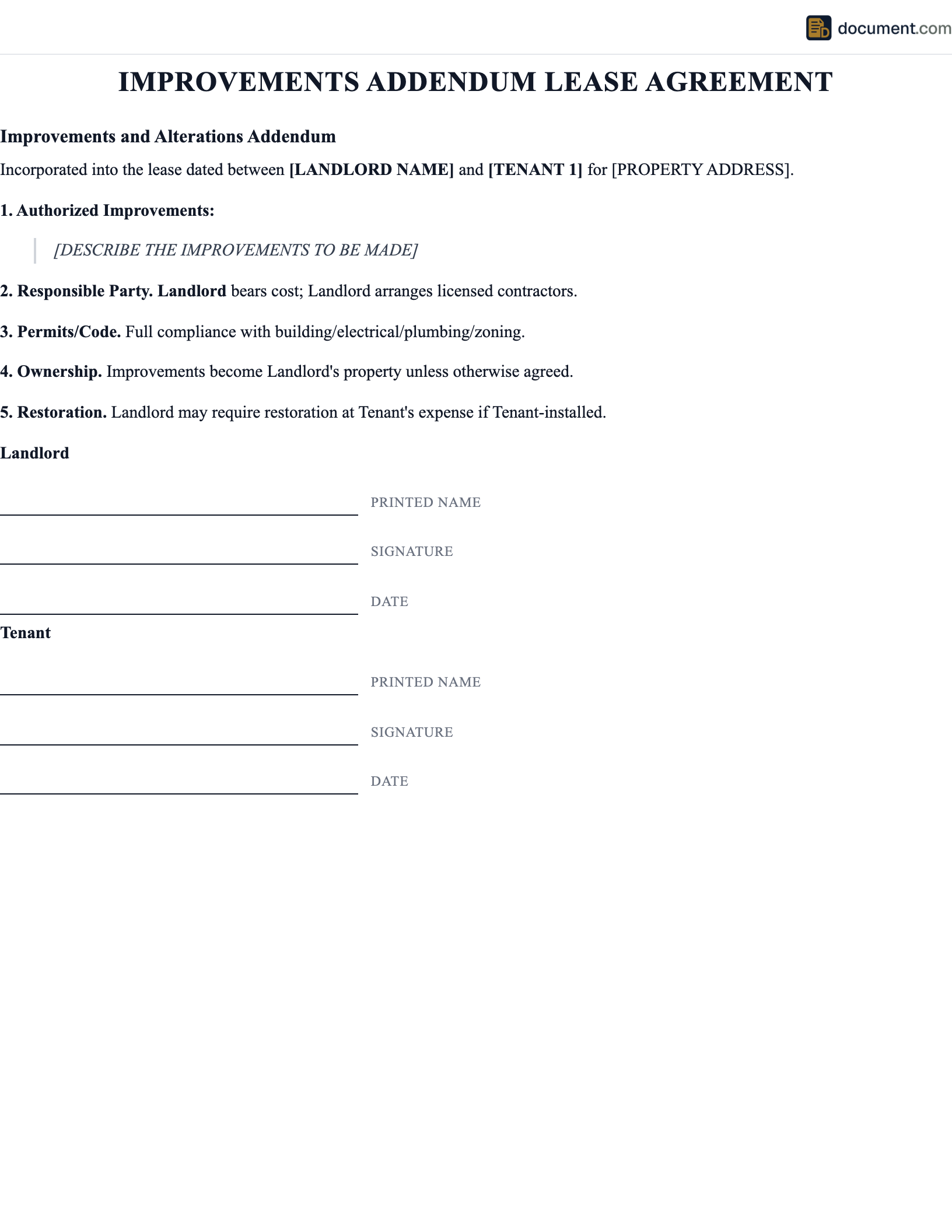
Below is a preview of the Improvements and Modifications Lease Addendum template. Your customized document will include all provisions for your specific situation.
IMPROVEMENTS AND MODIFICATIONS ADDENDUM
Property Modification Agreement
This document is entered into on [Date] between the parties identified below:
LANDLORD:
Name: [Landlord Name]
TENANT:
Name: [Tenant Name]
How to Use This Document
Establish the Approval Process
Require tenants to submit a written modification request describing the proposed change, materials, contractor identity and licensing, timeline, and whether building permits will be required. Specify the landlord's response timeline (14 to 30 days is standard; longer windows defeat the tenant's reasonable timing). Approval should be in writing with specific scope.
Define Permitted Modifications
List common modifications and whether they require approval. Hanging pictures with adhesive strips or small nails under 1/4-inch is typically pre-approved; painting requires written consent and color approval; replacing fixtures requires consent and licensed-contractor performance for hardwired installations; structural changes always require consent, permits, and licensed contractors.
Address Costs and Ownership
Specify who pays for the modification (tenant by default, landlord under Section 504 for federally funded housing) and who owns any improvements at the end of the lease under the doctrine of accession. For landlord-benefiting capital improvements (HVAC, water heater, accessibility ramps), consider a reimbursement clause or partial credit.
Include Restoration Requirements
State whether the tenant must restore the property to its original condition at move-out, including filling holes, repainting, removing added fixtures, and disposing of construction debris. Clarify the FHA reasonable-accommodation carveout: under 24 C.F.R. §100.203, the landlord may require restoration of disability modifications where reasonable but cannot refuse the modification itself.
Document the Pre-Existing Condition
Attach date-stamped walk-through photographs and a move-in condition report under Cal. Civ. Code §1950.5(f), Mass. G.L. c. 186 §15B(2)(c), or your state's equivalent. Both parties sign and date. Retain photographs in cloud backup for the deposit-return window plus the state's contract statute of limitations (typically three to six years).
Key Components
| Component | Description |
|---|---|
| Modification Request Process | Written request with description, materials, contractor, timeline, permits |
| Landlord Approval | Written consent required before work begins, 14-30 day response window |
| Contractor Requirements | Licensed and insured contractor under state licensing law for major work |
| Permit Compliance | Building permits per local code; EPA RRP Rule for pre-1978 housing |
| Cost Responsibility | Who pays for the modification, materials, and any restoration |
| Pre-Existing Condition | Date-stamped photographs, walk-through report, both parties sign |
| Restoration at Move-Out | Requirements to restore original condition, with FHA carveout |
| FHA Accommodations | Reasonable modification rights under 42 U.S.C. §3604(f)(3)(A) |
| Escrow for Restoration | 24 C.F.R. §100.203(a) escrow deposit option for FHA modifications |
Frequently Asked Questions
Common questions about consent, cost allocation, FHA modifications, and restoration under the Improvements and Modifications Lease Addendum.
Resources
Create your Improvements Addendum Lease Agreement in under 10 minutes.
Answer a few questions and download a compliant, attorney-drafted document ready for your state.