
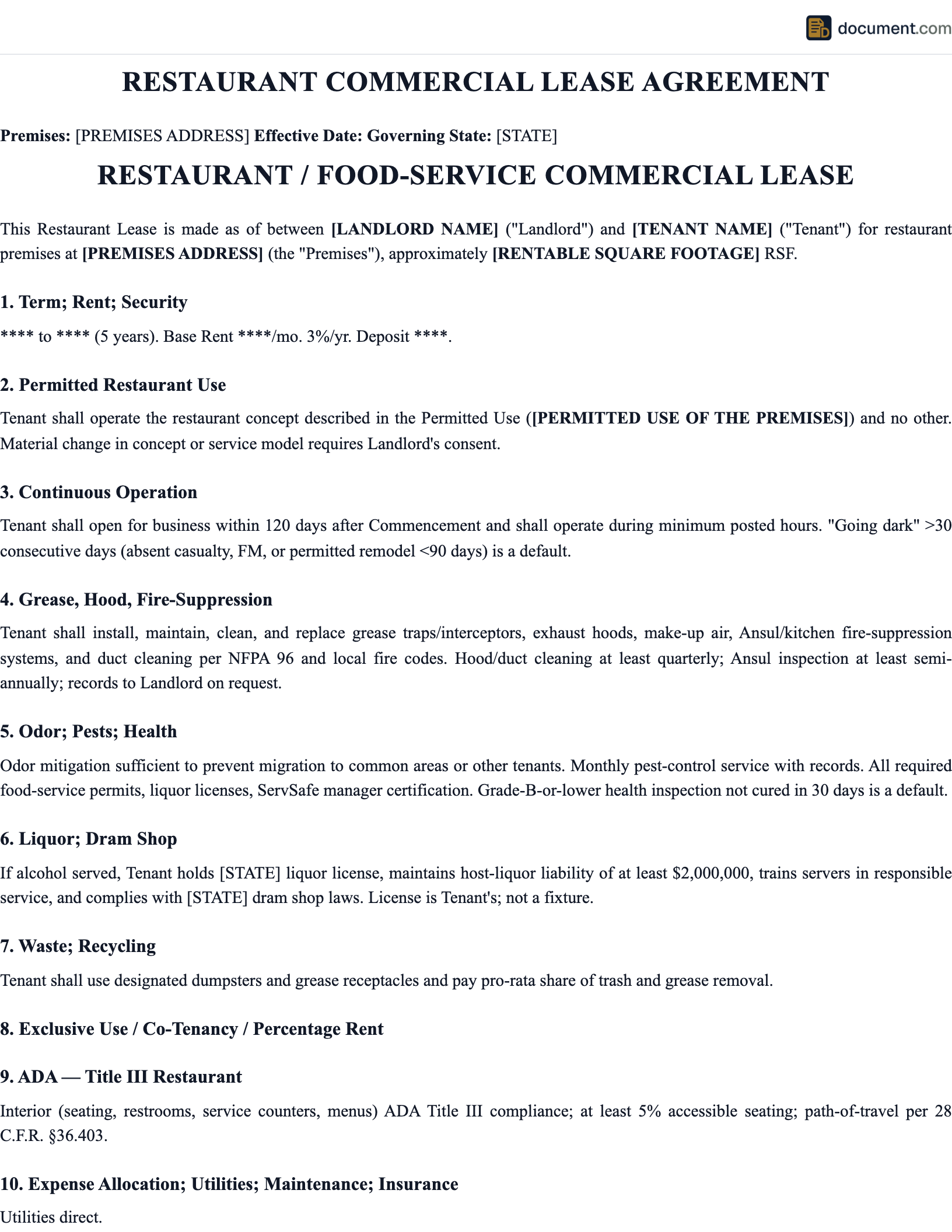



Virginia Restaurant Lease Agreement Overview
Virginia offers three genuinely distinct restaurant markets that each require a different leasing strategy. Northern Virginia, anchored by the dense commercial corridor running from Arlington through Tysons to Loudoun County, is one of the more competitive food service leasing environments on the East Coast, with rents and buildout expectations shaped by proximity to the federal government, the tech industry, and an affluent suburban demographic. Richmond has built something unusual: a mid-sized city with a nationally recognized independent food scene, where Scott's Addition breweries, Carytown retail, and Church Hill neighborhood dining create a market where creative operators still have access to spaces their budgets can support. Hampton Roads sits in its own lane, running on military population, Chesapeake Bay seafood identity, and Virginia Beach resort tourism.
Every Virginia restaurant lease needs to address the state's ABC Authority licensing structure. Virginia controls the wholesale distribution of distilled spirits through its ABC store network, so restaurants cannot source spirits from private distributors. Mixed beverage restaurant licenses carry food sales requirements and a 60 to 90-day processing timeline that affects rent commencement negotiations. The Virginia Department of Health licenses food establishments through local health districts, each of which conducts its own pre-opening inspections. Northern Virginia's Fairfax and Arlington districts apply standards above the minimum state floor in some areas. Locality-specific meals taxes ranging from 4% in Fairfax County to 7.5% in Richmond affect operating economics and how percentage rent clauses should be defined. Historic preservation restrictions in Alexandria, Shockoe Bottom, and Shenandoah Valley towns add construction complexity that needs to be addressed in TI allowance negotiations before the lease is signed.
$12
Filing fee
Required
Notarization
0
Witnesses required
Circuit
Filing office
Virginia Requirements
A complete Virginia restaurant lease needs to cover VDH food establishment licensing through the correct local health district, Virginia ABC mixed beverage licensing with an appropriate contingency, grease interceptor compliance tied to the applicable municipal FOG program, and any historic preservation restrictions that affect buildout scope. Locality meals taxes and CAM charge structures deserve attention before signing in any major Virginia market.
Virginia ABC State-Controlled Spirits Distribution
Unlike most states, Virginia routes all distilled spirits distribution through the Virginia ABC Authority store network. Restaurant operators cannot purchase spirits from private distributors, which affects procurement logistics and cost management throughout the lease term. Mixed beverage restaurant licenses require food sales percentages to be maintained. The 60 to 90-day ABC processing timeline for new licenses should be built into the rent commencement date rather than treated as a post-signing administrative task.
Key Lease Provisions
- VDH Food Establishment License: Identify the applicable Virginia Department of Health local district, assign inspection costs, and tie rent commencement to pre-opening inspection approval rather than a fixed calendar date
- Virginia ABC Contingency: Include a contingency allowing rent termination or abatement if the Virginia ABC denies a mixed beverage restaurant license for reasons related to the address or local jurisdiction restrictions on on-premise sales
- Locality Meals Tax Registration: Register for the applicable city or county meals tax before opening, noting that rates range from 4% in Fairfax County to 7.5% in Richmond, adding to the 4.3% state sales tax on prepared food
- Historic Preservation Compliance: For spaces in Virginia DHR-designated historic buildings or local historic district overlays, confirm modification restrictions with both the preservation authority and the local building department before committing to a buildout scope
- Grease Interceptor Responsibility: Specify whether the landlord delivers a properly sized interceptor or tenant installs it, and assign quarterly pumping costs, maintenance records, and municipal FOG program compliance obligations explicitly in the lease
- CAM Caps and Audit Rights: Negotiate caps on CAM charge increases, confirm what is excluded from the CAM pool, and include annual audit rights, particularly for Northern Virginia mixed-use properties where CAM structures are often complex
How to Execute a Virginia Restaurant Lease
The Virginia restaurant lease process involves more pre-signing due diligence than many operators anticipate, particularly around ABC eligibility, historic preservation constraints for older buildings, and local health district inspection timelines. Getting these steps right before ink goes on paper protects you from expensive surprises after execution.
Verify Zoning, ABC Eligibility, and Preservation Status
Confirm the address is zoned for food service and that the jurisdiction permits on-premise alcohol sales. If the building appears historic, check Virginia DHR records and the local historic district overlay before assuming a ventilation cutout or exterior modification is permissible. Historic constraints discovered after signing can blow the TI budget.
Inspect Kitchen Systems and Grease Infrastructure
Walk the kitchen with a contractor. Check hood system age, grease interceptor size relative to your cooking equipment, and HVAC capacity. In older NoVA buildings and Richmond's historic districts, ventilation upgrades and grease interceptor replacements are among the most common TI cost overruns restaurant tenants encounter.
Negotiate Contingencies and Rent Commencement Structure
Build in a VDH food establishment license contingency and a Virginia ABC mixed beverage license contingency with defined resolution timelines. Structure rent commencement to start only after the applicable VDH health district completes its pre-opening inspection rather than tying it to a calendar date that may not align with actual permitting timelines.
Execute the Lease and Begin Permit Applications Immediately
Sign the lease and start the Virginia ABC application, VDH license application, and any required building permits on the same day if possible. The ABC timeline of 60 to 90 days runs from application submission, and every week of delay between lease execution and application filing is a week of carrying rent without being able to open.
Pass VDH Inspection and Register for Local Meals Tax
Complete buildout, pass the VDH pre-opening inspection through the local health district, and register for the city or county meals tax applicable to your address. Once ABC approval and VDH license are both in hand, coordinate your opening and confirm your spirits purchasing account with the Virginia ABC store network before the first service shift.
Virginia Restaurant Lease Costs
Virginia restaurant startup costs span licensing, construction, and ongoing tax obligations. The locality-specific meals taxes are an ongoing operating cost that affect profitability throughout the lease term and deserve as much attention during negotiation as one-time permit fees.
| Fee / Cost | Typical Range |
|---|---|
| VDH Food Establishment License | $50 - $500 depending on establishment type, seating capacity, and applicable local health district |
| Virginia ABC Mixed Beverage Restaurant License | $1,300 - $2,000 annually; 60 to 90-day processing timeline for new applications |
| Local Meals Tax (Ongoing) | 4% (Fairfax County) to 7.5% (City of Richmond) on top of Virginia's 4.3% state sales tax on prepared food |
| Restaurant Buildout (Northern Virginia) | $150 - $350 per square foot for full buildout; historic buildings in Alexandria or Arlington can run higher |
| Grease Interceptor Installation | $3,000 - $15,000 for new installation depending on size; quarterly pumping costs $200 - $600 |
| Attorney Review | $500 - $1,200 for lease review with ABC contingency drafting, CAM analysis, and preservation coordination |
Sample Virginia Restaurant Lease Agreement
Below is a preview of our Virginia-specific template. Your customized document will include all fields and provisions required for filing in any Virginia county.
RESTAURANT LEASE AGREEMENT
STATE OF VIRGINIA
Legal Document Template
LANDLORD
Name: [Full Legal Name / Entity]
Property: [Building/Center Name]
Address: [Property Address]
TENANT / OPERATOR
Name: [Restaurant Entity Name]
Concept: [Restaurant Name/Concept]
Experience: [Years in Food Service]
Tax ID: [EIN]
PREMISES
Suite: [Number]
Total SF: [Square Feet]
Kitchen SF: [Square Feet]
Dining SF: [Square Feet]
Patio: [Yes/No - SF]
FINANCIAL TERMS
Base Rent: $[Amount]/month
Percentage Rate: [%] above $[Breakpoint]
TI Allowance: $[Amount]
Deposit: $[Amount]
CAM: $[Amount]/month
Virginia Restaurant Lease Agreement FAQ
Answers to common questions about filing a restaurant lease agreement in Virginia, including requirements, fees, and procedures.
Official Virginia Resources
Use these official state resources to verify requirements, find your local filing office, and access government forms for Virginia.
Related Virginia Documents
Depending on your situation, you may need additional documents alongside your Virginia restaurant lease agreement.
Create your Virginia Commercial Restaurant Lease Agreement in under 5 minutes.
Answer a few questions and download a Virginia-compliant document, ready for the state agency.