
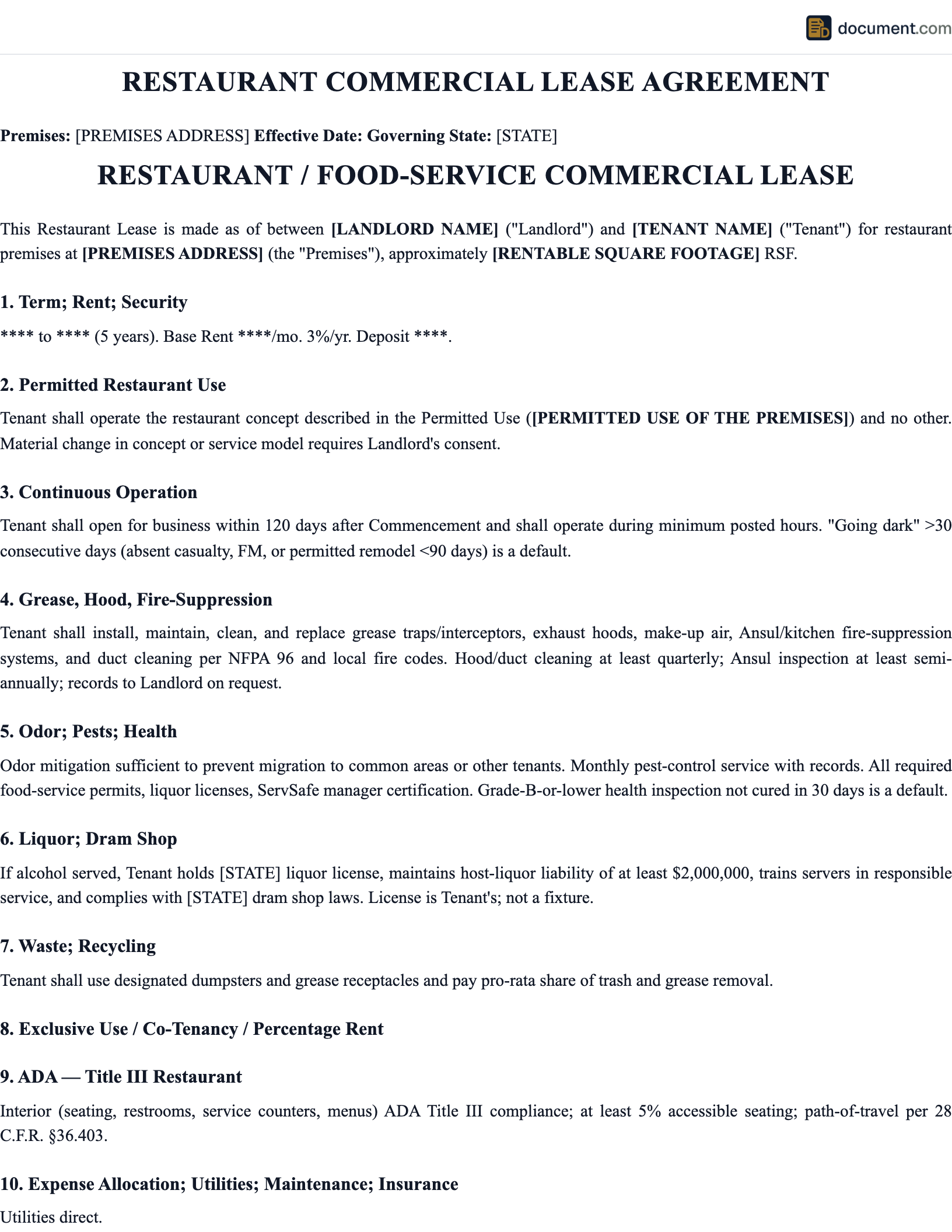



Ohio Restaurant Lease Agreement Overview
Ohio's restaurant market operates across three distinct urban centers that each require different lease strategies. Columbus has emerged as one of the most closely watched restaurant markets in the Midwest, driven by Ohio State University's student and alumni base, a young professional population, and the national attention that Short North and Italian Village have attracted. Cleveland's restaurant market has experienced meaningful revitalization in its Ohio City, Tremont, and East 4th Street entertainment district areas, while also benefiting from massive sports event traffic from Browns, Guardians, and Cavaliers game days that create revenue spikes for well-located operators. Cincinnati's food culture runs deep, with the Over-the-Rhine neighborhood transformation creating a competitive but rewarding restaurant corridor, and the area's distinctive chili culture creating a regional food identity that smart operators leverage.
Restaurant tenants in Ohio deal with the Ohio Department of Health for food service licensing and the Ohio Division of Liquor Control for alcohol permits. Ohio's DOLC permit system is moderately accessible compared to states with hard quotas, but the application process takes 60 to 90 days and a permit contingency in the lease is essential for any concept that depends on alcohol service. The ODH pre-opening inspection requirement means that restaurant operators in Ohio cannot open until the premises have been inspected and cleared, and that inspection readiness needs to be factored into the lease commencement date and rent schedule.
ODH
Food licensing
DOLC
Liquor permits
3
Major markets
60-90
Day DOLC timeline
Ohio Restaurant Lease Requirements
An Ohio restaurant lease must address the specific regulatory, market, and infrastructure requirements that affect food service operations in the state. Standard commercial lease templates often miss critical restaurant-specific provisions.
DOLC Permit Timeline Warning
Ohio DOLC liquor permit applications typically take 60 to 90 days to process, and the permit can be denied based on proximity to schools, churches, or other licensed establishments. Include a DOLC permit contingency in the lease that allows the tenant to terminate if the permit cannot be obtained within a specified period. Rent commencement should not begin until the permit is in hand for any concept that depends on alcohol service revenue from day one.
Key Lease Requirements
- ODH License Contingency: Include a contingency allowing the tenant to exit if an ODH Food Service Operation license cannot be obtained for the specific premises and intended use
- DOLC Permit Contingency: If alcohol service is planned, include a contingency allowing lease termination if the DOLC permit cannot be obtained within a specified timeframe and tie rent commencement to actual permit issuance
- Ventilation and Grease Systems: Address which party is responsible for commercial exhaust hood installation and grease interceptor maintenance, and ensure these systems meet ODH and local code requirements
- Dram Shop Liability Insurance: Confirm insurance requirements in the lease align with the exposure created by Ohio's Dram Shop Act for alcohol-serving establishments
- Columbus Game Day Provisions: For Columbus locations near Ohio State, address event-day operating restrictions, parking, and whether percentage rent clauses carve out game day revenue
- Rent Commencement Tied to Delivery: Tie rent commencement to actual delivery of the premises in buildout-ready condition, not to lease signing date
How to Execute an Ohio Restaurant Lease
Executing an Ohio restaurant lease requires working through regulatory due diligence before committing. The DOLC and ODH steps should happen before signing whenever possible.
Confirm Zoning and DOLC Eligibility
Contact the city zoning department to confirm the space is properly zoned for restaurant use. Review DOLC proximity restrictions for the specific address to confirm there are no nearby schools, churches, or other licensed establishments that would prevent permit issuance. In Columbus, Cleveland, and Cincinnati entertainment districts, DOLC permits are generally available, but confirm before committing to the lease.
Assess Kitchen Infrastructure
Have a mechanical engineer or kitchen contractor evaluate the premises before signing. Confirm the electrical panel, gas supply, ventilation, grease interceptor, and plumbing can support the intended restaurant concept. In older Cleveland and Cincinnati buildings, infrastructure gaps are common and can require significant capital investment. Identify these before signing and address the cost allocation in the lease.
Negotiate Contingencies and Market-Specific Terms
Include an ODH license contingency and a DOLC permit contingency. Negotiate a TI allowance for kitchen buildout. Columbus operators near Ohio State should address game day operations and percentage rent. Tie rent commencement to actual premises delivery in buildout-ready condition. Cleveland operators should confirm proximity to sports venues creates genuine revenue opportunity and that the lease reflects that by providing sufficient base term security.
Execute the Lease
Both parties should sign a comprehensive written lease. Have an Ohio attorney with commercial real estate or food service experience review the lease before signing. Retain fully executed originals.
Begin DOLC Application and Construction
Begin the DOLC permit application immediately after signing, since the 60 to 90 day processing window means delays can push your opening date significantly. Apply for the ODH food service license and schedule the pre-opening inspection as part of your construction timeline. Begin buildout once permits are filed and document all improvements for insurance and lease-end purposes.
Tax Implications for Ohio Restaurant Tenants
Ohio restaurant tenants face state and federal tax considerations that affect operating costs and reporting obligations.
| Tax Issue | Ohio Treatment |
|---|---|
| Ohio Sales Tax on Food | Ohio imposes a 5.75% state sales tax on prepared food sold for immediate consumption. Local county and transit authority levies can bring the effective rate to 8% or higher in Cuyahoga County (Cleveland) and Franklin County (Columbus). Restaurant operators must collect and remit sales tax on all prepared food and alcohol sales. |
| Ohio Commercial Activity Tax | Ohio imposes a Commercial Activity Tax (CAT) on gross receipts from Ohio business activity above a minimum threshold. Restaurant operators with annual Ohio gross receipts above the CAT threshold must register with the Ohio Department of Taxation and file CAT returns. The CAT applies to gross receipts, not net income, so it affects even restaurants operating at a loss. |
| Lease Rent Deductibility | Restaurant lease rent is deductible as an ordinary business expense for both federal income tax and Ohio Commercial Activity Tax purposes. TI allowances received from landlords may be includable in gross income; consult a tax advisor about the specific tax treatment of your Ohio lease structure. |
| Columbus Game Day Revenue | Revenue spikes from Ohio State game days create tax reporting considerations for percentage rent calculations and Ohio CAT filings. Operators should maintain clear records distinguishing game day and non-game day revenue, particularly if percentage rent clauses treat these differently under the lease. |
Sample Ohio Restaurant Lease Agreement
Below is a preview of our Ohio-specific template. Your customized document will include all fields and provisions required for filing in any Ohio county.
RESTAURANT LEASE AGREEMENT
STATE OF OHIO
Legal Document Template
LANDLORD
Name: [Full Legal Name / Entity]
Property: [Building/Center Name]
Address: [Property Address]
TENANT / OPERATOR
Name: [Restaurant Entity Name]
Concept: [Restaurant Name/Concept]
Experience: [Years in Food Service]
Tax ID: [EIN]
PREMISES
Suite: [Number]
Total SF: [Square Feet]
Kitchen SF: [Square Feet]
Dining SF: [Square Feet]
Patio: [Yes/No - SF]
FINANCIAL TERMS
Base Rent: $[Amount]/month
Percentage Rate: [%] above $[Breakpoint]
TI Allowance: $[Amount]
Deposit: $[Amount]
CAM: $[Amount]/month
Ohio Restaurant Lease Agreement FAQ
Answers to common questions about filing an restaurant lease agreement in Ohio, including requirements, fees, and procedures.
Important Considerations for Ohio Restaurant Tenants
Ohio's three major restaurant markets each present distinct opportunities and risks that should shape how you approach your lease.
Columbus: Game Day Revenue and OSU Influence
Columbus restaurants near Ohio Stadium and the Short North corridor experience dramatic revenue swings tied to Ohio State home football games. A lease near campus should address game day parking restrictions, delivery windows, and whether the landlord can use adjacent spaces for event purposes on game days. If you are projecting revenue to support rent, model both game day peaks and the dead stretches between semesters.
Cleveland: Sports District Timing and Infrastructure Age
The East 4th Street, Ohio City, and Tremont corridors have high foot traffic on Browns, Guardians, and Cavaliers game days. Many Cleveland restaurant buildings are older structures, and HVAC, grease trap, and electrical systems may not meet current ODH or fire code standards without significant capital. Before signing, get a contractor's assessment of the kitchen infrastructure, and negotiate TI allowances that reflect the real cost of bringing the space up to standard.
Cincinnati: Over-the-Rhine and the Chili Culture Premium
Cincinnati's Over-the-Rhine neighborhood has become one of the most competitive restaurant markets in the Midwest. Rents have risen sharply with neighborhood gentrification, and landlords in OTR often hold significant negotiating leverage. Cincinnati's unique food culture, including the skyline and Cincinnati-style chili traditions, can be an asset if positioned correctly, but it also means local competition is deeply established and well-funded. Budget for longer ramp-up time before the location gains foot traffic and loyalty.
Given the DOLC permit timeline, the Dram Shop Act liability exposure, and the market-specific lease risks in Columbus, Cleveland, and Cincinnati, having an Ohio commercial real estate attorney review your lease before signing is strongly recommended. The cost of a lease review is minor compared to the risk of signing a lease that does not protect your DOLC contingency or that locks you into rent obligations before your space is legally operable.
Official Ohio Resources
Use these official state and county resources to verify licensing requirements, understand your tax obligations, and access regulatory guidance for Ohio restaurant operations.
Ohio Department of Health - Food Safety
ODH Food Service Operation licensing and inspection program
Ohio Division of Liquor Control
DOLC liquor permit applications, quota system, and compliance
Ohio Department of Taxation - CAT
Commercial Activity Tax information for Ohio businesses
Ohio Attorney General - Business
Ohio commercial lease rights and business regulatory resources
Related Ohio Documents
Depending on your situation, you may need additional documents alongside your Ohio restaurant lease agreement.
Create your Ohio Commercial Restaurant Lease Agreement in under 5 minutes.
Answer a few questions and download a Ohio-compliant document, ready for the state agency.