
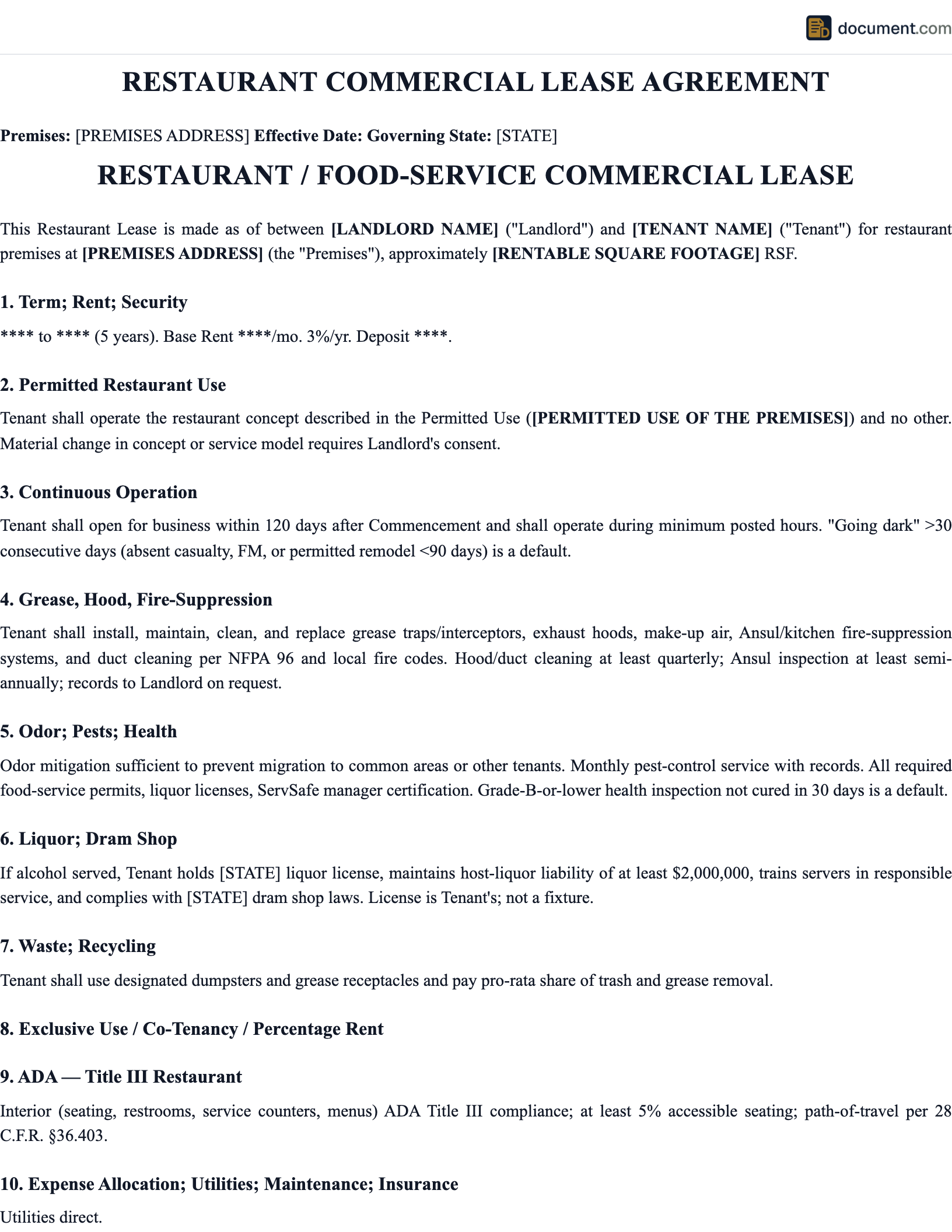



Maine Restaurant Lease Agreement Overview
Maine's restaurant market is defined by two distinct worlds. Portland has developed into one of New England's most celebrated food cities, with a dense concentration of nationally recognized chef-driven restaurants, a robust food truck scene, and year-round neighborhood dining that drives consistent commercial leasing demand. The rest of coastal Maine operates in a profoundly seasonal rhythm, with lobster shacks, seafood camps, and tourist-oriented restaurants that are highly profitable for four to five months and largely or entirely closed for the rest of the year. Understanding which market a restaurant lease is operating in shapes every provision of the agreement.
Maine restaurant operators must obtain food establishment licenses from the Department of Agriculture, Conservation and Forestry, and liquor licenses through the Bureau of Alcoholic Beverages and Lottery Operations. The lease should address DACF plan review requirements, BABLO licensing contingencies, hood and grease trap responsibilities, and the seasonal closure dynamics that make Maine restaurant leases structurally different from restaurant leases in year-round markets. For seasonal properties in coastal communities, the lease needs to address winter closure obligations, rent structures across operating and off-season months, and the implications of Maine's harsh winter climate for building maintenance during the closed period.
$13
Filing fee
Required
Notarization
0
Witnesses required
Registry
Filing office
Maine Restaurant Lease Requirements
A Maine restaurant lease must address food establishment licensing, liquor licensing, kitchen infrastructure, and the seasonal operating dynamics that distinguish Maine from almost every other restaurant market in the country. These provisions protect both landlord and tenant and reduce the risk of disputes arising from regulatory or seasonal surprises after the lease is signed.
Seasonal Closure and Winter Maintenance Obligations
Maine restaurant leases for seasonal coastal locations must explicitly address the off-season closure period. A lease that is silent on winter closure obligations can create serious disputes about rent obligations, building maintenance requirements, insurance continuation, and liability during months when the restaurant is not operating. Nail down these terms before signing, because they are harder to negotiate after a cold Maine January exposes the ambiguity.
Key Lease Provisions for Maine Restaurants
- DACF License Contingency: Tie rent commencement to the issuance of the Maine DACF food establishment license, with a termination right if the license is denied after a good-faith plan review submission
- BABLO License Contingency: Confirm the premises qualify for the required BABLO liquor license and include a contingency provision if the license cannot be obtained for reasons outside the tenant's control
- Seasonal Rent Structure: For seasonal locations, specify whether rent is reduced or deferred during the off-season months and what the tenant's obligations are during the closed period
- Winter Maintenance Obligations: Assign heat maintenance, snow removal, pest control, and insurance continuation responsibilities during the winter closure period
- Hood and Grease Trap Compliance: Specify whether the landlord delivers a code-compliant hood and assign grease interceptor installation, maintenance, and compliance responsibilities to a named party
- ADA Path-of-Travel Costs: Include a cost-sharing or cap provision for ADA path-of-travel upgrades triggered by the tenant's renovation, which can be substantial in older coastal Maine buildings
- Storm and Flooding Provisions: For waterfront locations, address what happens to rent and the tenancy if storm damage, coastal flooding, or sea level impacts close the location during peak season
How to Execute a Maine Restaurant Lease
Executing a Maine restaurant lease involves regulatory approvals from DACF and BABLO, site inspections, and in seasonal markets, careful negotiation of off-season terms. Follow these steps whether the location is in Portland or a coastal summer community.
Conduct Pre-Lease Site Inspection and Regulatory Review
Have the space inspected by a contractor familiar with DACF plan review requirements, particularly for kitchen layout, ventilation, and handwashing station placement. Confirm the location qualifies for a BABLO liquor license and that zoning permits a food service establishment. For older coastal Maine buildings, also assess ADA path-of-travel compliance and the structural implications of a kitchen buildout.
Negotiate Maine-Specific Lease Provisions
Work with a Maine commercial real estate attorney to draft the lease. For seasonal locations, negotiate the off-season rent structure, winter maintenance obligations, and the force majeure provisions for weather-related closures. For year-round Portland locations, focus on TI allowance structure, grease trap assignment, and BABLO license contingency provisions.
Execute the Lease and Submit DACF Plan Review
Once the lease is signed, submit your food establishment license application to DACF with floor plans showing kitchen layout, equipment, and handwashing stations. In Portland, coordinate with the city health department on the inspection timeline. DACF plan review can take several weeks, so submit early relative to your planned opening date.
Apply for BABLO Liquor License and Local Permits
Submit the BABLO liquor license application with the signed lease and proof of local municipal approval. Many Maine municipalities require a separate local vote or license board approval for new liquor licenses, which can add time to the process. Apply early, particularly if the opening is timed to the summer tourist season, when delays are costly.
Prepare the Space for Winter if Seasonal
For seasonal Maine restaurants, winterize the space at the end of each operating season according to the lease's closure procedures. Maintain heat to prevent pipe freezing, secure the premises against storm damage, and continue required insurance coverage during the off-season period. Document the closure condition and any damage discovered at the start of each season as the lease requires.
Maine Fees & Costs
Below is a breakdown of the typical costs associated with filing this document in Maine. Actual fees may vary by county.
| Fee / Cost | Amount |
|---|---|
| Filing Fee | $13 first page |
| Notarization | $5 - $25 per signature |
| Certified Copy | $1 - $10 per page |
| Attorney Review (optional) | $150 - $500 |
Sample Maine Restaurant Lease Agreement
Below is a preview of our Maine-specific template. Your customized document will include all fields and provisions required for filing in any Maine county.
RESTAURANT LEASE AGREEMENT
STATE OF MAINE
Legal Document Template
LANDLORD
Name: [Full Legal Name / Entity]
Property: [Building/Center Name]
Address: [Property Address]
TENANT / OPERATOR
Name: [Restaurant Entity Name]
Concept: [Restaurant Name/Concept]
Experience: [Years in Food Service]
Tax ID: [EIN]
PREMISES
Suite: [Number]
Total SF: [Square Feet]
Kitchen SF: [Square Feet]
Dining SF: [Square Feet]
Patio: [Yes/No - SF]
FINANCIAL TERMS
Base Rent: $[Amount]/month
Percentage Rate: [%] above $[Breakpoint]
TI Allowance: $[Amount]
Deposit: $[Amount]
CAM: $[Amount]/month
Maine Restaurant Lease Agreement FAQ
Answers to common questions about filing a restaurant lease agreement in Maine, including requirements, fees, and procedures.
Official Maine Resources
Use these official state resources to verify requirements, find your local filing office, and access government forms for Maine.
Related Maine Documents
Depending on your situation, you may need additional documents alongside your Maine restaurant lease agreement.
Create your Maine Commercial Restaurant Lease Agreement in under 5 minutes.
Answer a few questions and download a Maine-compliant document, ready for the state agency.