



Connecticut Restaurant Lease Agreement Overview
Connecticut carries one of the higher regulatory burdens for restaurant operators in the Northeast. The DESPP Liquor Control Division handles alcohol licensing, and approval timelines can run 60 to 120 days from application to final approval. Local health departments administer Connecticut's food service establishment regulations, and inspectors in cities like Hartford, New Haven, and Stamford apply them strictly. A restaurant lease that does not account for these timelines will leave tenants paying rent before they can legally open.
Connecticut's restaurant real estate market is shaped by its mix of urban and suburban markets. Hartford and New Haven have large inventories of historic commercial buildings, where restaurant conversions face constraints from local historic district commissions on exterior modifications and ventilation penetrations. Stamford competes more directly with New York City for food and beverage concepts and offers stronger TI packages. Across all markets, a Connecticut restaurant lease must address health permit plan review, DESPP licensing contingencies, grease trap authority requirements separate from health permits, ADA responsibilities in older buildings, and parking obligations.
$60
Filing fee
Required
Notarization
2
Witnesses required
Town
Filing office
Connecticut Requirements
Connecticut restaurant leases must address the state's distinct regulatory structure. DESPP handles liquor licensing separately from local government, health permits require detailed plan reviews, and historic district constraints can affect buildout scope in Hartford and New Haven. All of these affect timing and cost, and they belong in the lease document.
Connecticut Specific Note
Connecticut liquor licenses are issued by the DESPP Liquor Control Division, not by municipal governments. Restaurant leases should include a DESPP approval contingency because the agency has denied applications for premises that lacked proper zoning or had a disqualifying history. Connecticut health departments also conduct detailed plan reviews before issuing food service permits, and the turnaround can be lengthy in busier municipalities.
Document Requirements
- DESPP Liquor License Contingency: Include a clause allowing lease termination if DESPP denies a liquor license for the specific premises address
- Health Permit Plan Review: Confirm local health department preliminary approval of kitchen layout before buildout; Connecticut DPH regulations require this for new or substantially modified food service establishments
- Historic Building Provisions: For historic districts in Hartford, New Haven, or Stamford, specify who absorbs the cost of historic commission-mandated design changes to ventilation, signage, or facades
- Grease Interceptor Authority: Confirm which municipal water pollution control authority governs grease interceptors at the premises and allocate installation and pumping costs
- ADA Path of Travel: Specify which party funds ADA path-of-travel upgrades, particularly for older Connecticut buildings where compliance costs can be significant
How to Execute a Connecticut Restaurant Lease
Connecticut's regulatory environment means you need to confirm permit feasibility before executing. Work through these steps to avoid signing a lease on a space that cannot receive the approvals you need.
Verify Zoning and DESPP Eligibility
Confirm the address is properly zoned for food service and alcohol retail with the local planning and zoning department. Review Connecticut DESPP Liquor Control Division regulations to confirm no disqualifying history at the premises address.
Conduct a Health Department Pre-Review
Submit your preliminary kitchen layout to the local health department for a pre-application review. Connecticut's health departments are known for detailed plan reviews, and knowing required modifications before you finalize the lease terms protects your TI budget.
Negotiate and Draft Connecticut-Specific Provisions
Address DESPP contingency, health permit plan review approval, historic commission cost allocation (where applicable), grease interceptor authority requirements, ADA path-of-travel responsibility, permitted hours, TI disbursement schedule, and parking provisions.
Execute the Lease
Both parties sign the agreement. Immediately begin the DESPP liquor license application process and submit your full health permit application. DESPP processing alone can take 60 to 120 days, so early filing is essential to minimize your free-rent period.
Complete Buildout and Permit Final Inspections
Coordinate final inspections with the local building department, fire marshal, and health department. For historic district properties, obtain historic commission sign-off before making any exterior modifications. Keep all permits, inspection reports, and lien waivers from contractors on file.
Connecticut Fees & Costs
Below is a breakdown of the typical costs associated with filing this document in Connecticut. Actual fees may vary by county.
| Fee / Cost | Amount |
|---|---|
| Filing Fee | $60 per document |
| Notarization | $5 - $25 per signature |
| Certified Copy | $1 - $10 per page |
| Attorney Review (optional) | $150 - $500 |
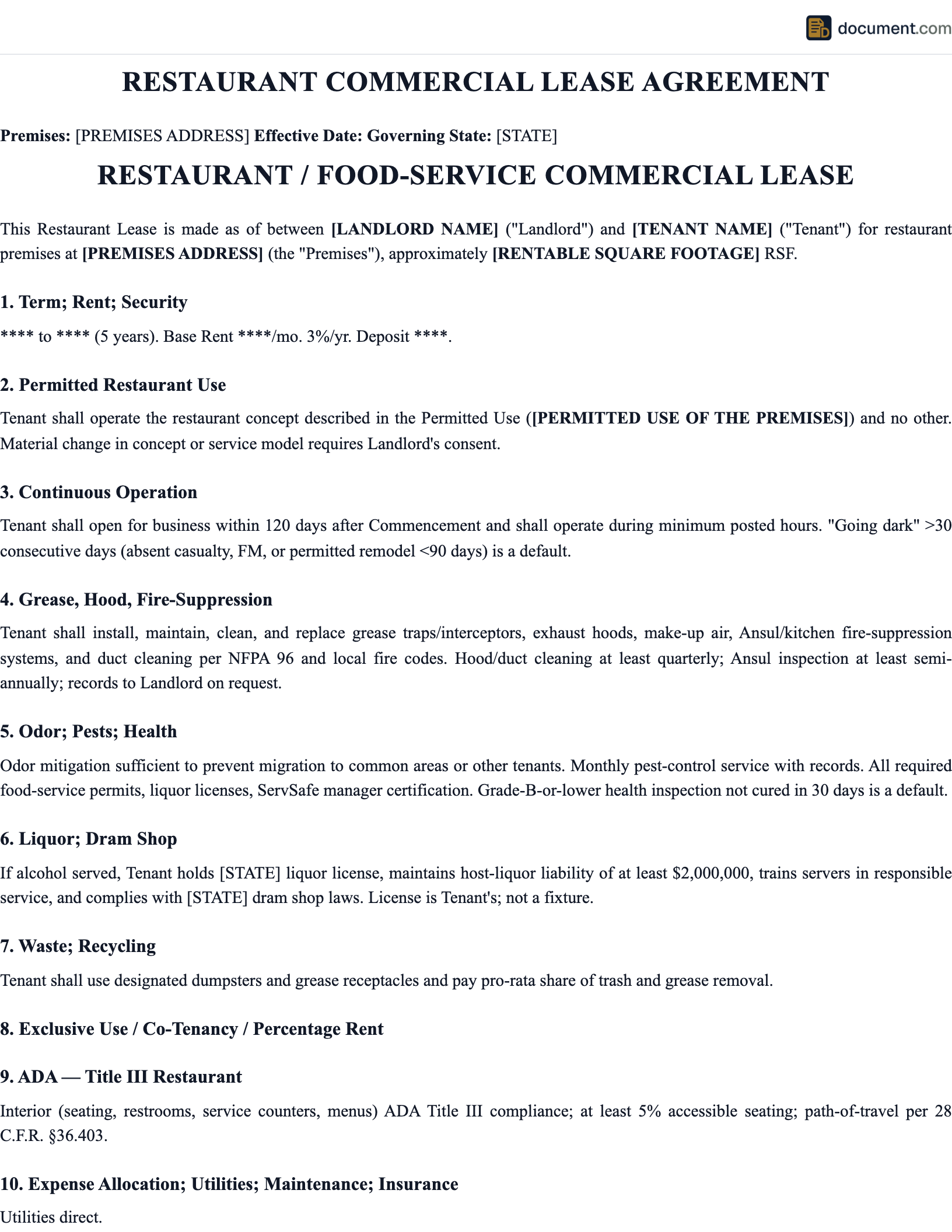
Sample Connecticut Restaurant Lease Agreement
Below is a preview of our Connecticut-specific template. Your customized document will include all fields and provisions required for filing in any Connecticut county.
RESTAURANT LEASE AGREEMENT
STATE OF CONNECTICUT
Legal Document Template
LANDLORD
Name: [Full Legal Name / Entity]
Property: [Building/Center Name]
Address: [Property Address]
TENANT / OPERATOR
Name: [Restaurant Entity Name]
Concept: [Restaurant Name/Concept]
Experience: [Years in Food Service]
Tax ID: [EIN]
PREMISES
Suite: [Number]
Total SF: [Square Feet]
Kitchen SF: [Square Feet]
Dining SF: [Square Feet]
Patio: [Yes/No - SF]
FINANCIAL TERMS
Base Rent: $[Amount]/month
Percentage Rate: [%] above $[Breakpoint]
TI Allowance: $[Amount]
Deposit: $[Amount]
CAM: $[Amount]/month
Connecticut Restaurant Lease Agreement FAQ
Answers to common questions about filing a restaurant lease agreement in Connecticut, including requirements, fees, and procedures.
Official Connecticut Resources
Use these official state resources to verify requirements, find your local filing office, and access government forms for Connecticut.
Related Connecticut Documents
Depending on your situation, you may need additional documents alongside your Connecticut restaurant lease agreement.
Create your Connecticut Commercial Restaurant Lease Agreement in under 5 minutes.
Answer a few questions and download a Connecticut-compliant document, ready for the state agency.