
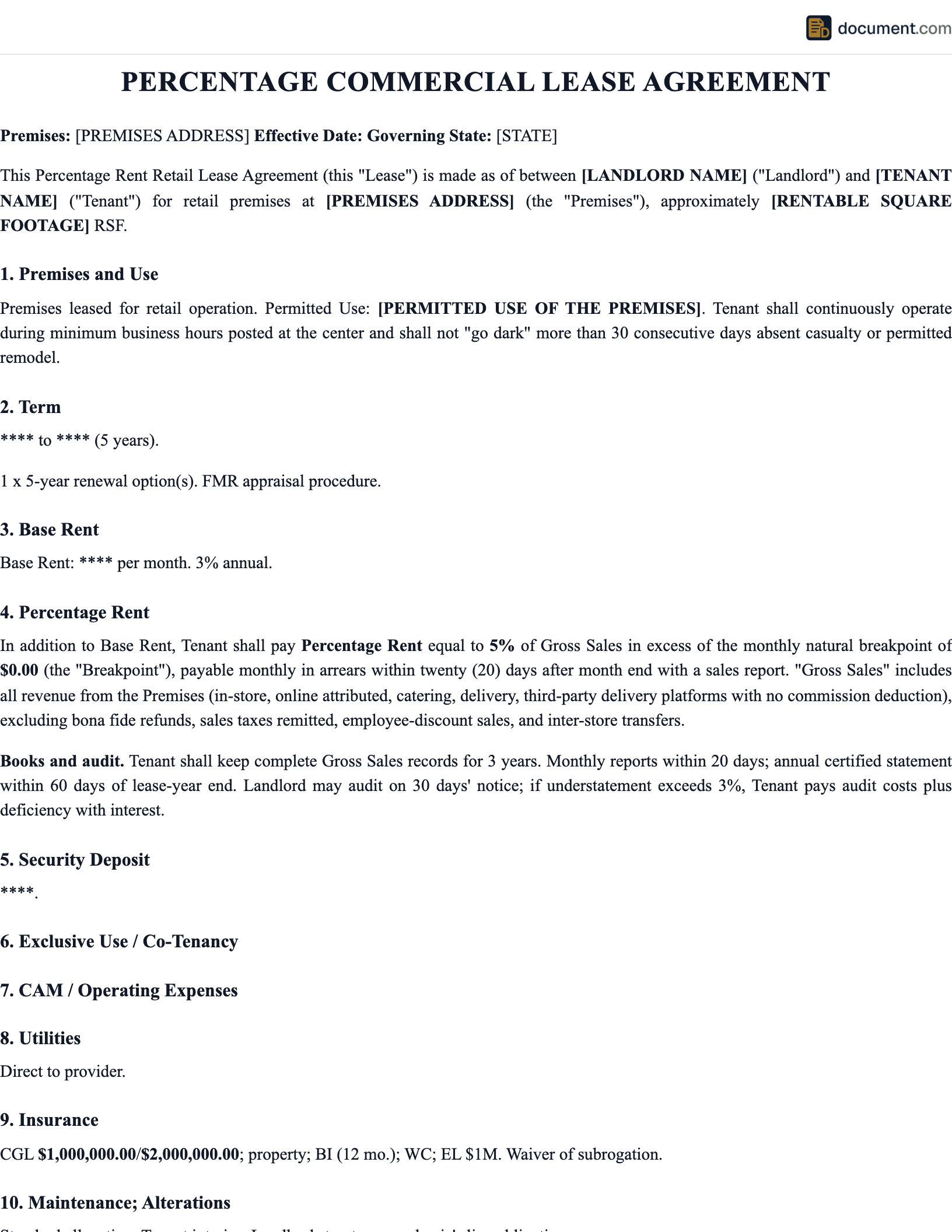



Pennsylvania Percentage Lease Agreement Overview
Percentage leases are the standard structure for retail tenancies in Pennsylvania shopping centers, urban street retail corridors, and food-and-beverage concepts in Philadelphia and Pittsburgh. The structure ties a portion of the tenant's rent to their commercial performance, aligning landlord and tenant interests in a way that pure gross or NNN leases do not. Pennsylvania percentage leases are governed by general contract law, and the critical provisions are all in the gross sales definition and the breakpoint calculation.
Pennsylvania imposes a 6 percent state sales tax, and Philadelphia adds a 2 percent local tax. Because sales tax is not income the tenant retains, it should be excluded from the gross sales definition. Philadelphia retailers also contend with the BIRT, which applies to business activity in the city and affects how gross receipts are tracked and reported. Understanding these tax layers is important both for structuring the percentage lease correctly and for ensuring that gross sales reports are consistent with the tenant's other tax filings.
$188.50
Filing fee
Required
Notarization
0
Witnesses required
Recorder
Filing office
Pennsylvania Requirements
A Pennsylvania percentage lease should spell out the gross sales definition, breakpoint structure, and reporting obligations in precise detail. These are the provisions that drive actual rent payments over the lease term, and vague language in any of these areas creates dispute risk.
Pennsylvania-Specific Note
Pennsylvania's 6 percent sales tax and Philadelphia's additional 2 percent local tax should be explicitly excluded from the gross sales definition. BIRT reporting by Philadelphia tenants creates gross receipts records that can inform but should be reconciled with percentage rent reports. Tenants in King of Prussia, Philadelphia neighborhoods, and Pittsburgh retail corridors should also evaluate whether co-tenancy protections are appropriate given current occupancy conditions in their shopping center.
Key Percentage Lease Provisions
- Gross Sales Definition: Enumerate inclusions and exclusions precisely; confirm Pennsylvania and local sales tax are excluded, along with returns, allowances, and employee discounts
- Breakpoint Structure: Specify whether the lease uses a natural or artificial breakpoint and how the breakpoint adjusts if base rent escalates over the lease term
- Reporting Requirements: Set the frequency and format for gross sales reports, the deadline for annual reconciliation statements, and the consequence of late or inaccurate reporting
- Audit Rights: Define the landlord's right to audit gross sales records and the tenant's record-retention obligations; specify the period within which audits can be initiated
- Co-Tenancy and Exclusivity: Address anchor vacancy rights and exclusive use protections, particularly relevant for Pennsylvania shopping centers facing occupancy challenges
How to Draft a Pennsylvania Percentage Lease
Negotiating a Pennsylvania percentage lease involves agreeing on the gross sales framework and breakpoint structure before finalizing base rent, since the two components need to be evaluated together.
Negotiate Base Rent and Percentage Rate
Agree on both the base rent and the applicable percentage rate for the tenant's retail category. For Philadelphia properties, consider how the BIRT affects the tenant's effective cost structure alongside the percentage rent obligation.
Draft the Gross Sales Definition
Define gross sales with precision. Confirm that Pennsylvania state sales tax (6 percent) and Philadelphia local tax (2 percent) are excluded. Include all appropriate exclusions such as returns, employee sales, and internet orders not fulfilled from the leased space.
Negotiate Co-Tenancy and Exclusivity Provisions
For Pennsylvania shopping center locations, determine whether co-tenancy protections are warranted based on the center's current occupancy and anchor tenant composition. Agree on the remedy if the co-tenancy trigger is breached, such as a reduced rent period or termination right.
Execute the Lease
Both parties sign the final lease. For terms exceeding one year, Pennsylvania's Statute of Frauds requires a written agreement. Have a Pennsylvania commercial real estate attorney review the percentage rent and gross sales provisions before execution.
Set Up Gross Sales Reporting Systems
Implement point-of-sale tracking that separates taxable gross sales from excluded items. For Philadelphia tenants, align gross sales reporting with BIRT gross receipts records to ensure consistency across tax and lease reporting obligations.
Pennsylvania Percentage Lease Costs
Typical costs associated with a Pennsylvania percentage lease. Percentage rent amounts depend on actual gross sales performance above the negotiated breakpoint.
| Fee / Cost | Amount |
|---|---|
| Base Rent | Fixed monthly amount; negotiated based on property and tenant type |
| Percentage Rent | Typically 3 to 10 percent of gross sales above breakpoint; varies by retail category |
| NNN or Operating Cost Pass-Throughs (if applicable) | Property tax, insurance, CAM if not embedded in gross rent structure |
| County Recording Fee (memorandum of lease) | Optional; varies by county |
| Attorney Review | $300 to $800 for commercial lease review |
Sample Pennsylvania Percentage Lease Agreement
Below is a preview of our Pennsylvania-specific template. Your customized document will include all fields and provisions required for filing in any Pennsylvania county.
PERCENTAGE LEASE AGREEMENT
STATE OF PENNSYLVANIA
Legal Document Template
LANDLORD
Name: [Full Legal Name / Entity]
Property: [Shopping Center Name]
Address: [Property Address]
TENANT
Name: [Business Entity Name]
Trade Name: [DBA / Store Name]
Address: [Current Address]
Tax ID: [EIN]
PREMISES
Suite: [Number]
GLA: [Gross Leasable Area SF]
Use: [Permitted Retail Use]
Exclusive: [Product Category]
FINANCIAL TERMS
Base Rent: $[Amount]/month
Percentage Rate: [%]
Breakpoint: $[Amount]/year
CAM: $[Amount]/SF
Deposit: $[Amount]
Pennsylvania Percentage Lease Agreement FAQ
Answers to common questions about filing a percentage lease agreement in Pennsylvania, including requirements, fees, and procedures.
Official Pennsylvania Resources
Use these official state resources to verify requirements, find your local filing office, and access government forms for Pennsylvania.
Related Pennsylvania Documents
Depending on your situation, you may need additional documents alongside your Pennsylvania percentage lease agreement.
Create your Pennsylvania Commercial Percentage Lease Agreement in under 5 minutes.
Answer a few questions and download a Pennsylvania-compliant document, ready for the state agency.