
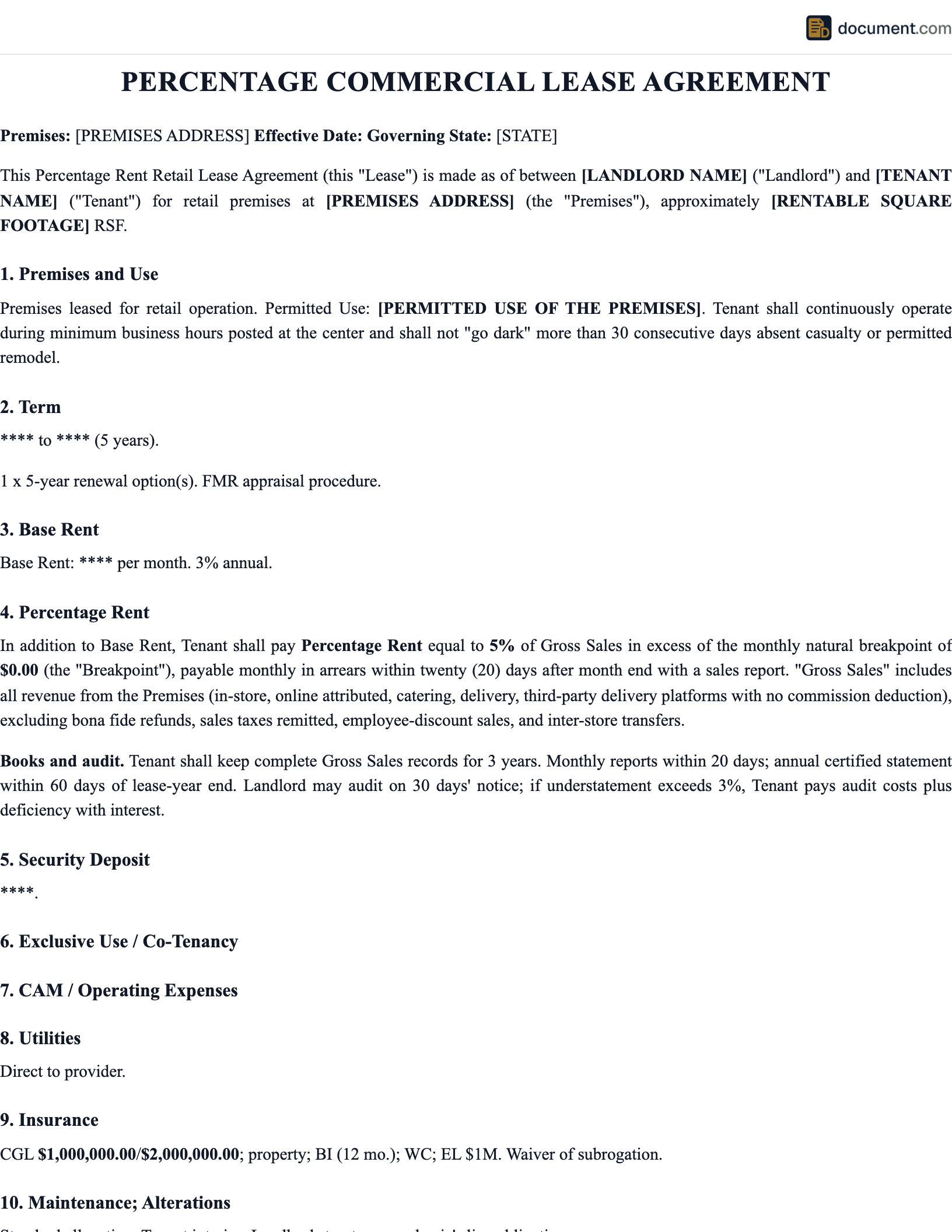



Nevada Percentage Lease Agreement Overview
A Nevada percentage lease combines a fixed base rent with additional percentage rent calculated as a share of the tenant's gross sales above a specified breakpoint. This structure aligns landlord and tenant interests in retail performance and is common in Nevada shopping centers, outlet malls, Las Vegas Boulevard-adjacent retail properties, and hospitality-adjacent commercial spaces. Nevada is home to some of the highest-traffic retail environments in the country, and percentage lease structures allow landlords to participate in the revenue upside of those locations while providing tenants with below-market base rent during lower-revenue periods.
Nevada percentage leases are governed by contract rather than by a specific retail lease statute. The gross sales definition, breakpoint, percentage rate, reporting obligations, and audit rights are all negotiated between the parties. Nevada does have a state sales tax, which creates a specific drafting consideration: the gross sales definition should address whether Nevada sales tax collected from customers is included or excluded from the percentage rent calculation. Most well-drafted Nevada percentage leases treat sales tax as an excluded item since it is a pass-through to the state rather than actual tenant revenue. Nevada imposes no commercial rent tax, so the percentage rent obligation itself does not attract any additional state-level levy.
$25
Filing fee
Required
Notarization
0
Witnesses required
County
Filing office
Nevada Percentage Lease Requirements
Nevada percentage leases are governed by contract rather than by a prescriptive retail tenancy statute. The following provisions must be clearly documented to create an enforceable and operationally workable percentage lease in Nevada:
Nevada Sales Tax and Gross Sales Note
Nevada retailers collect state sales tax on taxable transactions. The gross sales definition in a Nevada percentage lease should explicitly state whether Nevada sales tax is included or excluded from the gross sales figure. Including sales tax in gross sales inflates the tenant's reported revenue by an amount that belongs to the state, which would result in higher percentage rent than warranted. Standard Nevada practice is to exclude sales tax from gross sales. Confirm this treatment is explicitly documented in the lease.
Key Provisions
- Gross Sales Definition: Define which revenue is included in gross sales and list specific exclusions; Nevada sales tax collected from customers, returned merchandise, and employee discounts should all be addressed
- Breakpoint: Specify whether the breakpoint is natural (calculated from base rent divided by percentage rate) or artificial (set by negotiation); high-traffic Nevada retail locations often have negotiated artificial breakpoints below the natural level
- Reporting Obligations: Require monthly or quarterly gross sales reports and an annual certified sales statement; specify the format, deadline, and certification requirements
- Audit Rights: Give the landlord the right to audit the tenant's gross sales records; specify audit notice requirements, the window for initiating an audit after receiving annual statements, and cost allocation if a material discrepancy is found
- Co-Tenancy Provisions: For Nevada shopping center locations that depend on anchor tenant traffic, negotiate a co-tenancy clause that specifies the permitted occupancy threshold and the rent relief or termination remedy if co-tenancy requirements are not maintained
How to Execute a Nevada Percentage Lease
Executing a Nevada percentage lease involves several steps that go beyond the base lease terms. The percentage rent mechanics must be carefully established to avoid reporting and calculation disputes during the term.
Negotiate the Gross Sales Definition
Agree on a comprehensive definition of gross sales that includes all retail revenue from the leased premises and explicitly lists exclusions. For Nevada retailers, confirm how Nevada state sales tax is treated. For omnichannel businesses, address whether in-store pickup of online orders counts as gross sales from the premises.
Set Base Rent and Breakpoint
Negotiate the base rent, percentage rate, and breakpoint. Research current market rents for comparable Nevada retail locations. Determine whether a natural or artificial breakpoint better reflects the expected revenue trajectory for the business. High-traffic Nevada retail locations may warrant an artificial breakpoint set below the natural level.
Document Reporting and Audit Provisions
Specify the reporting schedule, format, and certification requirements for gross sales statements. Include a landlord audit right with defined procedures. These provisions protect both parties: the landlord can verify reported sales and the tenant has a clear process for resolving any reporting disputes.
Address Co-Tenancy and Exclusivity for Nevada Locations
For Nevada shopping center locations, negotiate co-tenancy provisions that provide rent relief or termination rights if anchor tenants close or center occupancy drops below agreed thresholds. Address exclusivity provisions that prevent the landlord from leasing to direct competitors in the same shopping center.
Execute and Set Up Sales Reporting
Both parties sign the agreement. Confirm signatory authority for any business entity. After execution, set up a reliable internal process for capturing and reporting gross sales data from the leased premises in the format and on the schedule specified in the lease.
Nevada Percentage Lease Costs
The following table outlines the major cost components of a Nevada percentage lease. The ongoing percentage rent obligation varies significantly based on actual gross sales performance.
| Cost Item | Typical Range |
|---|---|
| Base Rent | Market rate for the specific Nevada retail submarket; Las Vegas Boulevard, Henderson, and high-traffic Las Vegas Valley corridors command premium rates; Reno and rural Nevada markets are lower |
| Percentage Rent (above breakpoint) | Typically 1 to 10 percent of gross sales above the breakpoint depending on retail category; food and beverage runs higher, anchors run lower |
| Attorney Review (recommended) | $1,000 to $3,000; percentage lease provisions are complex and the gross sales definition and breakpoint mechanics warrant dedicated legal review |
| NNN Pass-Throughs (if combined structure) | Many Nevada retail percentage leases also carry NNN obligations; confirm whether property taxes, insurance, and CAM are included in base rent or added separately |
| Commercial Rent Tax | None; Nevada does not impose a commercial rent tax on tenants |
Sample Nevada Percentage Lease Agreement
Below is a preview of our Nevada-specific template. Your customized document will include all fields and provisions required for filing in any Nevada county.
PERCENTAGE LEASE AGREEMENT
STATE OF NEVADA
Legal Document Template
LANDLORD
Name: [Full Legal Name / Entity]
Property: [Shopping Center Name]
Address: [Property Address]
TENANT
Name: [Business Entity Name]
Trade Name: [DBA / Store Name]
Address: [Current Address]
Tax ID: [EIN]
PREMISES
Suite: [Number]
GLA: [Gross Leasable Area SF]
Use: [Permitted Retail Use]
Exclusive: [Product Category]
FINANCIAL TERMS
Base Rent: $[Amount]/month
Percentage Rate: [%]
Breakpoint: $[Amount]/year
CAM: $[Amount]/SF
Deposit: $[Amount]
Nevada Percentage Lease Agreement FAQ
Answers to common questions about filing a percentage lease agreement in Nevada, including requirements, fees, and procedures.
Official Nevada Resources
Use these official state resources to verify requirements, find your local filing office, and access government forms for Nevada.
Related Nevada Documents
Depending on your situation, you may need additional documents alongside your Nevada percentage lease agreement.
Create your Nevada Commercial Percentage Lease Agreement in under 5 minutes.
Answer a few questions and download a Nevada-compliant document, ready for the state agency.