



Mississippi Percentage Lease Agreement Overview
A Mississippi percentage lease combines fixed base rent with a percentage of gross sales above a breakpoint threshold. This lease structure is most common in enclosed shopping centers and strip malls in Mississippi's larger markets, including the Outlets of Mississippi in Pearl, Edgewater Mall in Biloxi, and Turtle Creek Mall in Hattiesburg. Mississippi's retail market is smaller than those in neighboring Tennessee or Georgia, which means percentage leases are less widespread here than in major coastal metros, but institutional landlords operating multi-tenant retail centers still use them routinely.
Mississippi contract law governs commercial leases, and no state statute specifically mandates or prohibits percentage rent structures. The parties are largely free to negotiate terms, which works in tenants' favor with local and regional Mississippi landlords who tend to negotiate more informally than national REIT operators. Mississippi's 7 percent state sales tax is one of the higher rates in the country, and any percentage lease in the state must explicitly exclude sales taxes from the gross sales definition to avoid paying percentage rent on tax revenue flowing to the state rather than the business.
7%
MS state sales tax
Exclude
Sales tax from gross sales
4-8%
Typical percentage rates
Gulf Coast
Hurricane provisions needed
Mississippi Requirements
Mississippi commercial leases are governed by contract law, and a percentage lease agreement must contain enough specificity in its gross sales and breakpoint provisions to be enforceable. The following elements are essential for any Mississippi percentage lease to function as intended.
Mississippi Sales Tax Note
Mississippi's state sales tax rate is 7 percent, one of the higher rates nationally. Any percentage lease in Mississippi must explicitly exclude sales taxes collected from customers from the gross sales definition. Omitting this exclusion means the tenant pays percentage rent on tax revenue passed through to the state, not on actual business revenue.
Key Lease Requirements
- Gross Sales Definition: The lease must define what constitutes gross sales subject to the percentage, explicitly excluding Mississippi sales taxes, employee discounts, returned merchandise, and credit card processing fees
- Natural Breakpoint: Negotiate for a natural breakpoint (annual base rent divided by percentage rate) rather than an artificial breakpoint set below that level, which would trigger percentage rent before base rent is covered
- Sales Reporting: The lease should specify monthly or quarterly gross sales reporting requirements with annual reconciliation, and require the tenant to maintain books and records for a defined audit period
- Audit Rights: Landlords typically require audit rights to verify reported gross sales, usually once per year with tenant reimbursing audit costs if a material discrepancy is found
- Co-Tenancy Protections: For enclosed mall locations in Mississippi, negotiate co-tenancy provisions tied to named anchors, with rent reduction or termination rights if anchor stores close
- Hurricane and Casualty Provisions: Gulf Coast locations in Biloxi, Gulfport, and surrounding coastal counties require specific language addressing hurricane damage, mandatory evacuation periods, and rent abatement rights when the tenant cannot operate due to weather events or landlord-caused closures
- CAM Reconciliation: Common area maintenance charges should be defined, capped where possible, and reconciled annually against actual costs with a process for tenant to dispute line items
How to File in Mississippi
Negotiating and executing a percentage lease in Mississippi involves analyzing your sales projections against the proposed rent structure, negotiating the key economic terms, and setting up systems to track and report sales accurately throughout the lease term.
Analyze the Location and Sales Projections
Research the shopping center's foot traffic, anchor tenant lineup, and comparable sales for similar retail categories in that Mississippi market. For Gulf Coast locations, review the property's hurricane history and insurance coverage. Build conservative and realistic sales projections to determine what breakpoint level makes sense before entering negotiations.
Negotiate the Gross Sales Definition and Breakpoint
Push for an explicit exclusion of Mississippi's 7 percent state sales tax from the gross sales definition. Negotiate for a natural breakpoint rather than an artificial one. Clarify the treatment of online or phone orders fulfilled from the store, employee discounts, gift card redemptions, and returned merchandise. Confirm the percentage rate fits your category and the Mississippi market context.
Address Co-Tenancy, CAM, and Casualty Provisions
For enclosed mall locations, negotiate co-tenancy protections with meaningful remedies tied to named anchor tenants. Review CAM provisions carefully and negotiate caps where possible. For Gulf Coast properties in coastal counties, specifically address hurricane force majeure, rent abatement rights during mandatory evacuation periods, and whether percentage rent is suspended during periods when the tenant cannot operate due to landlord-side damage or closures.
Have a Mississippi Attorney Review the Lease
A Mississippi commercial real estate attorney should review the lease before signing, particularly the gross sales definition, breakpoint mechanics, CAM provisions, and casualty language for Gulf Coast locations. Attorney rates in Mississippi are generally $175 to $350 per hour, making legal review cost-effective on any multi-year retail commitment. For Biloxi or Gulfport locations, look for counsel with experience in coastal commercial leases.
Execute the Lease and Set Up Sales Tracking
After both parties sign, configure your point-of-sale system to generate gross sales reports that match the lease definition, excluding Mississippi sales taxes and other excluded categories. Set calendar reminders for monthly or quarterly reporting deadlines and annual reconciliation dates. Keep all sales records for at least the audit period specified in the lease, typically three to five years.
Mississippi Fees & Costs
Below is a breakdown of typical costs associated with a Mississippi percentage lease. Mississippi's lower cost market means attorney and professional fees are generally lower than in larger metro states.
| Fee / Cost | Amount |
|---|---|
| Attorney Review (Recommended) | $175 - $350 per hour |
| Base Rent (Mississippi Retail) | $8 - $25 per sq ft per year |
| Percentage Rent Rate (above breakpoint) | 4% - 8% of gross sales |
| CAM / Operating Expenses | $4 - $12 per sq ft per year |
Sample Mississippi Percentage Lease Agreement
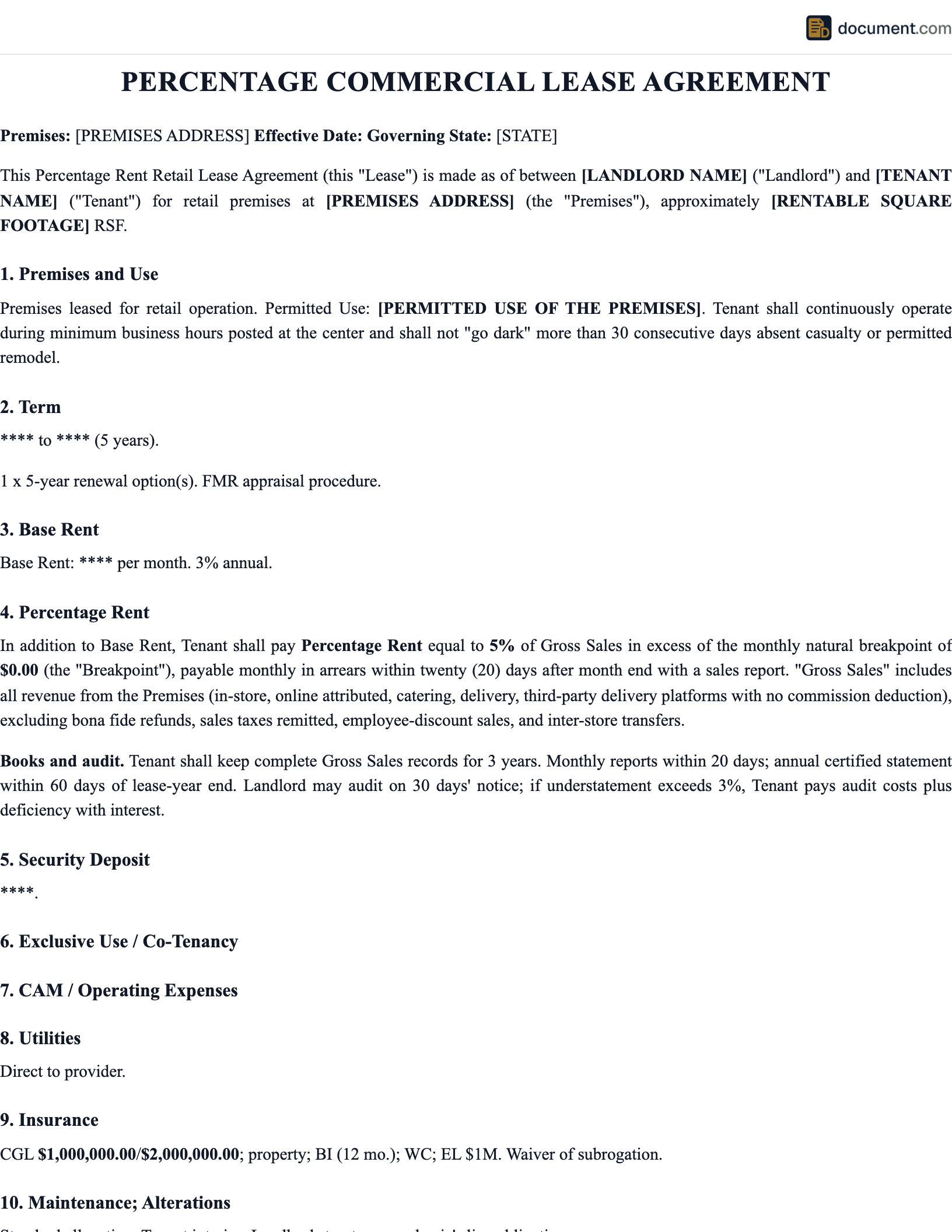
Below is a preview of our Mississippi-specific template. Your customized document will include all fields and provisions required for filing in any Mississippi county.
PERCENTAGE LEASE AGREEMENT
STATE OF MISSISSIPPI
Legal Document Template
LANDLORD
Name: [Full Legal Name / Entity]
Property: [Shopping Center Name]
Address: [Property Address]
TENANT
Name: [Business Entity Name]
Trade Name: [DBA / Store Name]
Address: [Current Address]
Tax ID: [EIN]
PREMISES
Suite: [Number]
GLA: [Gross Leasable Area SF]
Use: [Permitted Retail Use]
Exclusive: [Product Category]
FINANCIAL TERMS
Base Rent: $[Amount]/month
Percentage Rate: [%]
Breakpoint: $[Amount]/year
CAM: $[Amount]/SF
Deposit: $[Amount]
Mississippi Percentage Lease Agreement FAQ
Answers to common questions about filing a percentage lease agreement in Mississippi, including requirements, fees, and procedures.
Official Mississippi Resources
Use these official state resources to verify requirements, find your local filing office, and access government forms for Mississippi.
Related Mississippi Documents
Depending on your situation, you may need additional documents alongside your Mississippi percentage lease agreement.
Create your Mississippi Commercial Percentage Lease Agreement in under 5 minutes.
Answer a few questions and download a Mississippi-compliant document, ready for the state agency.